


Search for “Best SEO Agent for ChatGPT Claude and Gemini” and you’ll mostly find lists of AI SEO agencies. But what you actually need is an AI SEO agent — specialized software that tracks and improves your brand’s visibility on these LLMs. Tools like AIclicks, Profound, and Rankscale.ai each have unique strengths in monitoring, citation analysis, and content optimization. Paired with a content production platform that handles the actual AI-driven SEO writing, they give in-house teams the power to run their own Generative Engine Optimization (GEO) without outsourcing.
Contents
- What Is an AI SEO Agent—and How Is It Different from an AI SEO Agency?
- What to Look for in the Best SEO Agent for ChatGPT, Claude & Gemini
- Best SEO Agents for ChatGPT, Claude & Gemini: Head-to-Head Comparison
- Why Claude and ChatGPT Require Different GEO Strategies
- Getting Started: How to Set Up Your First Claude SEO Tracking Project in AIclicks
- Best AI SEO Agents for Small Teams, Solo Creators & Startups on a Budget
- How to Measure ROI from Your AI SEO Agent Investment
- Conclusion
- FAQ
What Is an AI SEO Agent—and How Is It Different from an AI SEO Agency?
The market tends to blur the line between AI SEO Agents and AI SEO Agencies, and that confusion often leads marketing teams to spend money on the wrong thing. Clarifying the difference is step one.
An AI SEO Agent is automated software. It handles tracking, diagnostics, and optimization visibility on Large Language Models (LLMs) without a human consultant in the loop. It’s a self-service platform: your internal team gets data, insights, and often content recommendations they can act on directly. An AI SEO Agency is a service company. Agencies deploy teams of experts to do the work for you, usually through a retainer model.
This distinction matters because many articles listing the “best tools” for AI search visibility are actually ranking service providers. An internal SEO team might click on a “best tools” article, only to find a list of agencies that require long-term contracts and human-led delivery — not software they can use themselves. The search intent behind “Best SEO Agent” points firmly toward software, but the current SERP is dominated by agencies, which makes informed software selection harder than it should be.
AI SEO Agent vs AI SEO Agency: A Side-by-Side Comparison
The real difference is who does the work. Below is a practical breakdown across key operational dimensions.
| Dimension | AI SEO Agent (Software) | AI SEO Agency (Service) |
|---|---|---|
| Execution Method | Software runs the checks. You configure tracking and read the dashboards. | Humans drive the work. Strategists and analysts monitor and optimize on your behalf. |
| Scalability | Highly scalable. You can add tracked prompts, keywords, or brands, usually at a fixed cost. This is the core of what makes an AI SEO agent scalable software. | Limited by human bandwidth. Growing the account or adding activity means hiring more people, which raises costs linearly. |
| Pricing Model | Generally transparent and scalable: subscription tiers, pay-as-you-go credits, or pay-per-check fees. Entry prices can be free or as low as $20/month. | High-ticket retainers. Industry analyses place starting prices for specialists between $3,500 and over $10,000 per month. |
| Technical Involvement | You need in-house SEO or marketing talent to set things up, interpret data, and carry out the optimization strategies the tool recommends. | Minimal internal effort. The agency acts as an outsourced team that handles both strategy and execution. |
| Best-Fit User Profile | Teams that already have SEO expertise, want ongoing monitoring data, and prefer to keep control of strategy execution. | Organizations without internal SEO resources that need full-service strategy, execution, and consulting — typically with larger budgets. |
Decision Framework: Should You Choose an Agent or an Agency?
The choice really comes down to your internal resources, how much control you want, and your budget. Start with an honest look at what your team can actually handle.
If you have in-house SEO talent and need continuous monitoring to keep up with LLM citation volatility, an Agent is the smarter move. It gives your team data ownership and scalable oversight without the high cost of a full-service retainer. If you lack internal AI search expertise and need both high-level strategy and hands-on execution, an Agency is a better first step. An agency can build the program for you, while an agent lets you run it yourself once the playbook is established.

For most companies that already have an SEO function, starting with an agent is a more capital-efficient way to build LLM visibility. As Shiyam Sunder, Co-Founder at TripleDart, puts it, his team’s work is about “[providing] the dataset to build platform-specific strategies that compound.” That function might begin with an agency, but eventually it has to be monitored internally — and that’s exactly where an agent becomes critical.
What to Look for in the Best SEO Agent for ChatGPT, Claude & Gemini
AI SEO Agents are not all built the same. The ones worth your time turn LLM complexity into a clear, actionable dashboard. Before signing up, measure any candidate against a few non-negotiable features that separate real platforms from niche monitors.
One key piece of context: AI-generated answers are inherently volatile. According to data from AI Rank Checker, ChatGPT changes its cited sources 54.1% month-over-month. That single stat explains why one-off checks are useless; continuous monitoring is the entire point of an AI SEO agent. Your tool selection has to be built around that reality. Look for platforms that offer scheduled, automated tracking — not just manual spot-checks.
Why Cross-Platform Tracking Matters: Not All LLMs Recommend the Same Brands
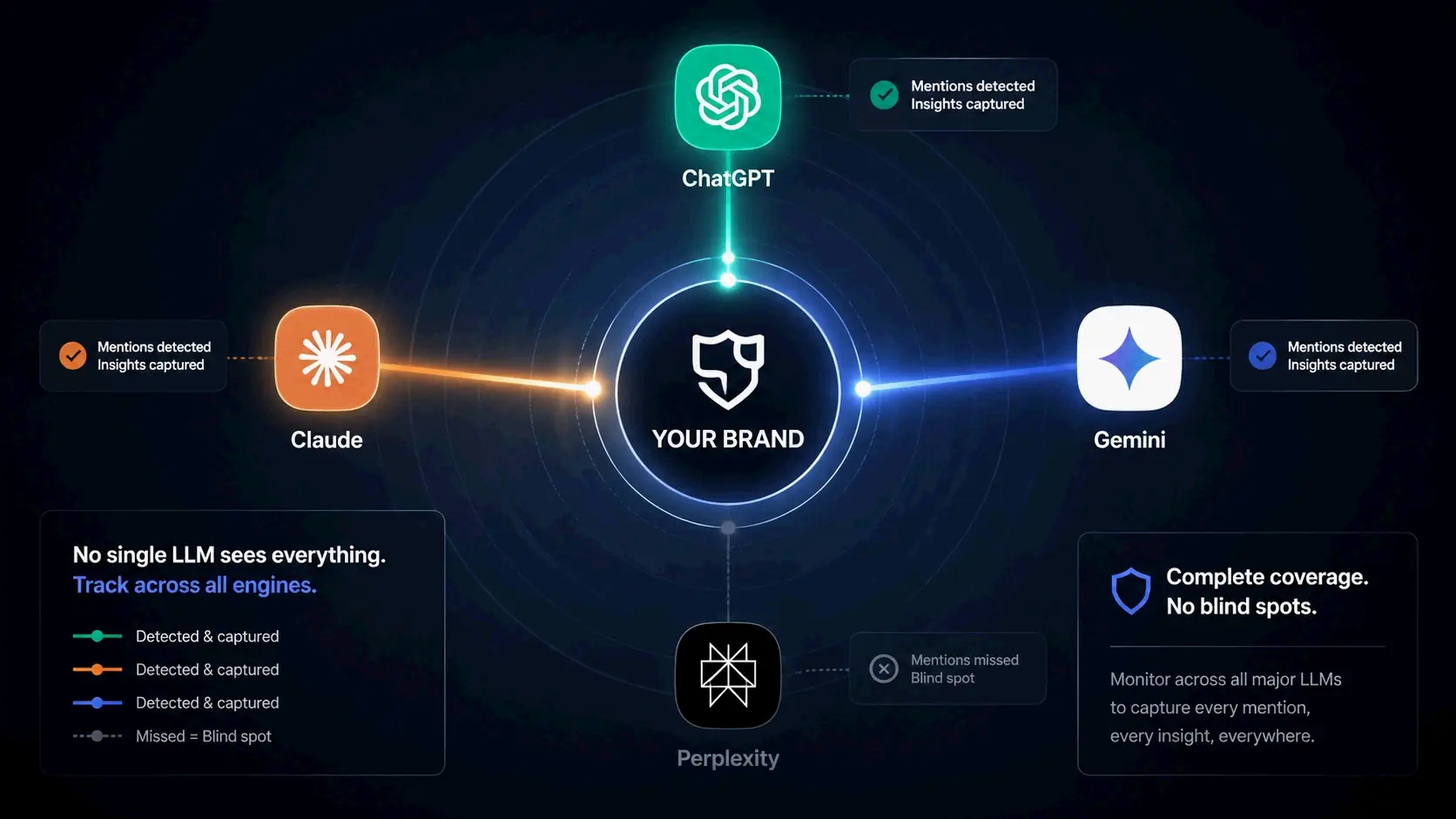
Shoppers spread their research across multiple LLMs, and each platform’s recommendation engine has its own set of biases. An agent that only tracks ChatGPT gives you a dangerously incomplete picture of your real AI search visibility.
A mid-market B2B brand might be nearly invisible on ChatGPT but have significant authority on Claude or inside Google’s AI Mode. Insights from TripleDart show that Claude and Perplexity name and cite brands in fundamentally different ways than ChatGPT. Google AI Mode, for example, shows the strongest correlation with traditional SEO strength. Perplexity, meanwhile, generates 4.6x more citations than ChatGPT — but carries a higher risk of citing your competitors. A solid agent should at least cover ChatGPT, Claude, Gemini, and Google AI Overviews. Ideally, it should also include Perplexity to give you a complete view of your AI search footprint.
The Citation Rate Metric: Measuring What Actually Matters in GEO
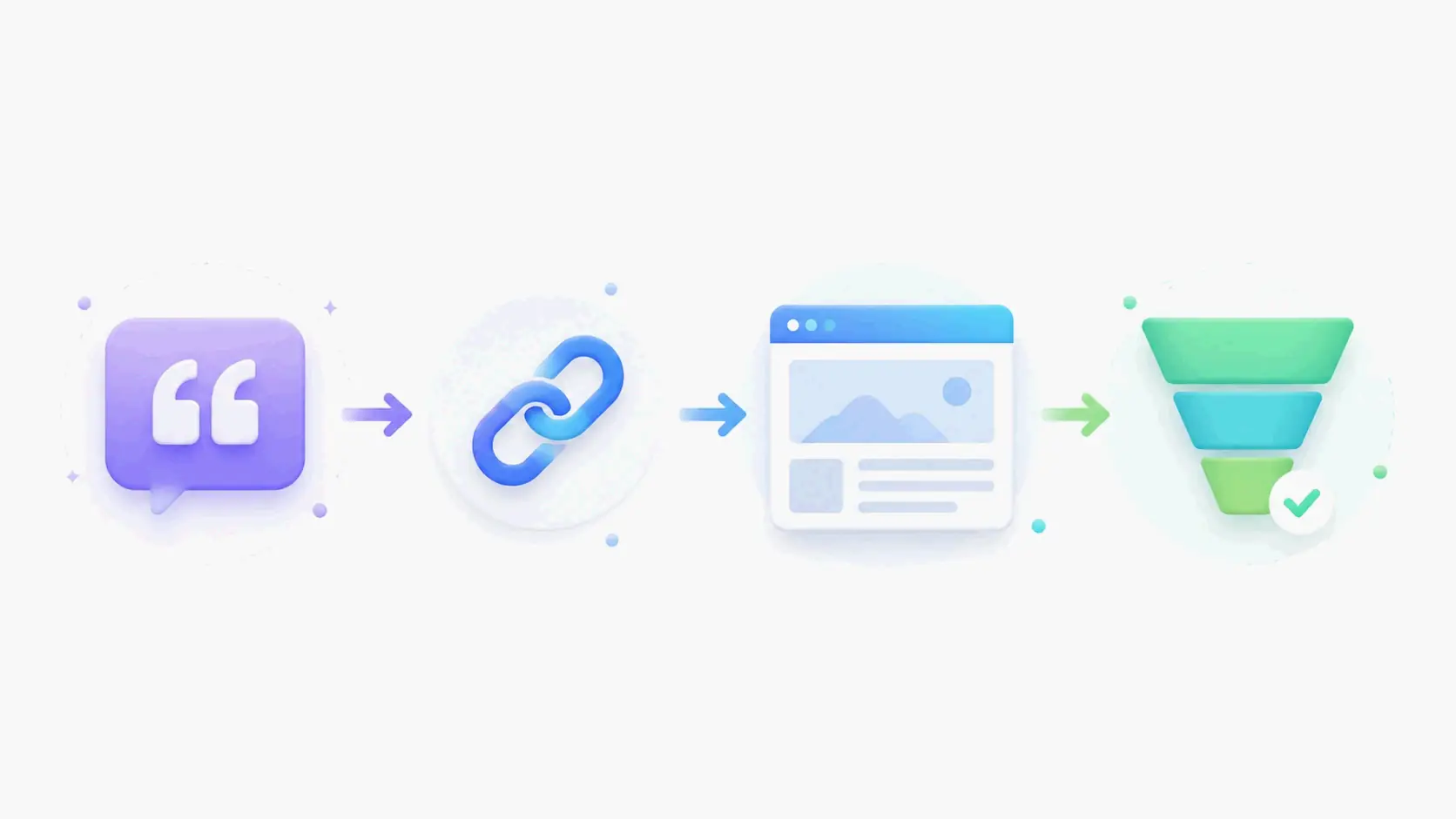
In Generative Engine Optimization, a click isn’t the primary unit of value — a citation is. Your core metric isn’t keyword ranking; it’s Citation Rate: how often your brand appears as a source in an AI-generated answer for your target prompts.
A good agent must go beyond simple “mention” counts and offer Citation Intelligence. This means identifying exactly which URLs the LLM is pulling from, whether it’s citing your own domain or a third-party review, and what percentage of your target queries result in a direct domain citation. To get even deeper, you need ROI measurement, which requires a direct integration with your analytics stack. GA4 integration is crucial for attributing referral traffic — and, more importantly, leads or sales — back to specific LLM platforms. That turns an abstract “citation” into a measurable contributor to your pipeline. And finally, transparent pricing makes sure the tool can grow with you, from a solo creator testing the waters to an enterprise team tracking thousands of prompts.
Best SEO Agents for ChatGPT, Claude & Gemini: Head-to-Head Comparison
After looking closely at the available platforms, three agents stand out: AIclicks, Profound, and Rankscale.ai. Each takes a distinct and complementary approach, so the right pick depends on what matters most to your business — citation depth, platform coverage, or budget control.
AIclicks: Best for Claude-Focused Citation Intelligence
AIclicks was built for AI-first visibility. Its real strength is prompt-level monitoring paired with deep citation intelligence, especially for Claude. As Matas Kibildis, Head of Growth at AIclicks, describes it, “Citation Intelligence feature is where AIclicks stands out.” It doesn’t just tell you if you showed up; it identifies every URL and domain Claude cites, so you can see which competitor sources are being chosen over your brand and plan accordingly.
The platform’s standout feature is its GEO Audit, which lets you test how Claude and other LLMs respond to your prompts across different regions. It’s still one of the few tools on the market that offers GA4 integration, closing the loop from an AI citation to a real website visit. For a Claude-first strategy, AIclicks is the strongest option. Plans start at $59/month, scaling to $189 for Pro and $499 for Business tiers, with a free trial available. One thing to keep in mind: while its Claude and citation intelligence is deep, its overall engine coverage isn’t the broadest on this list.
Profound: Best for Enterprise GPTBot Analytics & Multi-Engine Monitoring
Profound positions itself as the deepest monitoring infrastructure you can get, running over 15 million prompts per day. For enterprise teams, the real differentiator isn’t just the dashboard’s breadth — it’s the analytical depth into why answers are generated. Its Agent Analytics feature tracks how GPTBot, OpenAI’s web crawler, interacts with your site, giving you a granular view of how the AI “sees” your content.
With coverage of up to 10 LLM engines on enterprise plans — including Claude, Gemini, and Perplexity — Profound offers unmatched scale. Its content agents can also run gap analyses, providing strategic recommendations to boost citation rates. That depth comes at a cost, both in price and complexity. Pricing isn’t public; it’s sales-led, with a 1–3 week onboarding process and no free trial, as confirmed by software review platforms. Profound is the default choice for organizations where rigorous reporting and crawler-level data justify the enterprise commitment. Just know that its limited execution layer makes it a pure monitoring powerhouse, not an action-oriented platform.
Rankscale.ai: Best Credit-Based GEO Tracking for Precision Budget Control
Rankscale.ai solves a different problem. It brings the familiar UX of a traditional SEO rank tracker to AI search, running on a credit-based system that appeals to teams who want strict budget control without a recurring subscription. As the Whatagraph team notes, “The level of specificity Rankscale offers is unmatched,” letting you track by specific keyword, AI engine, and region.
This is a deep drill-down tool built for data-centric marketers. Founder Mathias Ptacek describes it as “for the geeky minds.” Teams can start at $20/month and scale their credit usage as needed, making it one of the most affordable and flexible entry points. The platform covers 8+ LLMs, including ChatGPT, Gemini, and Perplexity, with transparent credit rollover. The main limitation is that it’s still a newer product with maturing feature depth, and it lacks a content generation or execution layer — a gap that specialized content platforms like GeoWriter fill with an end-to-end pipeline from research to publish at roughly $0.6 per article with images, as pointed out in comparisons by RankAI.
Comparison Table: AIclicks vs Profound vs Rankscale.ai at a Glance
| Feature | AIclicks | Profound | Rankscale.ai |
|---|---|---|---|
| Primary Strength | Claude citation intelligence & GA4 integration | Enterprise GPTBot analytics & scale | Flexible credit-based pricing & regional drill-down |
| Platform Coverage | Claude, ChatGPT, Gemini, Perplexity, and more | Up to 10 engines including all major LLMs | 8+ engines, including all major LLMs |
| Unique Feature | Regional GEO Audit & GA4 Referral Tracking | GPTBot Crawler Analytics | SEO-like rank tracker UX for LLMs |
| Pricing Model | Subscription, from $59/mo (free trial) | Sales-led, enterprise (no free trial) | Credit-based, from $20/mo |
| Star Rating | ★★★★☆ (strong but breadth-focused) | ★★★★★ (enterprise gold standard) | ★★★★☆ (excellent for the price) |
Honorable Mentions: Trakkr, Rankability, and XSeek
- Trakkr: The best option if you need to start right now with zero financial risk. Its free plan covers ChatGPT and seven other models, with a clear path to a Growth plan at $79/month for daily tracking, citation source analysis, and GA4 integration. It’s an ideal on-ramp.
- Rankability: An agency-focused platform starting at $79/month. It separates AI signals into smart categories — Mentions, Recommendations, and Citations. That distinction, paired with white-label reporting and content optimizer tools, makes it a practical choice for agencies building GEO as a service and juggling multiple client dashboards.
- XSeek: A real-time monitoring specialist that starts at $99.99/month. It pairs tracking data with a built-in AI content studio. Its integrations with Cloudflare and Next.js make it a strong fit for technical teams that want to act on visibility data instantly.
Why Claude and ChatGPT Require Different GEO Strategies
Treating all LLMs as one optimization channel is a strategic error that will cost you visibility. Claude and ChatGPT have fundamentally different “personalities” when it comes to recommending and citing brands. A content strategy that earns a citation from one may be completely ignored by the other, because each platform’s retrieval-augmented generation system values different authority signals.
Shiyam Sunder, Co-Founder of TripleDart, puts it plainly: “Claude is more willing to name brands… it rewards answer-first writing, named authorship, and structured data.” That behavioral difference means your GEO strategy has to split in two, with distinct content formatting standards for each platform. On the monitoring side, a quality AI SEO agent helps you audit and track performance against these different rules. On the production side, GEO-forward content tools like GeoWriter bake E-E-A-T structure and editorial refinement into every article, removing the mechanical AI tone that both platforms penalize.
What Claude Rewards vs What ChatGPT Prefers: A Strategic Breakdown
Claude acts like a careful research assistant with a strong bias toward demonstrable domain expertise. It disproportionately rewards content that is easy to “lift” and cite: direct, answer-first prose; named authors with verifiable credentials (reinforced by Person schema); and specific structured data points like tools, calculators, and original research. For Claude, the quality and structure of the source matter enormously.
ChatGPT behaves more like a broad-spectrum analyst. It favors comprehensive, category-defining guides with strong domain authority and a solid backlink profile. It leans heavily on third-party validation from widely referenced sources such as Wikipedia, G2, and large media outlets. The platform is less sensitive to formatting cues like named authorship and more forgiving of mediocre, unstructured content — often giving a passing mention to brands that Claude would completely ignore. The practical takeaway is simple: you need a platform-specific content strategy, and your agent must be able to track how well you perform against these different rules on each engine.
The 4-10x Visibility Gap: Real Data on Claude vs ChatGPT Performance
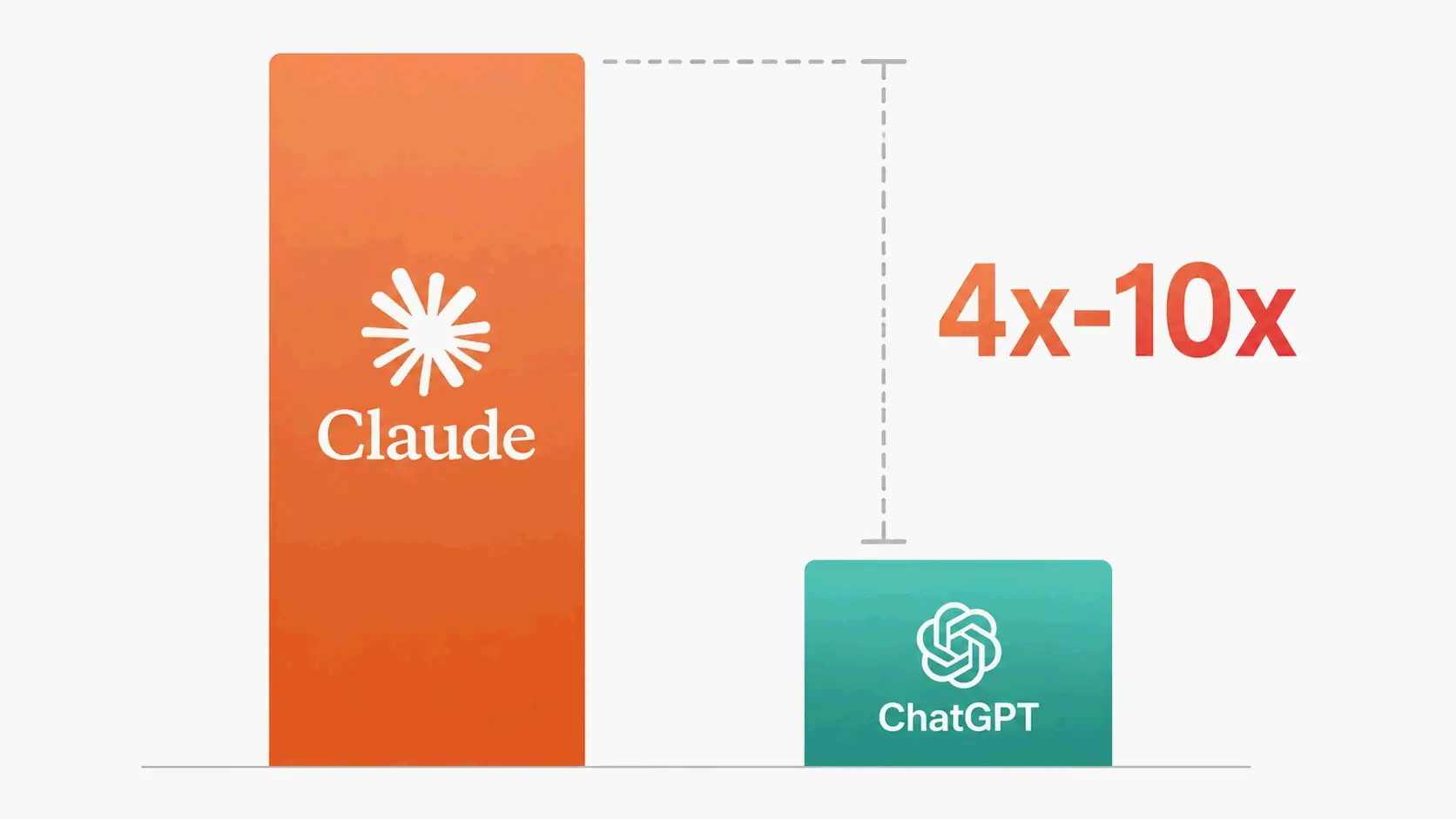
The cost of a one-size-fits-all strategy shows up clearly in data from a comprehensive analysis by TripleDart. Their research found that mid-market B2B brands see 4x to 10x higher brand visibility on Claude than on ChatGPT.
This isn’t a minor edge; it’s a systematic result of the two platforms’ biases. Claude’s engine creates a “quality moat” where specialized expertise gets amplified, letting a focused B2B SaaS company dominate the conversation. ChatGPT, meanwhile, defaults to naming the largest category leader and moves on. The pattern flips for dominant consumer-facing enterprises: for those very large brands, ChatGPT can match or even exceed Claude’s visibility. Your market position is the single most important variable in deciding which platform deserves the bulk of your optimization effort.
Getting Started: How to Set Up Your First Claude SEO Tracking Project in AIclicks
To turn this framework into action, you need to move from strategy to real data. Here’s a practical walkthrough of setting up your first Claude SEO tracking project in AIclicks — taking you from raw prompts to actionable content fixes.
Step 1: Creating Your First Monitoring Project
Start inside your AIclicks dashboard by building out a prompt library. List the 20-30 most commercially important questions a potential buyer might ask Claude about your category, products, or brand. Group them into topic clusters so you can analyze them strategically — keyword planning tools like GeoWriter’s kwmaster can help you prioritize which clusters to track first by scoring keywords into P0/P1/P2 tiers. For each prompt, configure your initial monitoring settings and make sure you select Claude as your target engine. If you want to capture regional differences in Claude’s responses, set up a GEO audit within the project — this is a feature the tool does especially well. Once your clusters are configured, finalize the setup to begin tracking. The platform will start running the checks and populating your prompt-level visibility data.
Step 2: Interpreting Citation Data and Identifying Gaps
The insight you really want isn’t a simple “visibility score.” Head to the Citation Intelligence section for your Claude tracking. This dashboard shows you every URL and domain Claude cited for your target prompts. You’ll immediately see whether your brand is cited and — more importantly — which specific pages of yours are winning links. The real value lies in spotting gaps: if a competitor gets cited instead of you, the report shows you exactly which of their pages Claude trusts. Study the structure and content of those winning pages to reverse-engineer why Claude prefers them as a source.
Step 3: From Insight to Action—Optimizing Content for Claude Citations
Now translate your diagnosis into tactical content changes. If a competitor’s page is being cited because of a clear, answer-first structure, reformat your equivalent page to put the core recommendation in the first 100 words. If Claude is citing a competitor’s “best tools” listicle, create a more authoritative, better-structured version of your own — content platforms like GeoWriter can handle this at scale with built-in E-E-A-T structure and real-time SERP alignment, avoiding the trade-offs of traditional AI writing tools. Add structured data — specifically Person and Article schema — to give Claude clear signals about authorship and content type, which it actively rewards. Finally, connect your AIclicks project to your GA4 property. This closes the optimization loop, letting you directly measure whether your content fixes lead to a real increase in referral traffic from Claude.
Best AI SEO Agents for Small Teams, Solo Creators & Startups on a Budget
Enterprise GEO tools tend to hog the spotlight, but the market has good, high-value entry points for budget-conscious teams serious about their AI search visibility. You don’t need a $99/month base subscription to start measuring and improving your LLM presence, but you do need to understand the trade-offs. The core compromise is always between cost and monitoring frequency: cheaper plans give you less frequent or smaller-scale data, which means you might miss the rapid citation shifts that happen on a platform like ChatGPT.
Free & Low-Cost GEO Tools: Features, Limits & Trade-Offs
Several tools offer a path into GEO for under $80 a month. Trakkr’s free plan is the most generous starting point, covering ChatGPT and seven other models with a limited number of prompts. However, its free tier checks less often than its $79/month Growth plan, which unlocks daily tracking and citation source analysis. If you’re a solopreneur who needs precise budget control, Rankscale.ai‘s credit-based system is unmatched, starting at $20/month and letting you pay only for the checks you run. The trade-off: you have to actively manage your credit consumption, and truly continuous monitoring can get pricey. Manual tracking is, of course, free, but systems like AI Rank Checker offer a hybrid model, charging $0.13 per ChatGPT keyword check with a minimum $5 top-up. This gives you on-demand data without a recurring commitment.
When Is It Worth Upgrading to a Paid AI SEO Agent?
Free or pay-per-check tiers are fine for a snapshot audit of your current visibility. You should upgrade to a paid, continuous monitoring plan the moment GEO stops being an experiment and starts being a business channel. That 54.1% month-over-month citation volatility statistic from AI Rank Checker is the ultimate justification. If a competitor can displace your brand’s citation in a matter of weeks, a one-off audit is obsolete the day you run it. A paid plan from AIclicks (from $59/month) or Trakkr ($79/month) gives you the systematic daily monitoring and automated alerts that turn GEO from a periodic check-in into a defensible growth channel — catching slippage before it becomes a sustained loss of pipeline. On the content creation side, the cost equation is equally important: traditional AI content services charge $20 or more per article, while end-to-end platforms like GeoWriter bring that down to around $0.6 per article with images, making high-volume GEO content production viable even for lean teams.
How to Measure ROI from Your AI SEO Agent Investment
The success of your AI SEO agent isn’t measured by the number of mentions it reports; it’s measured by its impact on your sales pipeline. To prove value, you have to move past abstract visibility scores and anchor your reporting in a quantitative framework that tracks both your share of AI answers and the business outcomes those answers generate.
The 3 Key Metrics Every GEO Dashboard Should Show You
Any viable AI SEO Agent needs to track three categories of metrics to give you a full picture. First, Citation Rate & Share of Voice: the percentage of your target prompts where your brand appears and how that share stacks up against your core competitors. Second, Referral Traffic Analysis is essential to connect a citation to a visit; it has to be powered by a GA4 integration that can isolate LLM referral traffic. Third, the dashboard should provide Lead Attribution data — the number of downstream conversions, trial signups, or demos that started with an LLM-sourced visit. Without this third metric, your agent is still working as a brand awareness tool rather than a performance marketing platform.
Building a Before-and-After Measurement Framework
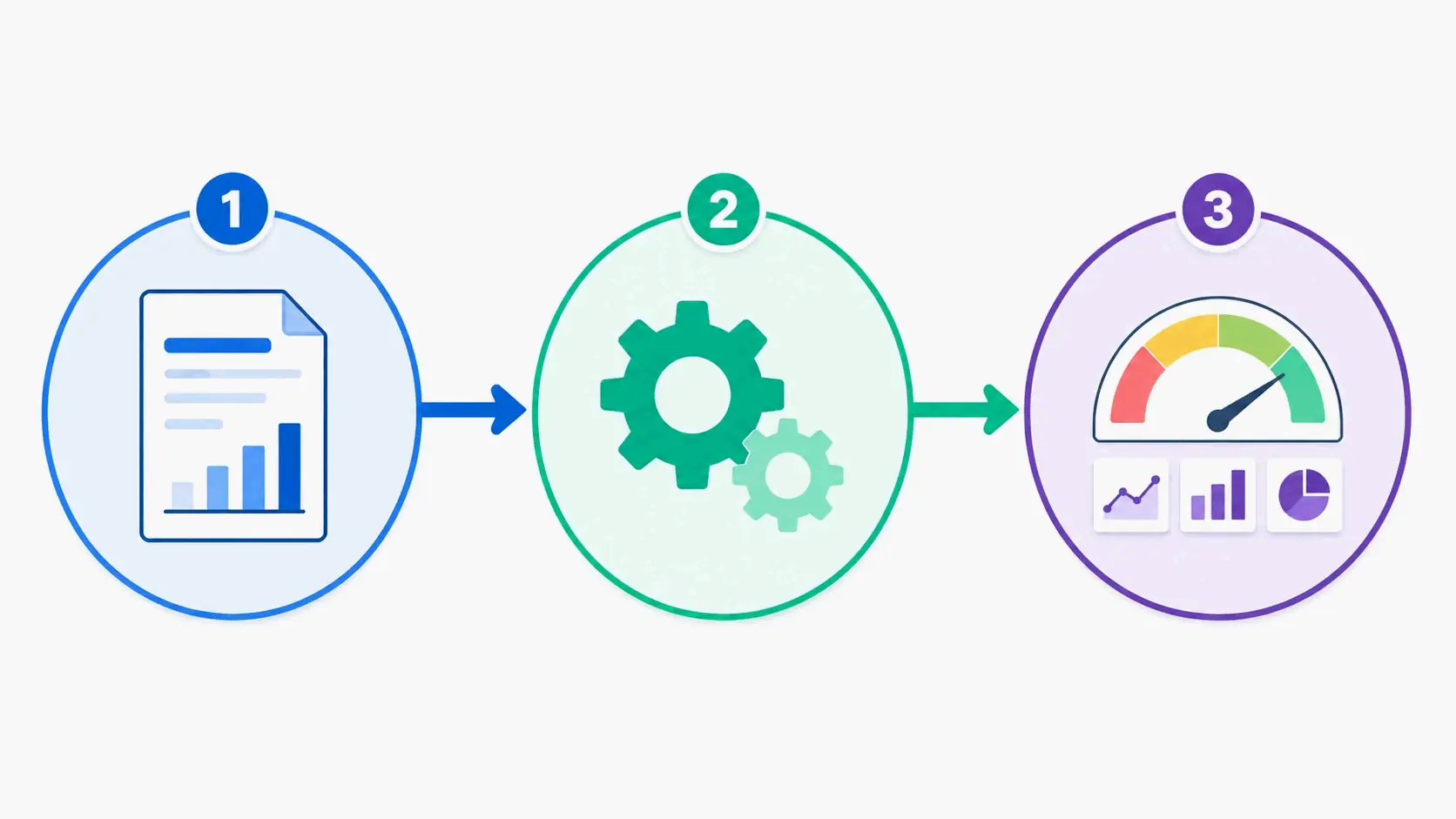
To calculate ROI, you need a structured, longitudinal approach. Begin by auditing your current citation performance. Run a one-off check using a manual tool or an agent’s audit feature to establish a baseline “before” picture of your Citation Rate across a fixed set of 20-30 prompts. After you implement a content optimization strategy informed by your agent’s gap analysis, run the same check again after three months. The change in your citation rate is your direct performance improvement.
Be realistic about timelines: GEO gains are cumulative. An improvement in citation rate during months 1-3 will start to drive a measurable increase in LLM referral traffic, followed by a small number of leads in months 3-6. The real payoff comes over a 6- to 12-month period as the compounding effect kicks in. Your brand becomes a trusted, consistently cited entity across the LLM landscape, and your share of voice turns into a steady pipeline source.
Conclusion
The best SEO Agent for ChatGPT, Claude, and Gemini isn’t a one-size-fits-all choice. It depends on where you’re focusing your efforts, your budget, and your technical skill set. AIclicks shines at deep Claude citation tracking with a direct GA4 integration that proves value. Profound delivers enterprise-grade GPTBot-level analytics for teams that need maximum coverage and scale. Rankscale.ai offers flexible, credit-based GEO monitoring for precise budget control and a familiar user experience. To get started, run a free audit with Trakkr to see which platform is driving the most relevant value for your business. Then pick a paid agent that specializes in that channel. Set up continuous monitoring and establish a before-and-after citation benchmark. Measuring the compounding impact on your pipeline over the next 3–6 months will give you the clearest proof of your investment’s ROI.
FAQ
What’s the difference between an AI SEO Agent and an AI SEO Agency—and which one should I choose?
An AI SEO Agent is automated software for monitoring LLM visibility, while an AI SEO Agency is a service company that manually executes strategy. Choose an Agent if you have in-house SEO talent and need scalable, lower-cost ongoing monitoring. Choose an Agency if you lack internal resources and prefer a full-service consulting partner with a larger budget.
How can I get my brand cited in ChatGPT or Claude’s responses?
For Claude, publish authoritative, structured content with answer-first writing and named authorship, since it disproportionately rewards domain expertise. For ChatGPT, build broad authority through external citations and brand recognition; it favors well-known entities. Use an agent like AIclicks or Profound to systematically track and close the specific content gaps your citation data reveals.
What’s the most important metric to track for Claude or ChatGPT SEO?
Citation Rate is the most critical metric. It measures how often your brand appears in AI-generated answers for your target queries. Track downstream referral traffic and lead attribution via GA4 integration to connect citations to your pipeline, but the leading indicator of success is your share of voice within the AI answer itself. Continuous monitoring is essential because ChatGPT changes its cited sources 54.1% month-over-month.
Can traditional SEO tools like Ahrefs or Semrush track AI search engine visibility?
No. Traditional SEO tools track search engine results pages (SERPs), not the synthesized answers generated by LLMs. They can’t monitor which URLs are cited in ChatGPT or Claude’s natural-language responses. You’ll need a specialized GEO platform such as AIclicks, Profound, or Rankscale.ai to track your brand’s visibility and citations in this new search landscape.
