


A direct GEOWriter vs MarketMuse comparison is a rare sight online. Our analysis shows they serve two distinct content eras. MarketMuse excels at deep topic planning and audits. GEOWriter automates end-to-end content creation and tracks visibility in AI search engines like ChatGPT and Google AI Overviews.
Contents
- GEOWriter vs MarketMuse: A Tale of Two Content Strategies
- Redefining the Comparison: Why “GEO Readiness” is the New “Content Score”
- Head-to-Head: A Practical Workflow Showdown
- Beyond the Draft: Audits, Scale, and the Content Lifecycle
- The Real Cost of Ownership: Pricing and Team Fit
- The Migration Reality Check: Moving from MarketMuse to a GEO-Centric Stack
- Conclusion
- FAQ
GEOWriter vs MarketMuse: A Tale of Two Content Strategies
To compare GEOWriter and MarketMuse in 2026, you have to grasp a basic shift in how content drives business value. AI search engines like ChatGPT, Perplexity, and Google AI Overviews have added a discovery layer that older content optimization tools simply weren’t built for. The question isn’t just “does my content rank well on Google?” anymore. It’s “is my content being cited by AI engines when my audience asks a question?”
MarketMuse works as a strategic content intelligence platform. Its strength is deep topic modeling and content inventory analysis. It crawls your website, maps your content coverage against competitors, finds topic gaps, and assigns personalized difficulty scores. In short, it answers what to write, at a strategic level.
GEOWriter fills a gap that MarketMuse leaves open. Instead of just giving you strategic advice, it automates the whole content engineering pipeline: AI-powered briefs, content creation, optimization, and—most importantly—tracking whether that content shows up in AI-generated answers. As SlateHQ puts it, “MarketMuse excels at telling you what to write. [GEOWriter] picks up where that insight ends.”
The real difference isn’t about which tool is “better” in a vacuum. It’s about whether you need a strategic advisor for content planning, or an engineering suite that handles GEO execution and tracks AI visibility.
The Architect vs. The Engineer: A High-Level Analogy
Picture MarketMuse as the architect: it draws the blueprints, surveys the competition, and tells you what to build and where. GEOWriter is more like the engineering firm: it takes those blueprints (or creates its own) and handles construction, quality control, and ongoing monitoring. One designs the strategy. The other executes and measures performance across both traditional and AI search environments.

Redefining the Comparison: Why “GEO Readiness” is the New “Content Score”
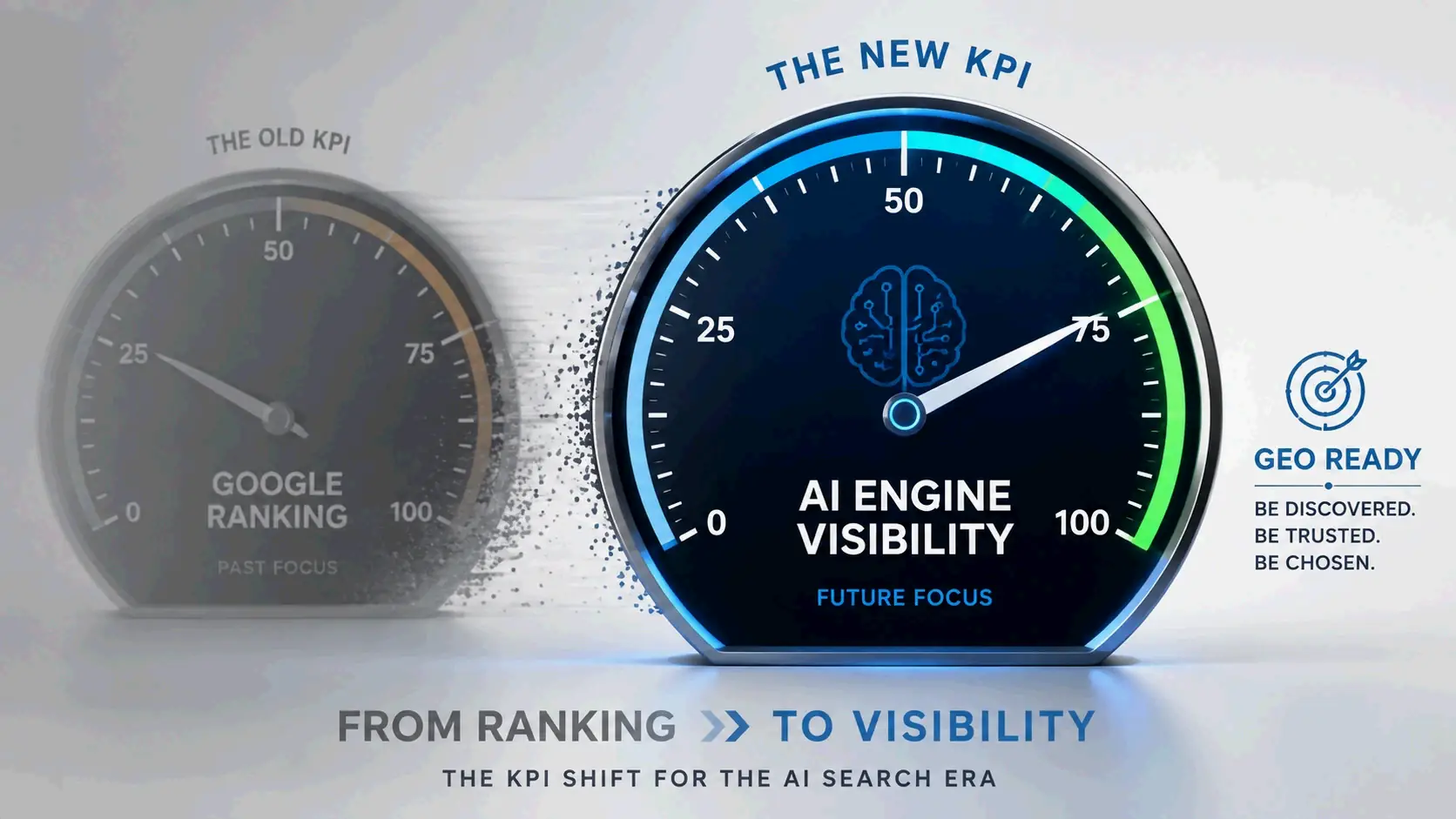
Content teams are shifting their primary KPI from “Is this optimized for Google?” to “Is this optimized for discovery and citation by AI engines?” Traditional content scoring—the numeric or letter-grade you get from tools like MarketMuse and Clearscope—measures how well you cover a topic compared to competing pages in a standard search results page. That score still counts, but it no longer tells the full story of where your content gets seen.
In 2026, when someone asks ChatGPT “what’s the best project management tool for remote teams,” they don’t get ten blue links. They get a synthesized answer that cites specific sources. And when Google’s AI Overviews answer a query before you even scroll to the organic results, the content cited in that overview wins the visibility. A platform that only optimizes for traditional rankings is targeting a shrinking slice of discovery.
MarketMuse still centers its scoring on traditional search. Its Content Score measures topical coverage against a proprietary topic model and benchmarks it against competing pages. That tells you if your content is comprehensive by classic SEO standards, but it can’t tell you whether an AI model will extract and cite your content as a trusted source.
That’s where the GEOWriter comparison becomes a difference in kind, not just degree. GEOWriter was built with GEO principles from the ground up—not bolted on later. It treats AI discoverability as a first-class optimization goal, right alongside traditional rankings.
The GEO Readiness Checklist for Modern Content Teams
In 2026, a GEO-ready content tool needs to meet three standards. First, it should track brand mentions and citations across ChatGPT, Perplexity, Google AI Overviews, and similar AI engines—not just monitor traditional rankings. Second, it should support content structures that help AI models extract information: schema markup, Q&A formatting, clear sources, and research that’s worth citing. Third, its workflow should help you spot and fill gaps in AI-generated answers, treating those as optimization targets on par with traditional SERP features.
Tracking AI Citations: The Black Box MarketMuse Never Opened
MarketMuse simply has no way to track AI search visibility. If a CMO asks, “Are we showing up in ChatGPT answers?” MarketMuse can’t tell you. That blind spot—noted in several 2026 reviews of content tools—creates a real risk for teams whose leadership now expects AI visibility reports alongside standard SEO metrics. GEOWriter closes that gap with built-in AI citation tracking, giving you visibility into the discovery layer MarketMuse was never designed to monitor.
Head-to-Head: A Practical Workflow Showdown
The most concrete way to evaluate GEOWriter vs MarketMuse is to walk through a real task: creating and optimizing a new article for a target topic. The workflows differ fundamentally in philosophy and automation level.
Step 1: From a Blank Page to a Detailed Brief
MarketMuse creates briefs from its topic model by analyzing top-ranking pages and identifying entities, subtopics, and structural elements needed for comprehensive coverage. The brief tells you what to cover, but the drafting still falls to a human writer. GEOWriter takes a different path. It runs an AI-driven analysis of both SERPs and GEO signals to auto-generate a detailed brief. That brief includes traditional NLP entities and AI-optimization instructions—like how to structure content so it gets extracted, cited, and included in AI answers. And you can act on that brief right inside the same platform.
Step 2: AI-Assisted Drafting vs. Guided Human Writing
MarketMuse overlays a real-time Content Score in a text editor, guiding a human writer toward better topic coverage as they draft. The writer stays in full control; the tool is like a quality compass. GEOWriter automates the entire draft. Its generative AI produces a full article already optimized for traditional NLP entities and GEO citation principles. The content is built for AI readability from the get-go, not after rounds of retroactive tweaking.
Step 3: The Feedback Loop and Final Polish
MarketMuse’s feedback loop revolves around the Content Score and personalized difficulty metrics. It spots topic gaps versus competitors and suggests where deeper coverage might lift rankings. GEOWriter gives you real-time feedback on a wider range of signals: ideal keyword density, AI readability scores, and E-E-A-T (Experience, Expertise, Authoritativeness, Trustworthiness) indicators that matter for both traditional and AI search. The feedback is tuned for GEO optimization, not just beating competitors on the SERP.
Side by side, the workflows highlight a fundamental split: MarketMuse guides a human writer through optimization. GEOWriter automates the engineering and treats content like a product you build and monitor at scale.
Beyond the Draft: Audits, Scale, and the Content Lifecycle
Content strategy extends beyond individual articles. The tools diverge sharply in how they handle the broader content lifecycle—audits, inventory management, scaling, and maintenance.
When Strategic Audits Matter: MarketMuse’s Content Inventory Deep Dive
MarketMuse’s Content Inventory is genuinely unique. It crawls your whole site, flags decaying content, spots cannibalization, and maps topic clusters against domain-wide authority gaps. If you’re a content lead managing 2,000 pages and deciding where to invest next quarter’s resources, this kind of strategic audit is invaluable. An analysis by Cited, based on 242 G2 reviews and 428 Capterra reviews, found that enterprise teams with dedicated content strategists gain the most from these advanced features.
But there’s a catch that tempers that strength. The same analysis notes that “most content teams use only 2-3 of MarketMuse’s six applications regularly”—mainly Optimize and Research. That gap means a lot of teams pay enterprise-level prices for strategic features they never fully use, overpaying for inventory analysis they don’t touch while still lacking execution and AI-tracking capabilities.
When Velocity and AI Visibility Matter: GEOWriter’s Automated Engine
GEOWriter puts its focus elsewhere: end-to-end workflow automation, content velocity, and AI visibility tracking. It’s built for teams that crank out a lot of GEO-optimized content, manage an editorial calendar, and need to track how each article performs across AI search engines. Instead of making you piece together a planning tool, a writing tool, an optimization tool, and a CMS, GEOWriter keeps the whole cycle connected in one system.
If your main KPIs are AI visibility and content velocity, GEOWriter’s streamlined, automated approach cuts out the complexity of juggling multiple apps. The trade-off is that it doesn’t go as deep on traditional content inventory analysis—that’s where MarketMuse still wins.
The Real Cost of Ownership: Pricing and Team Fit
The pricing models mirror what each platform offers. MarketMuse’s standard plan runs about $7,500 a year ($625/month), based on pricing data gathered by Cited. That’s a premium investment that only makes sense with significant content volume. GEOWriter charges $1/article (pay-as-you-go, free trial), bundling AI writing, GEO optimization, and AI tracking at $1 per article that costs less per article than any competing platform.
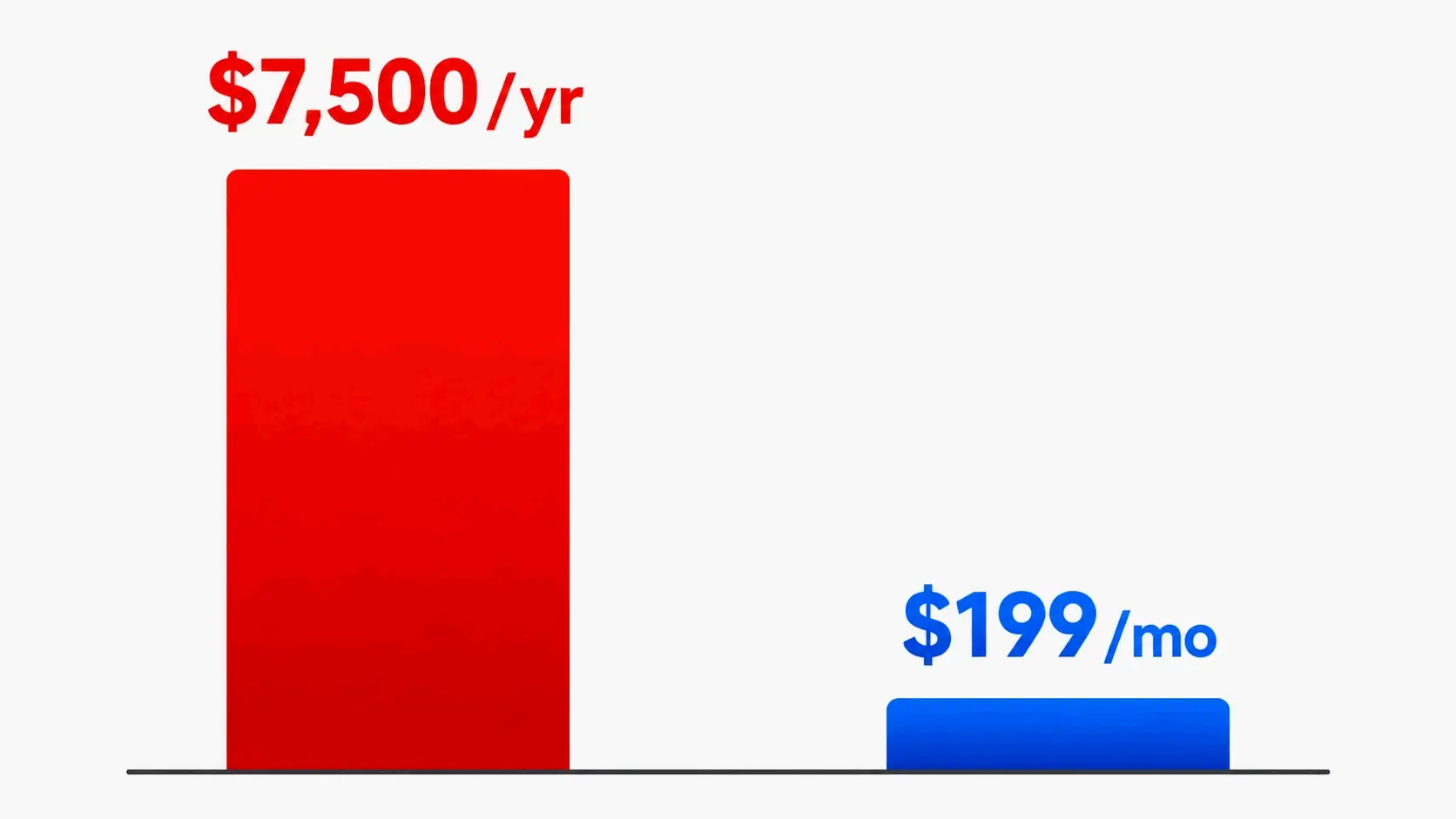
That price gap creates different buyer profiles. The AI-First Growth Lead—a role that barely existed when MarketMuse was built—has needs a traditional content strategist doesn’t. An agency content director juggling multiple client sites needs workflow automation that MarketMuse’s planning-first approach doesn’t offer. An enterprise SEO strategist managing 500+ pages may still find MarketMuse’s inventory and topic modeling indispensable. And a solopreneur just needs an affordable path to a complete GEO workflow without an enterprise-level price tag.
Pricing Breakdown and the True Cost of Visibility
Migration data from Cited shows that teams switching from MarketMuse to more execution-focused tools save roughly $4,872 a year. But the true cost goes beyond subscription fees. You also have team training, template conversion, and a first-month productivity dip of 10-15%. For a five-person team, that adds up to 56-108 hours of hidden migration costs. At a blended rate of $50/hour, that’s $2,800-$5,400 in labor—recoverable within one to three months from the subscription savings alone.
Who Should Choose GEOWriter in 2026?
GEOWriter fits three profiles especially well. First, the AI-First Growth Lead—common at B2B SaaS companies where AI visibility is now a board-level metric—needs GEO tracking and automated execution MarketMuse can’t provide. Next, the Agency Content Director managing multiple client sites gets value from GEOWriter’s client management and workflow automation, which can deliver higher client ROI than a heavier audit approach. Finally, the Solopreneur or lean content team gets access to a full GEO workflow at a fraction of MarketMuse’s cost, making competitive AI visibility possible without an enterprise investment.
As Megan from Topical Map AI puts it, tools are now being “built for individual creators, agencies, and content teams who need structured topic discovery and clustering without enterprise-level investment.” GEOWriter fills a similar role for the GEO era—bringing capabilities that used to be locked behind enterprise budgets.
Who Should Stick with, or Choose, MarketMuse?
MarketMuse is still the better pick for large content operations that need site-wide intelligence. If you manage 500+ pages and actually use Content Inventory, personalized difficulty scores, and competitive gap analysis across whole domains, you won’t find any GEO-focused tool that fully replicates that depth. Enterprise SEO strategists who think in terms of topic clusters and content decay cycles will continue to draw real value from MarketMuse.
The Migration Reality Check: Moving from MarketMuse to a GEO-Centric Stack
Migration isn’t a simple tool swap—it’s a whole workflow shift. In a case study documented by Cited, one agency team that moved from MarketMuse to a more execution-focused tool spent 72 hours on migration, saw a 15% productivity dip in month one, and saved $4,872 per year. They got back to baseline by month two.
Moving to GEOWriter is a different calculation. You’re not just trading one optimization tool for another; you’re adopting an automated content pipeline that changes how content goes from idea to published, tracked asset. The migration means exporting MarketMuse’s content inventory, pinpointing the highest-priority topics for GEO optimization, and setting up GEOWriter’s AI tracking for your key brand terms.
A 5-Step Migration Checklist for a Smooth Switch
A structured approach makes migration much smoother. Step one: export MarketMuse’s content inventory—topic models, content scores, competitive gap analyses, and priority lists—so you don’t lose that intelligence. Step two: identify the highest-priority topics for GEO optimization based on AI search opportunity, not just traditional ranking potential. Step three: configure GEOWriter’s AI tracking for your brand terms across ChatGPT, Perplexity, and Google AI Overviews. Step four: run a 30-day parallel pilot on 10 key pages, using both tools while your team gets comfortable. Step five: review the results for AI citation growth, not just traditional ranking changes.
The ROI calculation moves from simple cost savings to gains in velocity—more GEO-optimized content published faster—and qualitative wins—new visibility in AI engines MarketMuse could never track. The productivity dip is real but recoverable, and you’ll typically break even in 1-3 months.
Conclusion
The GEOWriter vs MarketMuse debate isn’t about which tool is universally better. It’s about which strategic priority you serve: human-led content architecture for traditional search, or AI-powered content engineering for generative AI visibility. MarketMuse is still a strong pick for enterprise teams with large content libraries that need deep topic modeling and inventory analysis. GEOWriter tackles a different, more urgent need: automated content creation optimized for AI search discovery, with built-in citation tracking across ChatGPT, Perplexity, and Google AI Overviews.

Be honest about your 2026 content KPIs. If brand visibility in AI-generated answers is a top concern, trying a GEO-first platform like GEOWriter is a logical, low-risk next move. The discovery layer has shifted—your content tool needs to match the reality your audience lives in.
See also: GEOWriter vs AI SEO Tools: The Ultimate 2026 Comparison — a comprehensive comparison of GEOWriter against all major AI SEO tools.
Related comparisons: GEOWriter vs SurferSEO · GEOWriter vs Frase
FAQ
What are the cheapest alternatives to MarketMuse that still offer strong content optimization features?
Tools like Surfer SEO ($49/month billed yearly) and Frase ($49/month) both offer robust on-page content scoring at a much lower price point. NeuronWriter, starting at $23/month, gives budget-constrained teams an even more affordable NLP-driven option.
Can any MarketMuse alternative track if my content is being cited by ChatGPT or Google AI Overviews?
This is the main blind spot for traditional tools. GEOWriter was built specifically for this—it monitors brand mentions and citations across major AI engines. MarketMuse and most alternatives in its class don’t have this capability at all.
What are the hidden costs of switching from MarketMuse to a different platform, and how long does migration take?
The main costs are time and a short-term productivity dip. Migration can take 40-70+ hours for a content team, factoring in exporting briefs, retraining your workflows, and a potential 15% productivity drop in month one, according to Cited’s migration analysis. You’ll typically break even within 1-3 months.
Which MarketMuse alternative is best for agencies managing multiple clients?
Frase and Surfer SEO are popular for their client-friendly, collaborative features. GEOWriter’s automated end-to-end workflow and AI-tracking capabilities give agencies a unique, high-ROI service for clients focused on modern AI visibility—helping them stand out in a crowded market.
How does Surfer SEO compare to MarketMuse for on-page content optimization?
Surfer gives you real-time SERP analysis and a detailed Content Score, while MarketMuse offers topic-level optimization modeling. Research cited by Cited shows Surfer’s score has a 0.28 correlation with rankings—so it’s a helpful signal, but not the whole story. For pure optimization workflows, it’s a direct and more affordable alternative.
