


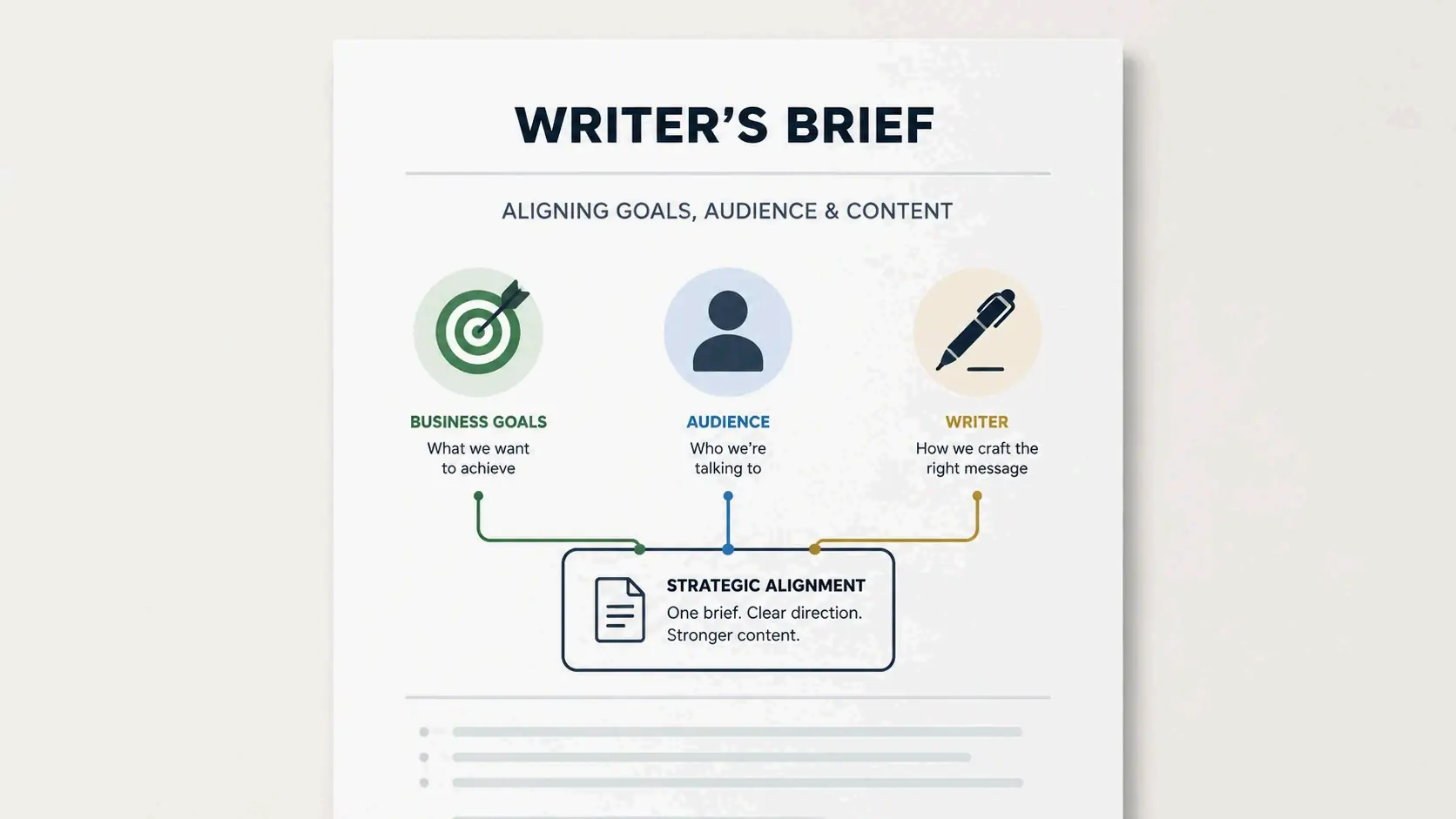
A writers brief is a short, strategic document that gets your team aligned on the project’s goal, target audience, and one clear message—so the final draft ends up focused and useful. This guide walks you through how to write one, step by step, and gives you a checklist to pressure-test your brief before any drafting starts.
Contents
- What Exactly is a Writer’s Brief? (And What It’s Not)
- The Core Problem: How a Weak Brief Sabotages Great Content
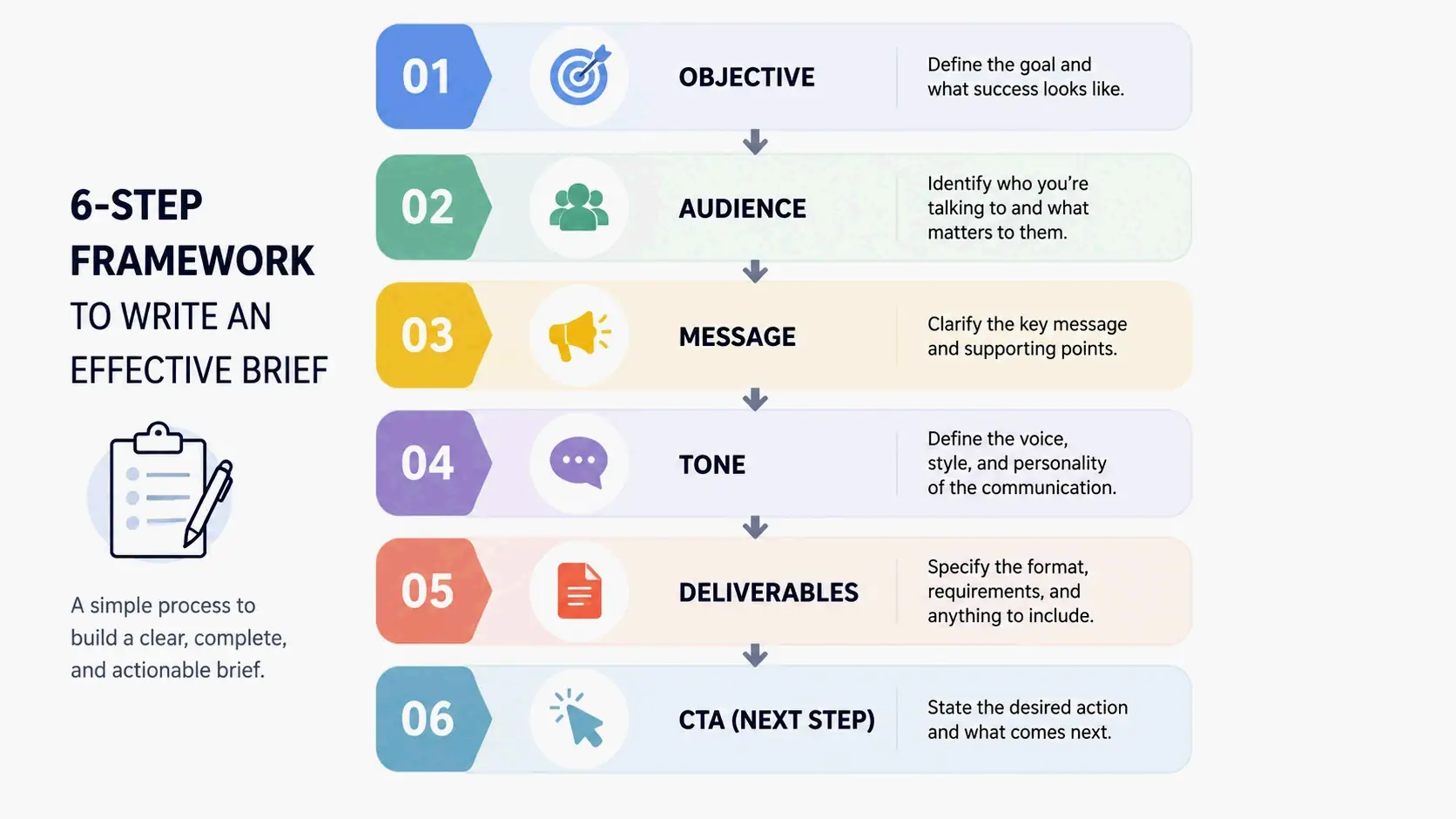
- How to Write a Writers Brief: A 6-Step Framework
- Going Deeper: Supporting Elements for a High-Performance Brief
- The Brief Self-Assessment: A 4-Question Pressure Test Before You Send It
- Future-Proofing Your Brief: A Note on AI and Answer Engine Optimization (AEO)
- Conclusion
- FAQ
What Exactly is a Writer’s Brief? (And What It’s Not)
A writer’s brief works like a strategic instruction manual for a specific piece of content. It spells out the business goal, who you’re writing for, the core message, and the practical requirements that turn a loose topic into a focused, effective draft. Unlike a vague email or a topic suggestion, a proper brief hands the writer everything they need to produce work that matches the brand strategy from the very first sentence.
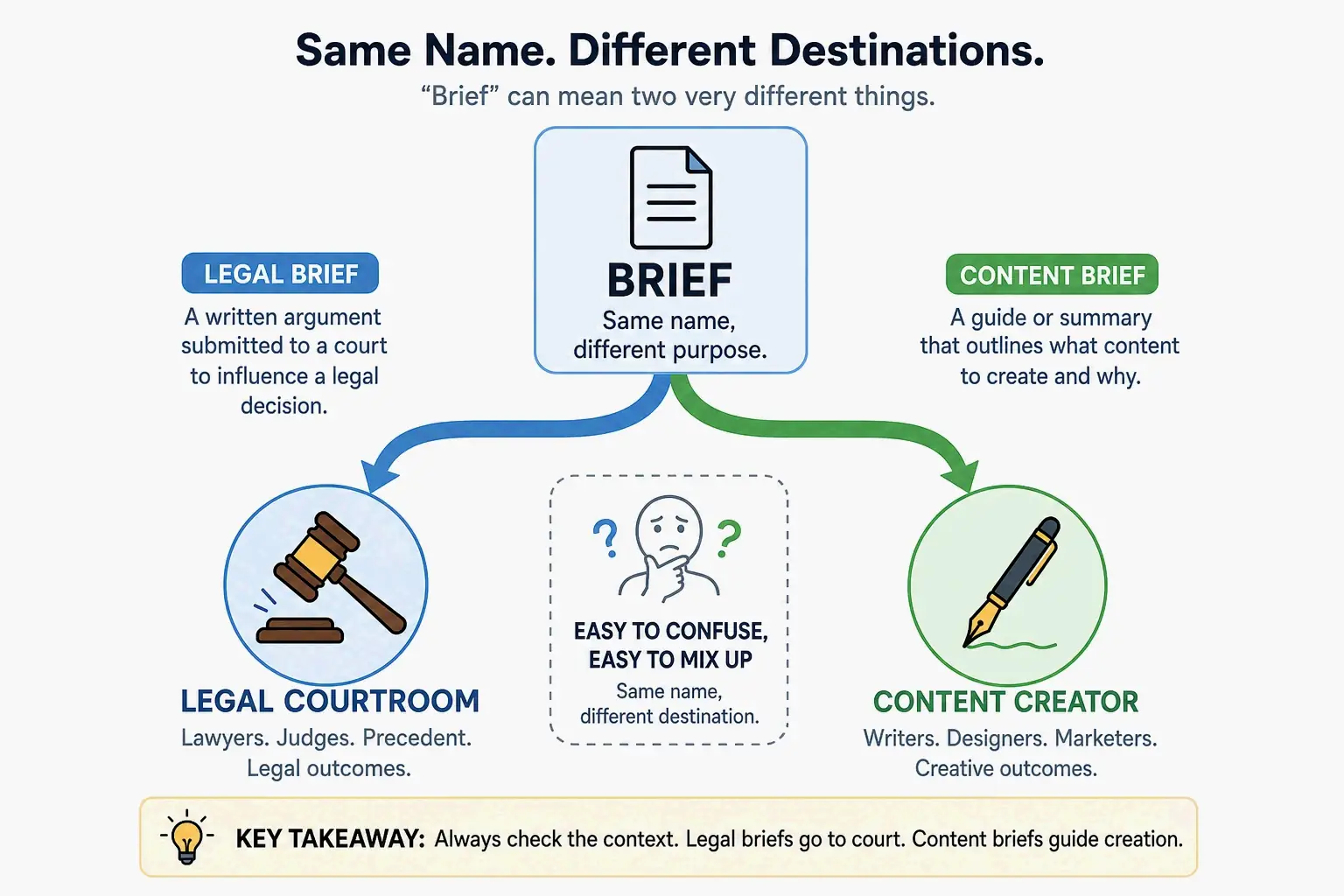
One common point of confusion—especially in search results as of 2026—is the overlap with legal briefs. A legal brief is a formal written argument submitted to a court. It lays out legal precedents and evidence to support a case. A content or creative brief serves an entirely different purpose: it gives instructions to a creator, not arguments to a judge. The two formats share a name but operate in separate universes.
A writer’s brief isn’t a rigid set of rules, either. As Neil Dennis, writing for GAIN Creative Studios, notes, “The brief is a starting point, a launch pad to something new, exciting and successful.” It should offer enough structure to keep the work on track while leaving room for the writer to find a creative, non-obvious angle. A brief that dictates every subheading and sentence produces compliant content—not compelling content.
The core purpose is alignment. The brief connects the business objective with the audience’s needs and the writer’s execution. Without it, the writer guesses, the editor corrects, and the final piece drifts away from the strategy that justified the project in the first place.
The Core Problem: How a Weak Brief Sabotages Great Content
A weak brief doesn’t just damage one section of the finished piece. The trouble ripples through the entire draft, creating structural failures that no amount of line editing can fix. The cause-and-effect chain is predictable and expensive.
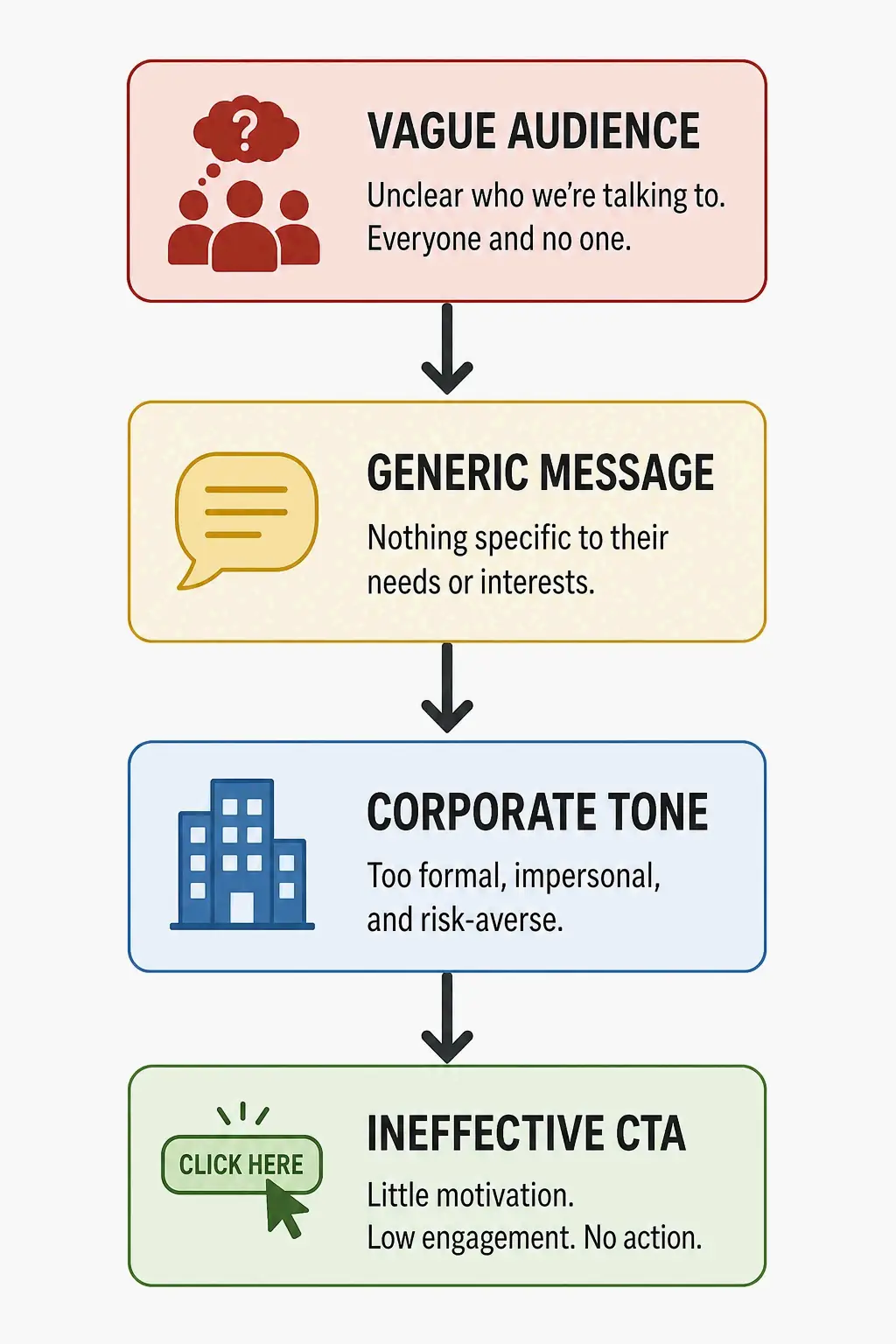
Consider what happens when the target audience is too vague. If the brief describes the reader as “everyone” or “small business owners” with no further context, the writer can’t figure out the right level of detail. Beginners need simple explanations and foundational concepts. Experts want sharper analysis and less hand-holding. Without that guidance, the draft will feel too shallow for one group and too technical for the other—satisfying neither. The key message then turns generic because no specific reader need is being addressed. The tone of voice defaults to safe, corporate-speak because the writer has no sense of who is listening. And the call to action flops because it asks for an action that doesn’t match any real reader’s stage of readiness.
The business cost of this breakdown is measurable. Textuar, a content writing service, directly links brief quality to content quality in their June 2026 guide: “The better the brief, the better the content quality.” When the brief is hazy, you don’t just get a weaker article. You get guaranteed extra revisions, mixed messaging, and a draft that fails to hook readers from the opening line. Time spent rewriting is time stolen from publishing, promoting, and measuring the content’s impact.
The specific elements most vulnerable to this cascade are the Target Audience, the Key Message, the Tone of Voice, and the Call to Action. When these four pieces are weakly defined or missing, the brief stops functioning as a strategic document and becomes merely a topic assignment. The writer is left to make decisions that should have been made before the project was commissioned.
How to Write a Writers Brief: A 6-Step Framework
Building an effective brief follows a logical sequence. Each step builds on the previous one, and the order matters. Starting with the objective ensures every later decision serves the business goal. Ending with the call to action ensures the content has a clear destination.
Step 1: Define the Objective (Start with ‘Why’)
The objective isn’t the topic. It’s the business outcome the content needs to deliver. Start by asking: If this piece succeeds, what specific action will the reader take?
Frame the objective in plain language. Don’t stop at “write a blog post about automation.” Explain whether the piece should build awareness, educate prospects, support a product page, or move a reader toward requesting a demo. Textuar’s guide emphasizes this distinction: “An educational article would feel different from a lead-generation page, even if the topic overlaps.” A writer who knows the goal is “educate SaaS founders on workflow automation benefits” will make fundamentally different choices than a writer told to “drive signups for our automation tool.”
A clear objective also defines what the content should avoid. If the piece is for top-of-funnel awareness, it shouldn’t push for a sale. If it’s for bottom-of-funnel conversion, it shouldn’t spend paragraphs on basic education. Stating these boundaries up front cuts down on confusion and revision cycles later.
Step 2: Profile Your Audience Beyond Demographics
You need to know more about your audience than their job titles and industry labels. According to Textuar’s sample content brief structure, the target audience field should answer not just who they are, but what they care about. For a SaaS blog project about workflow automation software, the defined audience isn’t just “SaaS founders.” It’s “SaaS founders, operations managers, product teams, and startup leaders looking to reduce manual work.”
Add context that shapes the writing. What does this reader already know? What frustrates them? What decision are they trying to make? Textuar’s guide provides helpful prompts for this section: Who will read this first? Which problem are they trying to solve? What level of knowledge should the writer assume? What action do they need after reading?
Poor audience definition directly sabotages the next step. If the brief doesn’t specify who the message is for, the writer can’t craft a message that resonates with that specific person. A message aimed at everyone lands with no one.
Step 3: Craft the Single-Minded Message
This is the one core takeaway the reader should remember after finishing the piece. It’s not a list of features, benefits, or everything true about the product or topic. It’s a single idea, expressed clearly.
VoiceDeck’s creative brief guide identifies this as the section most briefs get wrong. Their instruction is direct: “Write it as a single sentence in plain language a stranger would understand.” If you need the word “and” to fit a second idea in, you have two messages. The work will then end up saying neither clearly.
The single-minded message also bridges audience and tone. If the message for a skeptical technical audience is “automation reduces errors, not jobs,” the tone must be data-backed and empathetic, not edgy and disruptive. The message dictates the emotional register of the piece. If that connection is unclear, the draft will feel misaligned even if every sentence is technically correct.
VoiceDeck’s pressure test for the message is worth applying immediately: Does it come from a real audience insight? Can your reasons to believe actually back it up? Could a competitor honestly say the same thing? If a rival could claim it word for word, sharpen it until only your brand can own it.
Step 4: Set the Tone of Voice and Style Guide
Tone shapes reader trust. If the piece should feel practical and warm, say so explicitly. If the brand avoids hype, state that boundary. Describe the voice with actionable language: “warm and empathetic but data-backed” is clearer than “professional.” “Edgy and disruptive” is clearer than “bold.”
Textuar’s guide emphasizes that tone guidance should include what not to do. “Mention words, phrases, or claims that should not appear.” This is especially critical in regulated or sensitive industries where a single loose phrase can create legal exposure. A content writing company that knows the guardrails can produce faster, more consistent work because they aren’t guessing where the line is.
Tone emerges logically from the audience and message defined in the preceding steps. If the brief specifies a message for risk-averse operations managers, the tone can’t be casual or flippant. The connection should be traceable: Audience A plus Message B yields Tone C. When the brief makes this chain visible, the writer understands not just what the tone is, but why it is that way.
Step 5: Detail the Deliverables and Specifications
Ambiguity in this section causes more revision rounds than any other brief component. Specify the format, the expected word count, required sections, and hard deadlines.
Textuar’s SaaS blog brief example demonstrates the level of precision needed. The suggested word count is “1,000 to 1,200 words.” The content angle is defined as “Practical and benefit-driven. Show how SaaS teams can save time, improve collaboration, and scale operations with automation.” The brief also lists the primary keyword, secondary keywords, and search intent. These details transform the writer’s task from “write about automation” to “write a 1,000 to 1,200-word, benefit-driven article optimized for informational intent, targeting readers who want to understand how automation software improves efficiency.”
Include internal links that must appear, terms that must be used, and products or services that must be mentioned by name. If a specific heading structure is required, list it. The goal is to remove every logistical question the writer would otherwise need to ask.
Step 6: Specify the Call to Action as a Non-Negotiable
The call to action gives the content its purpose. It’s the practical endpoint of the objective and the message. Without a CTA, content feels open-ended and the reader receives no direction on what to do with the information they just consumed.
Textuar’s guide states this clearly: “Every brief should tell the writer what the reader should do next. This might be to book a demo, read another article, download a guide, or contact the team.” The CTA must also match the reader’s stage. A top-of-funnel blog shouldn’t push for a sales call. A bottom-of-funnel page should guide the reader directly toward conversion. The brief should make that choice explicit.
A CTA for an awareness campaign—“Read our case study on automation results”—differs fundamentally from a CTA for a product demo request. The brief should specify not only the action but the language and placement. If the CTA belongs at the end of the article, say so. If it should appear as an inline prompt, specify that too.
Going Deeper: Supporting Elements for a High-Performance Brief
Standard briefs cover the six elements above. High-performance briefs go further, adding layers that speed up drafting, improve factual accuracy, and strengthen the credibility of the core message.
Why Including SEO and Keywords Isn’t Optional Anymore
SEO guidance in a brief does more than help content rank. It ensures the writer addresses the actual questions readers are asking. Include the primary keyword, a few related terms, and any internal links that matter. Also note whether the page should target informational search intent or something closer to conversion intent.
Textuar’s 2026 guide adds a forward-looking dimension: “Also ensure that the content is optimized for generative and answer engines like ChatGPT and AI Overviews.” This means formatting content in a structured way, applying a clear H1-H5 heading hierarchy, and incorporating elements like FAQs and tables where appropriate. A brief that ignores this dimension produces content that reads well to humans but remains invisible to the AI systems that increasingly mediate search results.
Providing Content Structure and Trusted Sources
Writers work faster and more accurately when they know the expected shape of the piece. List the headings you want, the sections that must appear, and any terms that should be included. If facts or data points must be incorporated, provide the approved sources or documents directly. Textuar’s guide notes that this practice “helps keep the content accurate and prevents guesswork” while also preventing claims that are too broad, outdated, or impossible to support. Approved sources also reduce the time writers spend on research, shifting their effort toward synthesis and structure.
Arming Your Writer with ‘Reasons to Believe’
The single-minded message requires support to be credible. Reasons to believe are the proof points, data, examples, and logic that back up the core claim. If the message is “automation software saves SaaS teams 15 hours per week,” the reasons to believe might include case study results, workflow diagrams, and expert commentary.
VoiceDeck’s brief structure explicitly includes this field, treating it as essential to message credibility. Connecting the reasons to believe back to the single-minded message ensures that every piece of evidence in the draft serves the central argument rather than distracting from it. A message without support is an opinion. A message backed by specific, verifiable reasons to believe becomes a position the reader can trust.
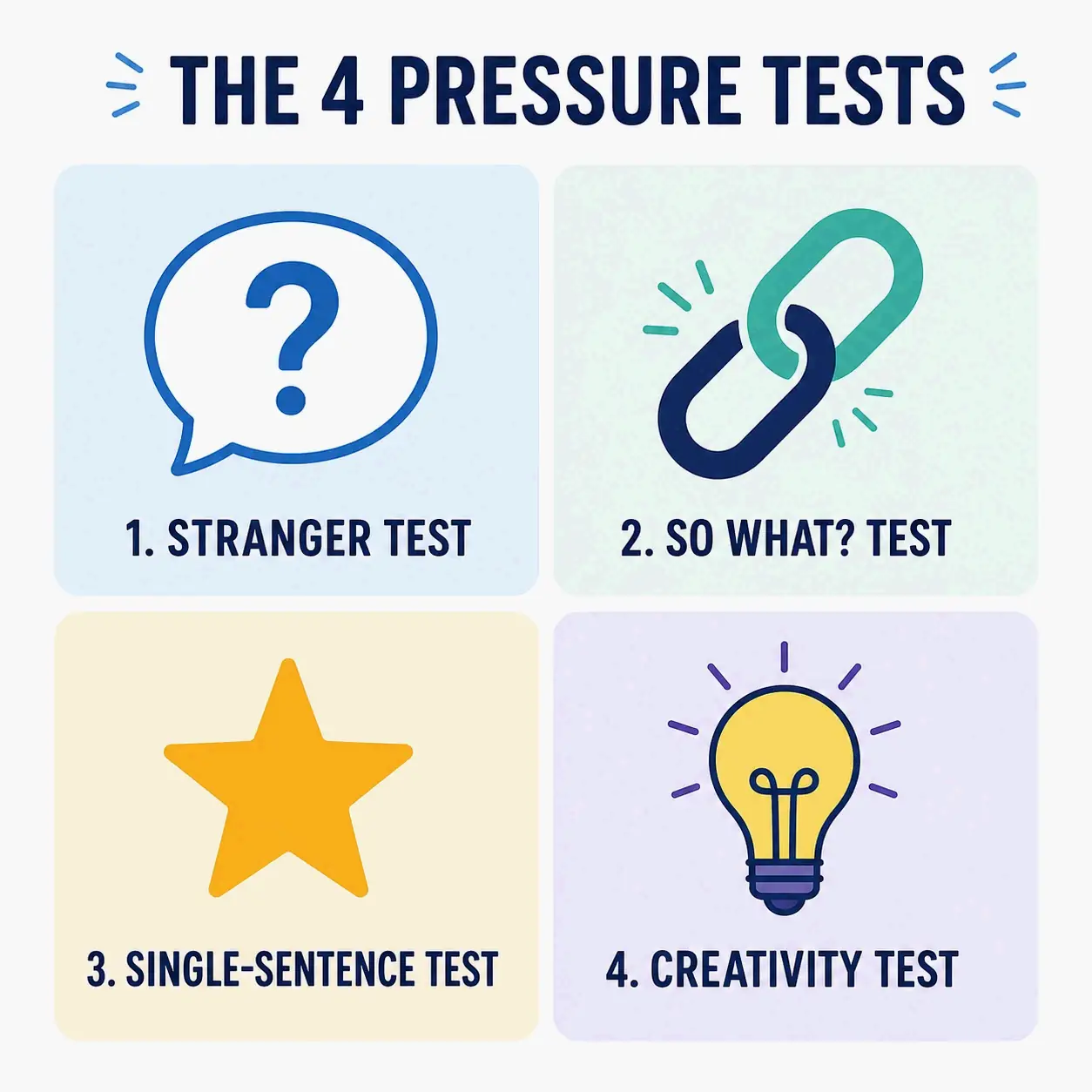
The Brief Self-Assessment: A 4-Question Pressure Test Before You Send It
Even a carefully written brief can contain blind spots. Apply these four tests before sending the brief to your writer. Each test targets a specific failure mode that otherwise only becomes visible after the draft arrives.
The Stranger Test. Can someone entirely outside your industry read the single-minded message and understand it? VoiceDeck’s guideline is the benchmark: the message must be “a single sentence in plain language a stranger would understand.” If an outsider cannot paraphrase your core message after one reading, the brief isn’t clear yet. Jargon, internal shorthand, and assumed context are the usual culprits.
The ‘So What?’ Test. For each element in the brief, ask “so what?” If the target audience is “marketing managers,” ask “so what?” until you reach a real need or pain point. If the objective is “increase awareness,” ask “so what?” until you reach a measurable business outcome. Every point in the brief should connect to either a reader need or a business goal. Points that can’t survive this questioning are just filler.
The Single-Sentence Test. Ask the writer (or a colleague) to read the brief and then summarize its entire goal in one sentence. If they can’t, the brief isn’t focused. This test exposes briefs that contain multiple competing priorities, any one of which could derail the writing. A strong brief has one North Star that every section points toward.
The Creativity Test. Does the brief provide a solid foundation while still leaving room for a creative, non-obvious angle? Neil Dennis describes the brief as “a starting point, a launch pad to something new.” If the brief specifies every detail of the execution, the writer becomes a formatter, not a creator. The brief should define the destination and the guardrails, not the exact route. A brief that survives this test produces work that is strategically aligned yet creatively surprising.
Future-Proofing Your Brief: A Note on AI and Answer Engine Optimization (AEO)
The search landscape in 2026 is shaped by generative AI and answer engines that extract structured information from web pages. A modern writer’s brief should prompt the writer to think about how the content will be surfaced and consumed by these systems.
Include specific instructions for AEO-readiness. Direct the writer to produce concise, standalone definitions for key terms at the top of relevant sections. These definitions become the extractable answers that AI overviews pull directly from your content.
Specify the use of structured data formats where appropriate. Tables, bulleted lists, and clearly labeled comparison sections are more likely to be featured in AI-generated answer snippets. A brief that mandates these formats gives the writer concrete tools rather than abstract guidance.
Require a logical H1-H5 heading hierarchy that remains coherent even when stripped of surrounding visual context. AI systems parse heading structure to understand content relationships, and a clear hierarchy improves the chances that your content is selected and accurately represented. Textuar’s 2026 guidance reinforces this: formatting content for answer engines means applying structured headings and adding elements like FAQs and tables as standard practice, not afterthoughts.
Conclusion
A well-constructed writers brief isn’t just paperwork. It’s the most efficient risk-management tool you have for any content project. When the objective, audience, single-minded message, tone, deliverables, and call to action are clearly defined and aligned, the first draft lands closer to the target. Revision cycles shrink. Strategic intent survives the writing process intact.
Download the six-step framework above and apply the four-question pressure test to your next brief. Pick a piece of content already in your pipeline, draft the brief using the structure outlined here, and run it through the Stranger Test, the “So What?” Test, the Single-Sentence Test, and the Creativity Test. Then measure the difference in revision requests, time to publication, and content performance. A brief that passes these checks is ready to launch work that is strategic from the first sentence.
FAQ
What is the difference between a creative brief and a content brief?
A creative brief is broader, guiding a full marketing campaign across multiple channels including visuals, video, and taglines. A content brief is a focused sub-type, used specifically to guide a writer on a single asset such as a blog post, white paper, or landing page. The content brief inherits direction from the creative brief but narrows the scope to what the writer needs to execute a specific piece.
How long should a writers brief be?
It should be concise, typically one to two pages. The ideal length is the minimum required to provide absolute clarity on the objective, audience, and key message without becoming restrictive. VoiceDeck recommends one page as the target and two pages as the limit. A brief that runs longer is probably describing the project instead of briefing it.
What common mistakes should I avoid when writing a brief?
The most damaging mistake is a vague audience, such as targeting “everyone,” and listing product features instead of articulating a single-minded benefit message. Another critical error is omitting the call to action or providing no guidance on approved sources and keywords. Both gaps force the writer to guess at elements that should be strategically defined, leading to inaccurate or unfocused first drafts that require significant rework.
