


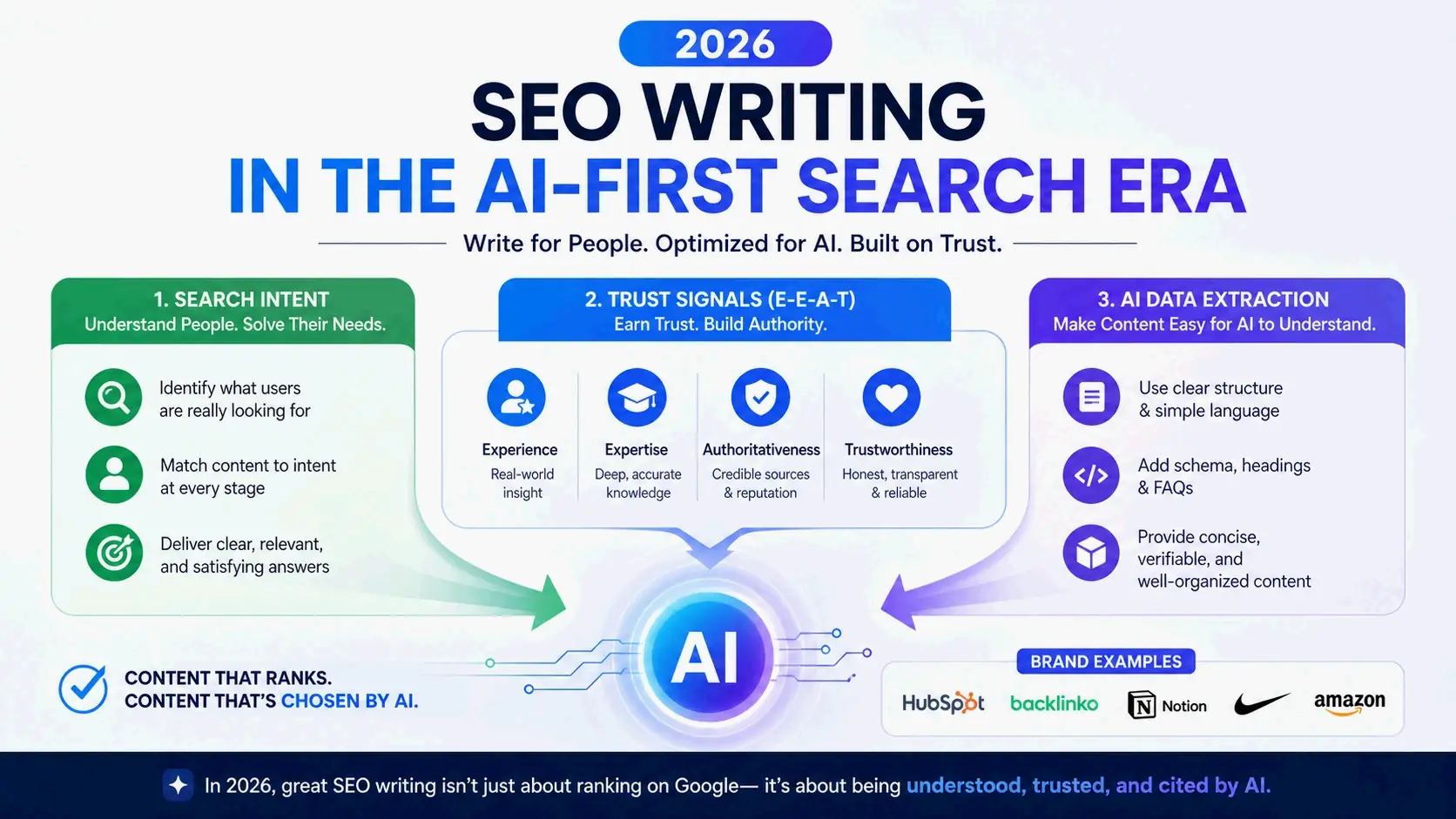
These real-world SEO writing examples show you exactly how top brands combine precise keyword targeting, visible E-E-A-T signals, and structured data to capture search traffic. We’ve broken down what’s working right now at Nike, Bankrate, NYT Cooking, and others — so you can swipe the tactics and adapt them for 2026’s AI-first search landscape.
Contents
- What Is SEO Writing? A Quick Working Definition for 2026
- Why Search Intent Must Drive Every SEO Writing Example You Study
- SEO Writing Example #1: Nike’s Product Page Architecture (On-Page SEO Precision)
- SEO Writing Example #2: How Bankrate Builds E-E-A-T Directly Into Editorial Copy
- SEO Writing Example #3: NYT Cooking’s Structured Data Play for AI Overviews
- How to Do Keyword Research That Shapes SEO Writing (and Where Long-Tail Fits In)
- SEO Writing Examples by Content Type: Blog Posts, Product Pages, and Local Pages
- Common SEO Writing Mistakes That Undo Good Keyword Research
- Writing Content That Earns Backlinks: The NerdWallet Content-First Approach
- How to Write SEO Content People Actually Read: Readability, Images, and Core Web Vitals
- Conclusion
- FAQ
What Is SEO Writing? A Quick Working Definition for 2026
SEO writing means building content that works for both human readers and search crawlers at the same time. Unlike general copywriting, every element — your H1 tag, your URL slug, your opening paragraph — has a dual job: it needs to communicate value to a person and signal topical relevance to an algorithm.
By mid-2026, the goal has expanded well beyond earning a blue link on page one. Your content now needs to be structured so AI Overviews, featured snippets, and generative engine responses can cite it cleanly. That means writing paragraphs in digestible chunks that AI systems can parse, placing direct answers high in each section, and using schema markup so the content becomes machine-readable without extra work.
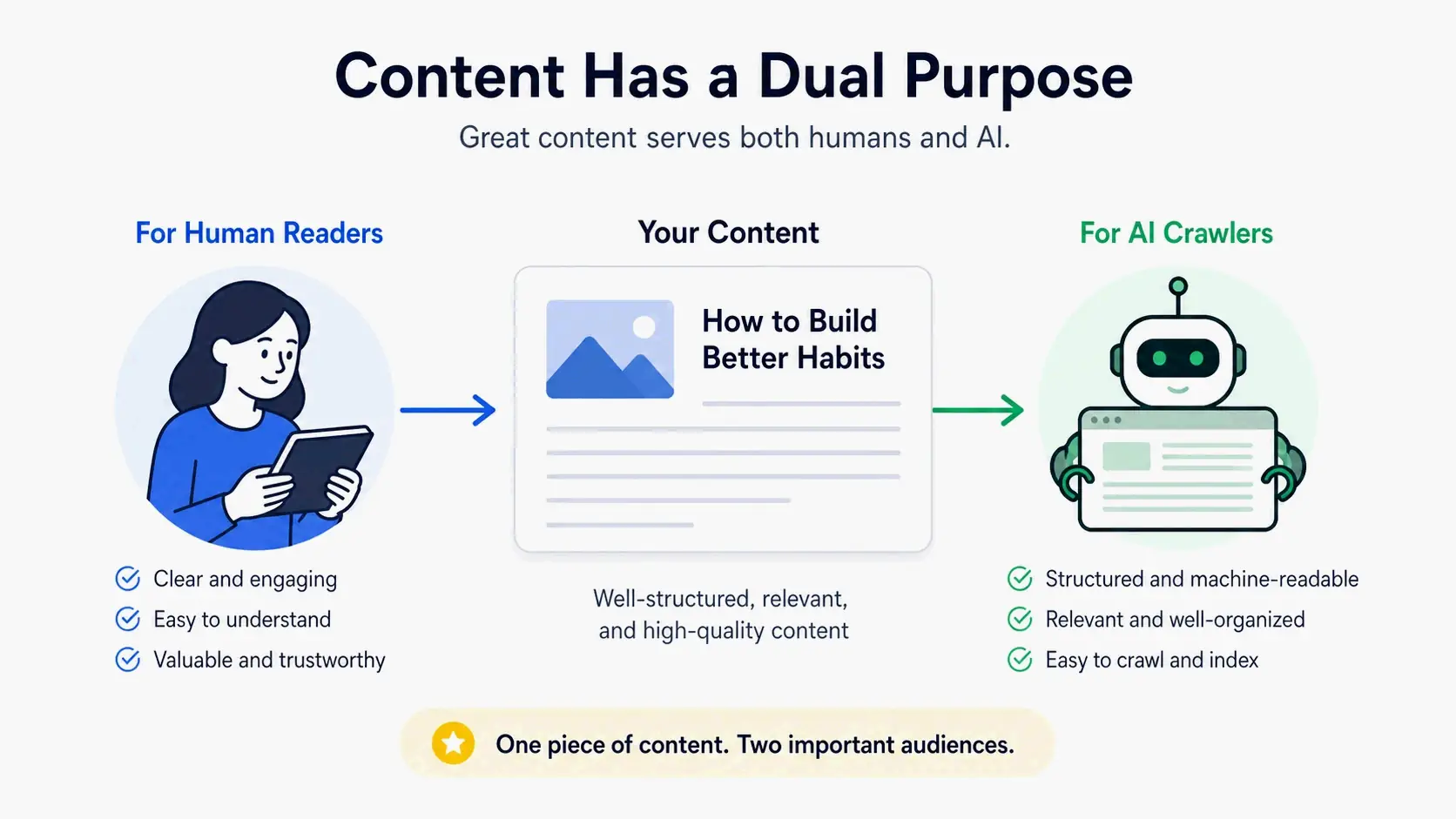
The biggest shift has been the move from pure keyword matching to satisfying search intent. Google’s ranking systems now reward content that addresses the “why” behind a query — not content that just repeats a target phrase over and over. The Calm Quill Writes notes that more than 90% of blog posts get zero organic traffic, a statistic that underlines how costly it is to ignore these principles. Writing for search intent means getting clear on whether a user is trying to learn, compare, buy, or navigate to a specific page, then delivering the exact format and depth that query demands.
Why Search Intent Must Drive Every SEO Writing Example You Study
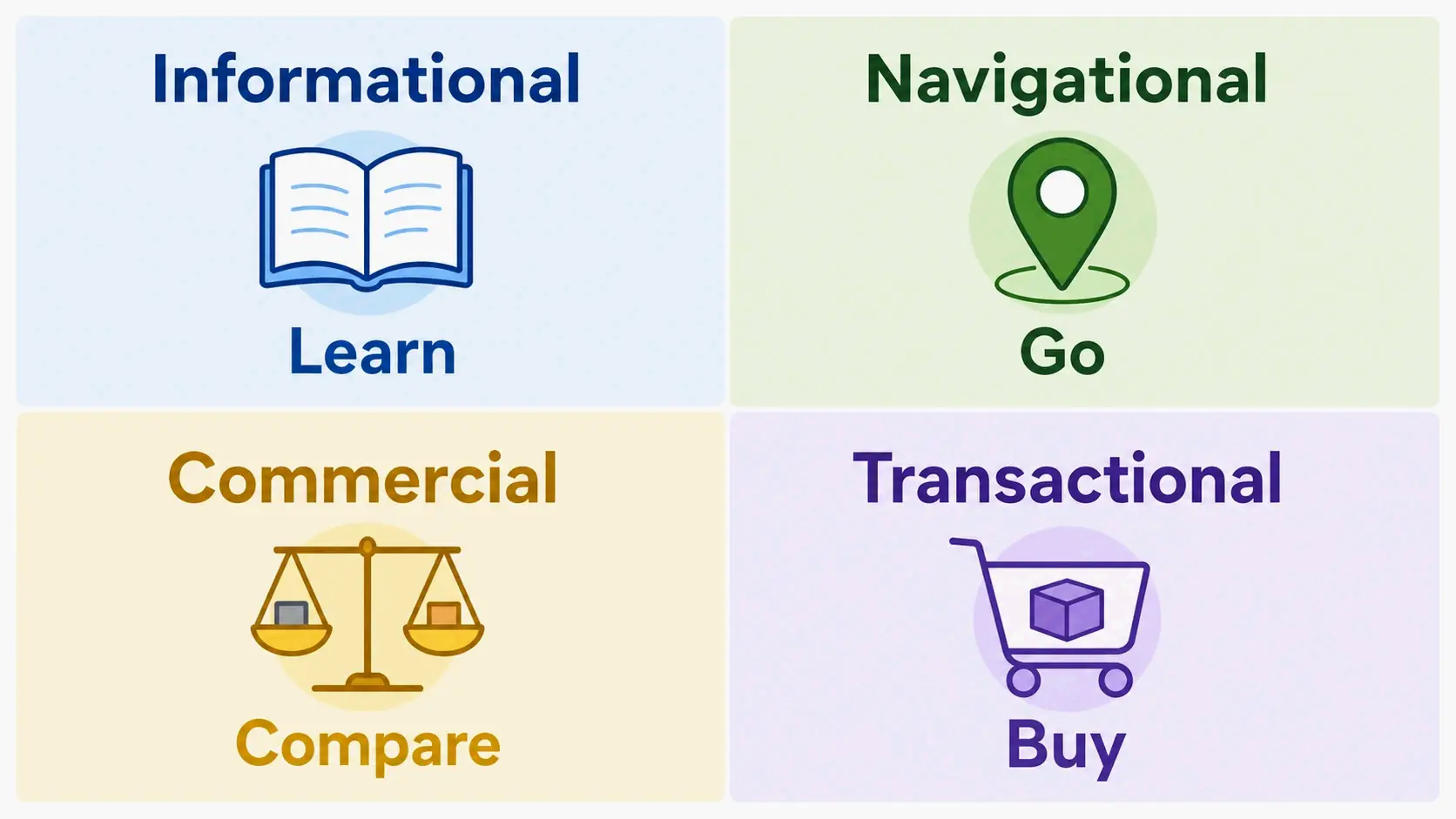
Search intent is the reason someone types a query into a search engine. The four main types — informational, navigational, commercial, and transactional — each call for a different structure and content format. If your content doesn’t match the intent behind a query, you’ll struggle to rank no matter how well you’ve optimized the keywords.
Informational intent covers queries where users want to learn something, like “how to write SEO content” or “what is E-E-A-T.” These searches demand in-depth guides, tutorials, or explainers. Navigational intent means the user is trying to reach a specific page — think “Nike product page” or “Bankrate mortgage calculator.” Transactional intent signals readiness to buy: queries that include “buy,” “discount,” or “near me.” Commercial investigation sits between informational and transactional; users are researching their options before a purchase, searching for things like “best SEO tools” or “Semrush vs Ahrefs.”
A quick example: “Writing Tips” is vague and doesn’t align with any clear intent. Rewrite it as “11 SEO Content Writing Tips for Creating SEO-Optimized Content in 2026” and suddenly the headline tells the reader exactly what they’ll get (actionable tips), the context (SEO content writing), and the timeframe (current year relevance).
Intent Before Keywords: A Quick Litmus Test
Before you write, type your target keyword into Google and study the top five results. Look at the dominant content format: are they blog posts, product pages, landing pages, or videos? Pay attention to common headings, depth of coverage, and what questions from “People Also Ask” are still unanswered. This SERP analysis reveals what Google considers a good intent match and highlights gaps you can fill with better content.
A common misstep is stuffing in keywords without covering the full user journey. Say you’re targeting “SEO writing examples.” A page that lists a bunch of examples but never explains why they work or how to replicate them won’t satisfy the commercial-investigation intent. Readers want both inspiration and real application.
SEO Writing Example #1: Nike’s Product Page Architecture (On-Page SEO Precision)
Nike shows how to weave primary and long-tail keywords into product pages without losing your brand voice. On a typical Nike product page, the product name — which also serves as the primary keyword — appears in the H1 heading, the URL slug, and the first body paragraph. For a shoe page, you’ll see clear, descriptive language that naturally incorporates the terms people actually search for when they’re buying.
Google’s crawler reads this content hierarchy as a clear topical signal. When the URL, H1, and opening paragraph all reinforce the same subject, the page achieves what search engines interpret as high relevance for that product category. Nike takes it further by publishing informational articles and FAQ sections about their products, which widens the keyword surface beyond transactional terms.
A common mistake: burying the primary keyword in generic marketing copy. Compare a product page that opens with “Welcome to our collection of premium footwear designed for the modern athlete” to Nike’s approach, where the product name appears right away. The difference is precision versus vagueness. The crawler recognizes the specific topic immediately in the first case; in the second, it has to guess.
Swipe the Technique: A Checklist for Your Product Pages
- Put the product name or primary keyword in the URL slug, H1 tag, and first paragraph.
- Write unique product descriptions instead of copying manufacturer text.
- Add Product schema to help crawlers index the page faster.
- Nestle long-tail variations naturally into subheadings and body copy.
- Link to related informational content that answers common buyer questions.
SEO Writing Example #2: How Bankrate Builds E-E-A-T Directly Into Editorial Copy
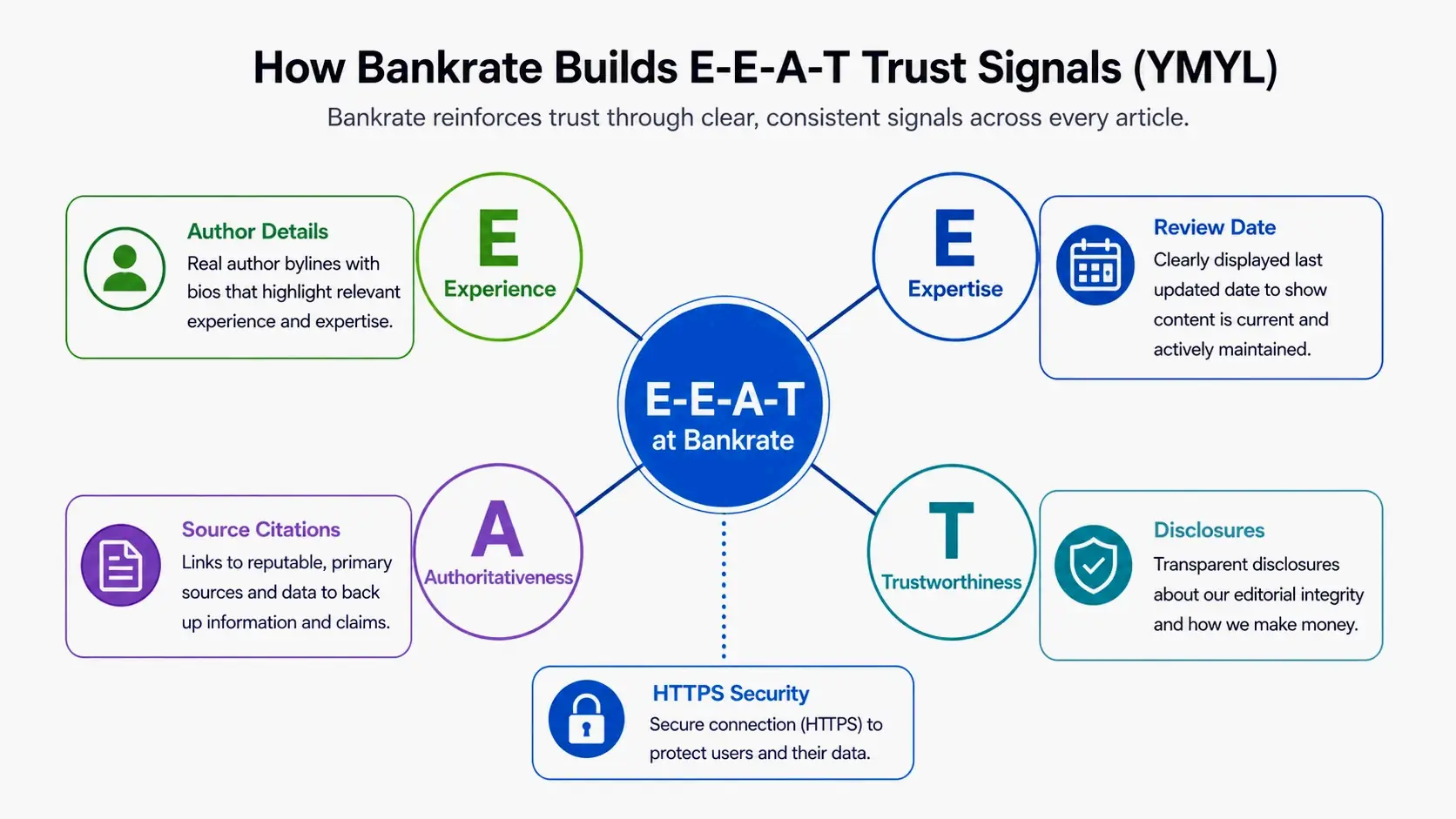
Bankrate is a model for embedding Experience, Expertise, Authoritativeness, and Trustworthiness (E-E-A-T) signals directly into editorial content — a practice that’s especially critical in Your Money or Your Life (YMYL) niches like finance. Every article features visible trust elements: author bios that list real credentials and years of experience, date-stamped editorial review panels showing when content was last reviewed, and direct citations of primary financial sources.
Why does this matter? Because Google’s Quality Rater Guidelines weigh E-E-A-T heavily for topics that can affect someone’s financial stability or health. When Bankrate links to an author page that details the writer’s education, industry experience, and articles published on other reputable sites, it creates entity associations that boost credibility. The site’s advertiser disclosure adds another layer of transparency.
The reverse example comes from Nathan Ojaokomo, a solo content writer whose personal blog growth case study illustrates how individual operators can signal Experience. Ojaokomo grew his site to nearly one million impressions in six months and built over $24,000 in organic traffic value. He did it by incorporating original screenshots of his Google Search Console data, sharing personal results from his writing process, and using first-person narrative to describe what worked. Where a large publisher relies on institutional authority, a solo creator can lean on documented firsthand experience — showing rather than just telling.
E-E-A-T Verification Checklist: 5 Signals Every Byline Needs
- A detailed author bio with years of experience and relevant credentials.
- Each byline linked to a comprehensive author page listing education, third-party publications, and areas of expertise.
- Date-stamped review information indicating when the content was last fact-checked or updated.
- Direct citations of primary sources with external links to authoritative domains.
- A site that uses HTTPS and clearly displays contact information to support the Trust component.
SEO Writing Example #3: NYT Cooking’s Structured Data Play for AI Overviews
NYT Cooking uses Recipe schema markup to make its content machine-readable, and that decision directly fuels its presence in AI Overviews. Specific schema fields — prepTime, cookTime, ingredients, and instructions — get parsed by AI generation engines into direct-answer blocks that show up at the top of search results.
As documented by SEO.com, this structured-data approach means NYT Cooking recipes are regularly cited in AI Overviews. When someone searches “how long does it take to make cold brew coffee,” the AI Overview pulls the prep time straight from the schema markup, rather than scanning unstructured text for a guess. Translating content into a format AI systems can digest cleanly is the core of generative engine optimization.
The typical mistake is optimizing only for the blue link. Traditional SEO focuses on ranking within the list of organic results. In 2026, your content also needs to be structured for AI extractability. A practical technique is to place a 40-to-60-word direct-answer paragraph right under each H2 section — a tight summary that states the key point in language an AI Overview can lift word-for-word.
GEO-Ready Paragraph Template: The 40-to-60-Word Rule
Under every major section heading, include a standalone paragraph of 40 to 60 words that gives the core answer directly. This paragraph should make sense when read on its own, naturally contain the target keyword, and avoid referring to other parts of the page. AI systems pull individual passages, not whole pages; each section needs to function as an independent, citable unit.
How to Do Keyword Research That Shapes SEO Writing (and Where Long-Tail Fits In)
Keyword research for SEO writing follows a reliable sequence: start with a seed topic, expand using search engine suggestions, analyze competitor gaps, and cluster your findings into pillar-and-cluster topic groups. This process doesn’t just tell you what terms to target — it tells you what kind of content each keyword demands.
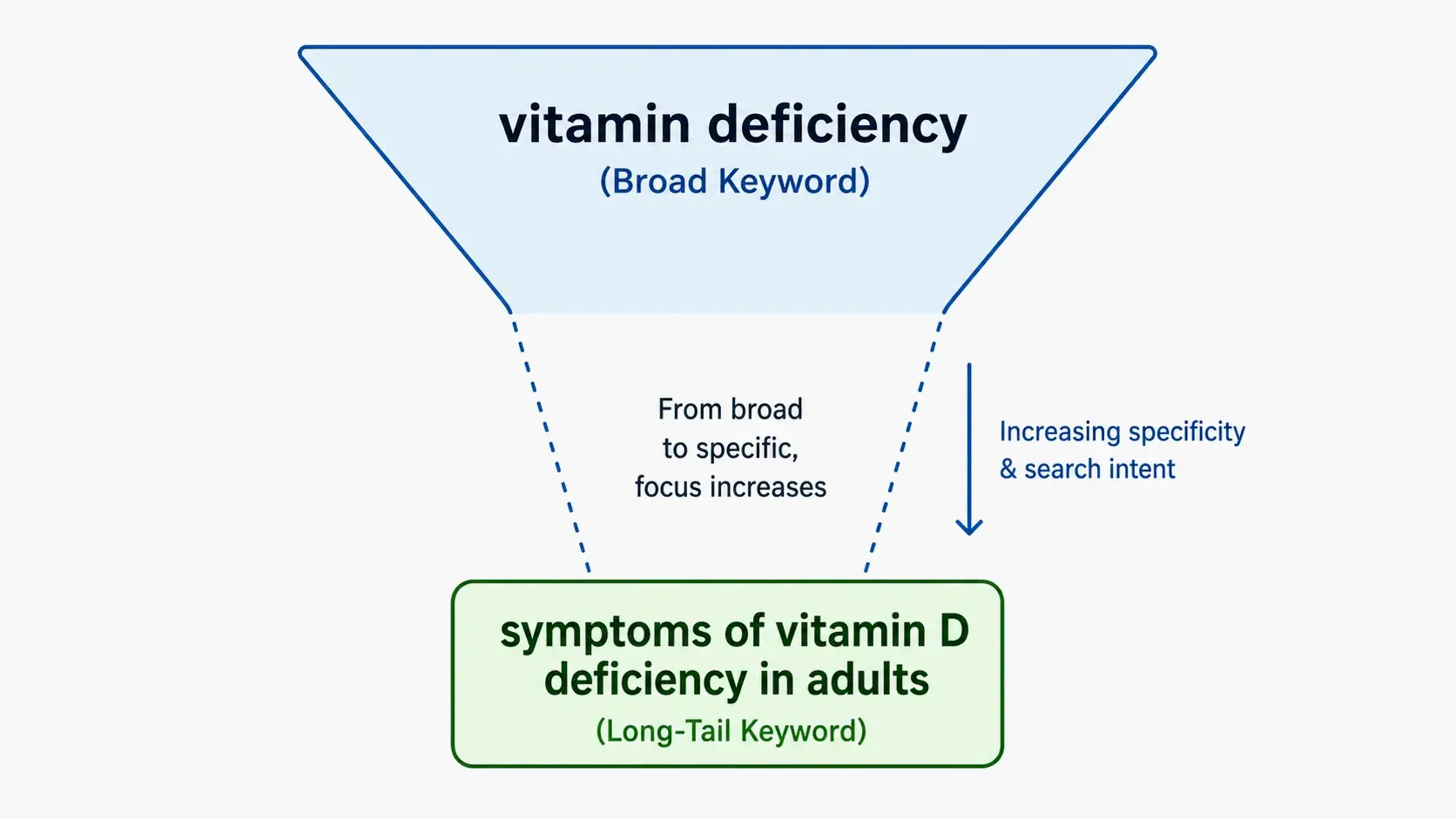
The key difference between a head term and a long-tail keyword comes down to specificity and intent. A head term like “vitamin deficiency” is broad and competitive. A long-tail variation like “symptoms of vitamin D deficiency in adults” signals clear informational intent and mirrors how people actually search. Tools like Google Keyword Planner (for search volume), competitive analysis features in Semrush and Ahrefs, and AnswerThePublic for question discovery all support this process.
But you don’t need paid tools to extract long-tail variations. Just use Google’s own features. Type a seed keyword and scroll to the “People Also Ask” section — every expandable question is a potential H2 or H3 for your content. The autocomplete suggestions that appear as you type reveal longer, more specific phrases that real users search for. Both methods are free and reflect genuine query patterns.
Cleveland Clinic in Action: Symptom-Specific Topic Targeting
Cleveland Clinic shows how to do long-tail keyword targeting at scale by building content around specific symptom-level queries. Instead of a generic page about vitamin deficiencies, they target phrases like “symptoms of vitamin D deficiency in adults.” This strategy earns them spots in top organic results, AI Overviews, and featured snippets all at once. The pages rank for zero-click searches because they match precise informational intent with authoritative, exact answers. Each symptom page works as a cluster article within a wider topical authority framework around health conditions.
SEO Writing Examples by Content Type: Blog Posts, Product Pages, and Local Pages
Different content types need different SEO writing strategies. Treating a product page like a blog post dilutes its transactional intent and confuses search crawlers about the page’s purpose. Let’s look at three content types that illustrate the variation.
For long-form blog content, Semrush models precise keyword integration. A Semrush blog post places the target keyword in the page title, H1, introductory paragraph, and table of contents links. The URL also includes the keyword, which further reinforces the topical signal to crawlers. Blog content prioritizes informational depth, internal links to related educational resources, and a structure optimized for featured snippet extraction.
For ecommerce category pages, Canva’s programmatic SEO approach generates templated content for thousands of design templates. Each page targets terms like “business card template” or “resume template,” folding the keyword into page titles and headings. Even though some pages lack meta descriptions, they still rank for high-volume searches because the programmatic structure matches commercial investigation intent. The pages offer immediate utility — users can start designing right away.
For local service location pages, Simon Roofing creates city-specific content with H1 headings such as “Commercial Roofing Services in New York” and body text that mentions specific neighborhoods like Mount Vernon and Yonkers. These pages include location-relevant details — landmarks, regional service descriptions, and local project images — so they don’t feel like generic service pages.
Content Type Cheat Sheet: Blog vs. Product vs. Local Page SEO Rules
Blog posts:
– Use a question-based or numbered-list title tag structure.
– Link internally to related informational content.
– Distribute keywords naturally across H2s.
– Emphasize author expertise signals.
Product pages:
– Put the product name first in the title tag.
– Link internally to related products and buying guides.
– Concentrate the primary keyword in the H1 and URL.
– Emphasize trust signals (reviews, shipping info).
Local pages:
– Include the city and service in the title tag.
– Link internally to other location pages and the main service page.
– Place the location keyword in the H1 and first paragraph.
– Emphasize NAP consistency and Google Business Profile integration.
Common SEO Writing Mistakes That Undo Good Keyword Research
The first major mistake is stuffing headlines until they become unreadable. A headline like “SEO Writing Services: Best SEO Writing Company for SEO Content Writing” sacrifices clarity for repetition. A cleaner version: “SEO Writing Services: Content That Ranks and Converts.” It places the keyword once and lets descriptive language carry the value proposition.
The second error is ignoring internal linking context. Adding a link isn’t enough — the anchor text should describe what the target page is about. “Click here” tells Google nothing. “Read our guide to keyword research” signals the linked page’s topic. Descriptive anchor text helps crawlers understand page relationships and spreads authority more effectively across your site.
The third mistake is treating image alt text as an afterthought. Alt text isn’t just an accessibility feature — it’s indexed content that tells search engines what an image depicts. Apple provides a clear contrast: its product pages use clean, descriptive copy alongside images that include properly written alt attributes. Each image reinforces the page topic instead of leaving an information gap for crawlers.
Fix It Fast: 3 Rewrites That Turn SEO Errors Into Assets
- Stuffed headline → clean: Place the keyword once and add a benefit.
- Generic internal link → SEO-valuable: Use keyword-rich anchor text that describes the destination page.
- Missing alt text → optimization opportunity: Add a concise, descriptive sentence that includes the keyword where it fits naturally.
These three fixes take a few minutes per page and directly improve crawlability and user experience.
Writing Content That Earns Backlinks: The NerdWallet Content-First Approach
NerdWallet demonstrates how to create content that attracts backlinks at scale. The brand’s cost of living calculator is a utility-first asset: users input their current city, a comparison city, and their income, and they get a personalized comparison. According to Ahrefs data cited by SEO.com, this single URL has picked up more than 5,000 backlinks from over 1,000 referring domains — including Wikipedia, Salesforce, and Yale.
The calculator succeeds because it pairs interactive value with scalable comparison data. Users get an immediate, personalized answer to a financial question. Publishers and researchers cite the tool as a data source, generating natural backlinks without any outreach. The format anticipates user needs by offering specific input fields instead of a static article.
You can replicate this approach without a development team by creating stat-based reference posts. A linkable asset starts with original data compilation — survey results, industry benchmarks, or pricing comparisons — presented in a structured format with clear tables, charts, and methodology notes. That format signals to other content creators that the page is a citable source, leading to backlinks from content that references your data.
How to Write SEO Content People Actually Read: Readability, Images, and Core Web Vitals
Readability signals have a direct impact on user engagement metrics, and those metrics feed into Core Web Vitals — which can influence rankings. Short paragraphs (two to three sentences), bullet structures for scannable information, and a conversational tone all help lower bounce rates and keep visitors on the page longer. When users stick around and interact with your content, search engines read that as a quality signal.
Visual content amplifies engagement. According to QUASA.io, posts with images generate 650% higher engagement compared to text-only content. That stat extends to SEO through optimized visual assets: descriptive file names that include keywords, alt text that describes the image content for both accessibility and search engines, and compressed file sizes that don’t drag down page speed.
Page speed directly affects user experience and revenue. Data originally reported by Amazon and cited via WebFX shows that a 100-millisecond delay in page load time can reduce sales by 1%. Unoptimized images and bloated copy blocks are usually the biggest culprits. Compressing images, using lazy loading for below-the-fold visuals, and choosing lightweight formats like WebP all contribute to faster load times and better Core Web Vitals scores.
Conclusion
SEO writing in 2026 rewards precision over volume. The winning formula combines a search-intent-first structure, visible E-E-A-T signals, and structured data designed for AI Overviews. Every example in this guide — Nike’s keyword placement, Bankrate’s trust architecture, NYT Cooking’s schema strategy — is a specific, replicable tactic, not abstract theory.
To put these insights into action, pick one SEO writing example that fits your content type and bookmark it. Run a 10-minute audit on your current page using the Intent Litmus Test from Section 2. Check whether your content format matches the dominant SERP result, whether your H1 contains the primary keyword, and whether each section opens with a clear answer an AI system could cite. Then rewrite your underperforming headline this week using the before-and-after structure shown in the intent section. Small, targeted changes compound into measurable ranking improvements.
FAQ
How long should SEO content be for ranking in 2026?
Aim for 2,100 to 2,400 words for comprehensive blog posts, but don’t add length just for the sake of it. Match word count to search intent — a simple definition might rank at 300 words, while a full guide needs more depth. Use competitor analysis to gauge content-length expectations for your target keyword.
Can I use AI tools to write SEO content without getting penalized?
Google’s guidance targets unedited, low-value AI spam, not AI-assisted writing. Disclose AI usage internally, add original Experience signals (like screenshots and case data), and apply strict human editorial review. The goal is AI efficiency combined with verifiable, E-E-A-T-strong human oversight.
Do I need expensive tools to start writing SEO-optimized content?
No. Start with Google autocomplete, “People Also Ask” boxes, and free tools like Google Search Console and Google Trends. Only invest in paid tools once scaled keyword data becomes necessary. Manual intent analysis costs nothing. The core skill is understanding user intent, which requires observation more than software.
What’s the difference between SEO content writing and regular copywriting?
SEO writing is structured for search engines with keyword-informed headings, internal linking, and snippet-optimized answers. Regular copywriting can be brand-focused and creative but may lack the crawlable architecture search algorithms need. The best modern SEO writing blends both — voice-led copy built on a search-intent framework.
How often should I update old blog posts for SEO?
Update quarterly for high-value cornerstone content and biannually for standard posts. Refresh statistics, replace expired example links, and update the publish date only when substantive changes are made. Use Google Search Console to identify pages with declining impressions — those should be your update priority.
