


Generative Engine Optimization (GEO) is how you get your brand cited in the answers that AI search engines—like ChatGPT, Perplexity, Gemini, and Google AI Mode—generate for users. Success here isn’t measured by traditional rankings; it’s about how often the AI mentions you. Understanding how to use AI in SEO is the foundation—GEO builds on that by restructuring your content to lead with direct answers, building verified entity authority, and making sure AI crawlers can actually find your pages. The path you take depends on your team’s size and resources, from solo creators to large enterprises.
Contents
- What Is Generative Engine Optimization (GEO) and Why It Matters Now
- Choose Your GEO Implementation Path Based on Team Resources
- How to Structure Content That AI Engines Can Cite and Trust
- Entity Optimization: From Keywords to Knowledge Graph Connections
- Platform-Specific GEO Tactics for 2026
- How to Measure AI Search Visibility and Prove GEO ROI
- The Quick Guide to Writing for AI Search Engines (For Non-SEOs)
- Conclusion
- FAQ
What Is Generative Engine Optimization (GEO) and Why It Matters Now
Generative Engine Optimization, or GEO, is the practice of earning citations in the synthesized answers that AI engines produce, rather than chasing a spot in a traditional list of blue links. That’s the fundamental difference. Traditional SEO is about positioning a page within a ranked list. GEO is about becoming the source material for the single, constructed answer an AI delivers. A page can be perfectly indexed and still never appear in a ChatGPT, Gemini, or Perplexity response. Getting from “indexed” to “cited” is the whole game.
The numbers show why this matters urgently. Similarweb’s zero-click research found that as of May 2025, 69% of searches ended without a click to any website. That number jumps to nearly 80% when AI Overviews are present. Users are getting what they need without ever visiting a source. If your content isn’t that source, you haven’t just lost a click—you were never part of the conversation.
The business case is just as compelling. Semrush’s AI Search Traffic Study found that visitors coming from AI platforms convert at roughly 4.4 times the rate of traditional organic traffic. These users arrive with higher purchase intent, their decision already shaped by what an AI told them. Showing up in AI answers isn’t a branding exercise; it drives revenue directly.
GEO doesn’t replace traditional SEO. It sits on top of it. Google Search Central makes it clear that their generative AI features are grounded in core Search ranking and quality systems. Every signal that earns a traditional ranking—authority, relevance, freshness, clarity—still matters for being eligible for an AI citation. Strip those fundamentals away in pursuit of “conversational” content, and you’ll lose on both fronts.
The Fundamental Shift: Rankings to Citations
In traditional search, a higher position means more visibility and more clicks. In AI search, visibility means getting cited. If the AI pulls your content into its synthesis and references your brand or article, you’ve achieved the GEO equivalent of a top ranking. If you’re not cited, you simply don’t exist in that answer, no matter how well your page ranks for standard SEO signals.
This shift from retrieving and ranking documents to generating synthesized answers changes how content is evaluated. AI models aren’t ranking pages against each other. They are building a single answer from multiple sources. The signals that determine which sources get pulled in—which ones get cited and paraphrased—are different. Authority still matters, but the type of authority has changed. Entity clarity, density of specific facts, and structured formatting now carry more weight than keyword placement or the sheer volume of backlinks.
The real-world implication is that the top-ranking page on Google isn’t automatically the most-cited one. The content that gets cited is the clearest, most authoritative, and most directly useful as a building block for the AI’s answer.
How AI Search Engines Actually Read Your Content (RAG Explained)
To work with GEO, you first need a basic grasp of Retrieval-Augmented Generation, or RAG. This is the mechanism powering most AI search responses right now. When someone asks a question, the AI engine doesn’t go digging through its old training data. It runs live web searches, pulls relevant content from current indexes, and synthesizes that information into a coherent answer. Google’s official documentation describes RAG as a grounding technique: it relies on core Search ranking systems to retrieve relevant, up-to-date pages from the Search index, then reviews specific information from those pages to generate a more reliable response.
RAG levels the playing field in a way traditional SEO never did. If your content is well-structured, fresh, and accessible to AI crawlers, it can be cited in a real-time response, regardless of how long your domain has been around. That’s why keeping content current and crawlable, with a clear structure, directly improves your chances of being cited.
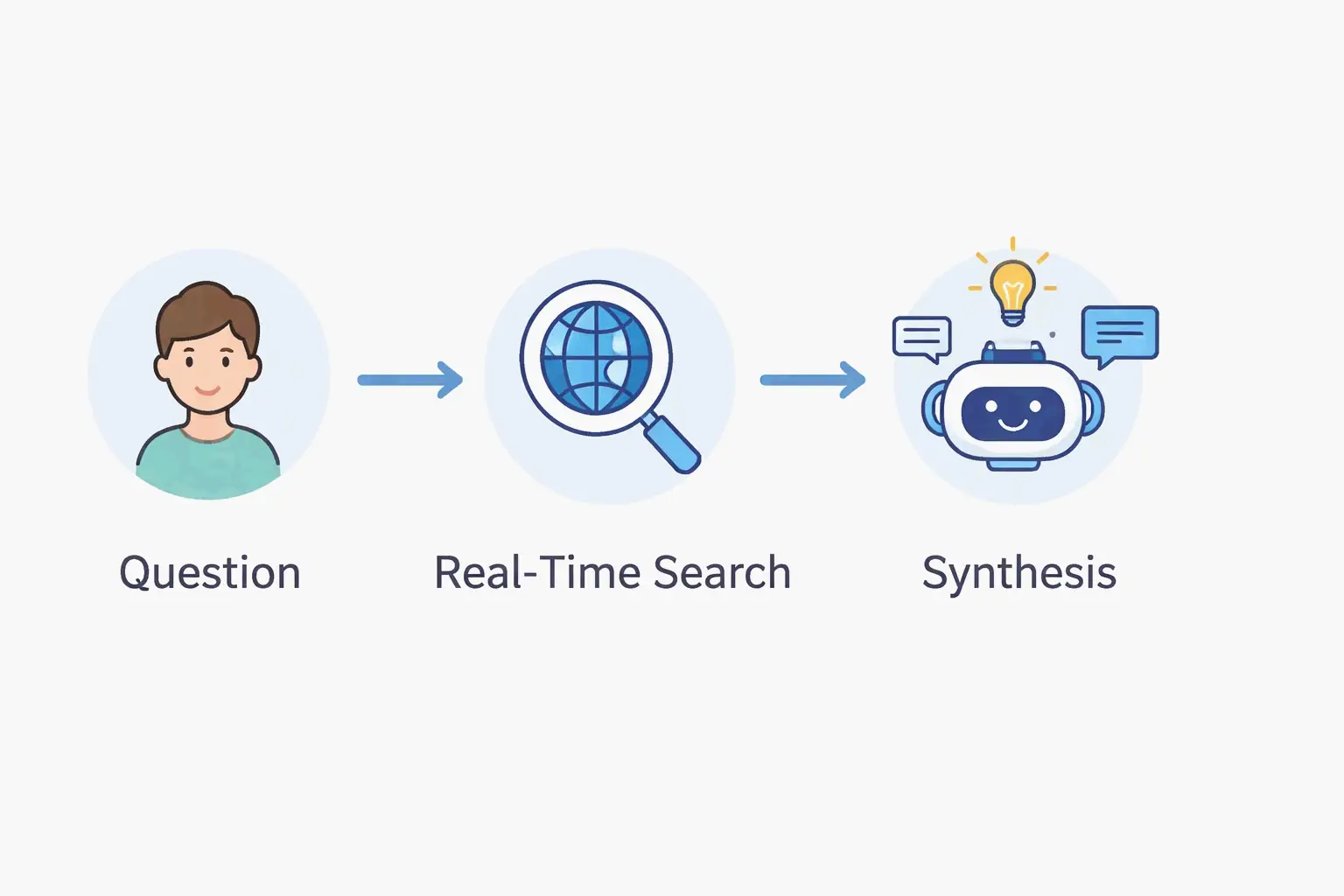
Along with RAG, AI search engines use something called Query Fan-Out. The engine breaks a single question into multiple smaller, simultaneous searches. A query like “best running shoes for flat feet” might fan out into searches for “arch support technology,” “podiatrist recommended running shoes,” and “flat feet running shoe reviews.” The engine then gathers the most relevant passages for each sub-query and knits them into a final answer. This process rewards content that tackles multiple related sub-questions within a single authoritative page, rather than content narrowly focused on one exact keyword.
Choose Your GEO Implementation Path Based on Team Resources
GEO is not a single playbook you apply the same way everywhere. The core principles—leading with answers, optimizing for entities, ensuring technical accessibility, and measuring correctly—don’t change, but how you execute them scales dramatically with your resources. What makes sense for a large company with a dedicated SEO team and engineering support doesn’t work for a solo operator. The following three tiers map GEO execution to the resources you actually have.
Adobe applied systematic GEO discipline across Adobe.com. The result: a 5x increase in citations for Adobe Firefly, a 200% increase in LLM visibility for Adobe Acrobat, and a 41% lift in LLM referral traffic within weeks. GM created LLM-friendly content pages, leading to a 23% increase in AI visibility and a 35% increase in citations. These aren’t just vanity numbers. They show GEO works at scale, but the underlying principles are accessible to anyone.
Tier 1: The Solo Creator’s GEO Quick-Start Kit
For solo creators and small teams, GEO starts with a few high-impact manual actions that require zero engineering support. The single most powerful move you can make is a BLUF (Bottom Line Up Front) rewrite of your top five pages. Rewrite the introduction of each page so the first two to three sentences directly answer the core question, without any warm-up. This structural change alone can shift your citation potential, since 44.2% of AI citations are drawn from the first 30% of a page’s content, according to Kevin Indig’s research analyzing over 100 million LLM citation instances.
For entity optimization, start with free tools to spot gaps. Search your brand name on Google and see if a Knowledge Panel appears. Run your brand plus key terms on Perplexity and ChatGPT to see if and how you’re cited. The GEO Score Checker at frase.io/tools/geo-score offers a free entity coverage breakdown.
For technical accessibility, confirm that AI crawlers aren’t blocked in your robots.txt file. Check for directives related to GPTBot, Google-Extended, and CCBot. If you use WordPress, install a Schema plugin for basic Article and FAQPage markup. These three actions—BLUF rewrites, an entity check, and a crawlability check—form a minimum viable GEO foundation.
The biggest constraint for solo creators is usually the speed-versus-quality tradeoff: producing GEO-optimized, E-E-A-T-compliant content takes time. End-to-end pipelines like GeoWriter—which handle research, writing, editorial refinement, AI tone removal, and image generation in a single pass at around $0.6 per article—can close that gap without sacrificing structural credibility. The point isn’t which tool you pick; it’s that your content ships with citation-ready structure from the start.
Tier 2: Scalable GEO for Growing Teams
Mid-size teams can move beyond fixing pages one by one to building a scalable content architecture. The central lever here is atomic H2 design: structuring every subsection of a page so it functions as an independently understandable answer block. An AI should be able to extract it without needing context from the sections above. Each H2 should open with a direct, 30- to 60-word answer in BLUF format. This creates content where every section is ready to be cited.
Structured internal linking around entity clusters becomes critical at this scale. Map your main, canonical entity to supporting spoke pages on narrower sub-entities, using descriptive anchor text that names the entity. Planning these hub-and-spoke topic clusters systematically—using keyword planning tools like kwmaster for P0/P1/P2 prioritization and kwplanner for cluster mapping—ensures you cover the full entity surface instead of guessing which sub-topics to write next.
Tier 3: Enterprise GEO Automation and Monitoring
Enterprise teams need full automation for visibility monitoring and programmatic content optimization. This includes dedicated GEO scorecards that track Brand Visibility Score, AI Share of Voice, and Prompt Coverage across all major AI platforms. Adobe Brand Visibility integrates LLM referral traffic with Adobe Analytics, connecting GEO efforts directly to revenue and conversions. Profound tracks brand visibility across more than 10 engines using a dataset of over 400 million real user conversations.
Programmatic Schema injection ensures every page carries Article, FAQPage, and Organization schema with validated sameAs links connecting your entity to Wikipedia, LinkedIn, and Crunchbase. Platform-specific optimization pipelines can then tune content for the distinct retrieval preferences of ChatGPT, Perplexity, Gemini, and Google AI Mode. This matters because, according to Superlines’ analysis of 34,234 AI responses, the same content can see a 615x difference in citation volume between the lowest and highest-citing platforms. Agencies building GEO practices for their clients can find a detailed operational playbook in our guide to GEO for agencies.
How to Structure Content That AI Engines Can Cite and Trust
Content structure is your most direct lever in GEO. AI retrieval systems don’t read an article from top to bottom like a person does. They break it into segments, evaluate each one independently for relevance and authority, and then pull the best-fitting segment from across many candidate documents. Kevin Indig’s 2026 research on over 100 million LLM citations found that 44.2% are drawn from the first 30% of a document’s text. This single insight should change your approach to content architecture. AI systems pull from wherever the clearest, most useful answer appears—and they look at the top of the page first.
Princeton and IIT Delhi’s original GEO paper found that including statistics with a clear attribution to a primary source can improve AI citation rates by up to 40% compared to unoptimized content. The combination of a strong structural position and specific, factual details creates the highest probability of getting cited.
The BLUF Method: Leading with Answers AI Can Extract Instantly
The Bottom Line Up Front principle means every section starts with a direct, 30- to 60-word answer to the question implied by its heading. That opening block is what AI systems extract first, and it carries disproportionate citation weight.
A good BLUF opener has a specific structure: a direct, plain-language statement of what the section covers, without any preamble. The pattern is consistent: “[Entity] is a [category] that [differentiator].” An article about GEO might open with: “Generative Engine Optimization (GEO) is the practice of structuring content so AI-powered search engines can retrieve and cite it accurately in synthesized answers.” The AI can lift that sentence verbatim into a response.
Cut all throat-clearing openers: “In this section,” “As you might expect,” “Before we dive in”—anything that sounds like that. These are wasted citation opportunities. The actual answer, the content you want cited, is buried behind text the retrieval system will skip.
Atomic H2 Architecture: Building Chapters That Stand Alone
Atomic section architecture means every H2 and H3 block must work as an independently citable answer. It needs to be complete enough to address the heading’s implicit question without requiring the reader—or the AI—to have read any prior section. A section that opens with “as mentioned above” or “building on what we covered earlier” is partially or wholly invisible to AI retrieval. These sections depend on context the retrieval mechanism doesn’t carry over.
Before you hit publish, read each H2 section in isolation. If it makes sense as a standalone 200-word answer, it’s ready. If it needs context from earlier sections to be understood, rewrite the opening to be self-contained. This isn’t a style preference. It’s a structural requirement.
This atomic architecture also supports Query Fan-Out. When an AI system fans out a query across multiple sub-questions, each independently citable H2 section can serve as a potential answer fragment for a different sub-query. A single well-structured article can earn citations across several facets of a complex question.
Before & After: Rewriting a Paragraph for AI Citability
Traditional introductions often spend a few sentences setting the scene before arriving at the core answer. This structure may read smoothly for a human, but it buries the extractable fact behind text the AI skims over. Here’s a real-world example of a traditional opening and its BLUF rewrite.
Before (traditional SEO style):
“In today’s rapidly evolving digital landscape, businesses are increasingly turning to artificial intelligence to power their search strategies. As more users shift from traditional search engines to conversational AI assistants, understanding how these systems work has become critical. In this article, we will explore the fundamentals of generative engine optimization and why it matters for your brand’s visibility.”
After (BLUF/GEO optimized):
“Generative Engine Optimization (GEO) is the practice of structuring content so AI-powered search engines—like ChatGPT, Perplexity, and Google AI Mode—cite your brand in synthesized answers. Unlike traditional SEO, which targets rankings in a list of links, GEO targets inclusion in the AI-generated response itself. Success is measured by citation frequency and AI share of voice.”
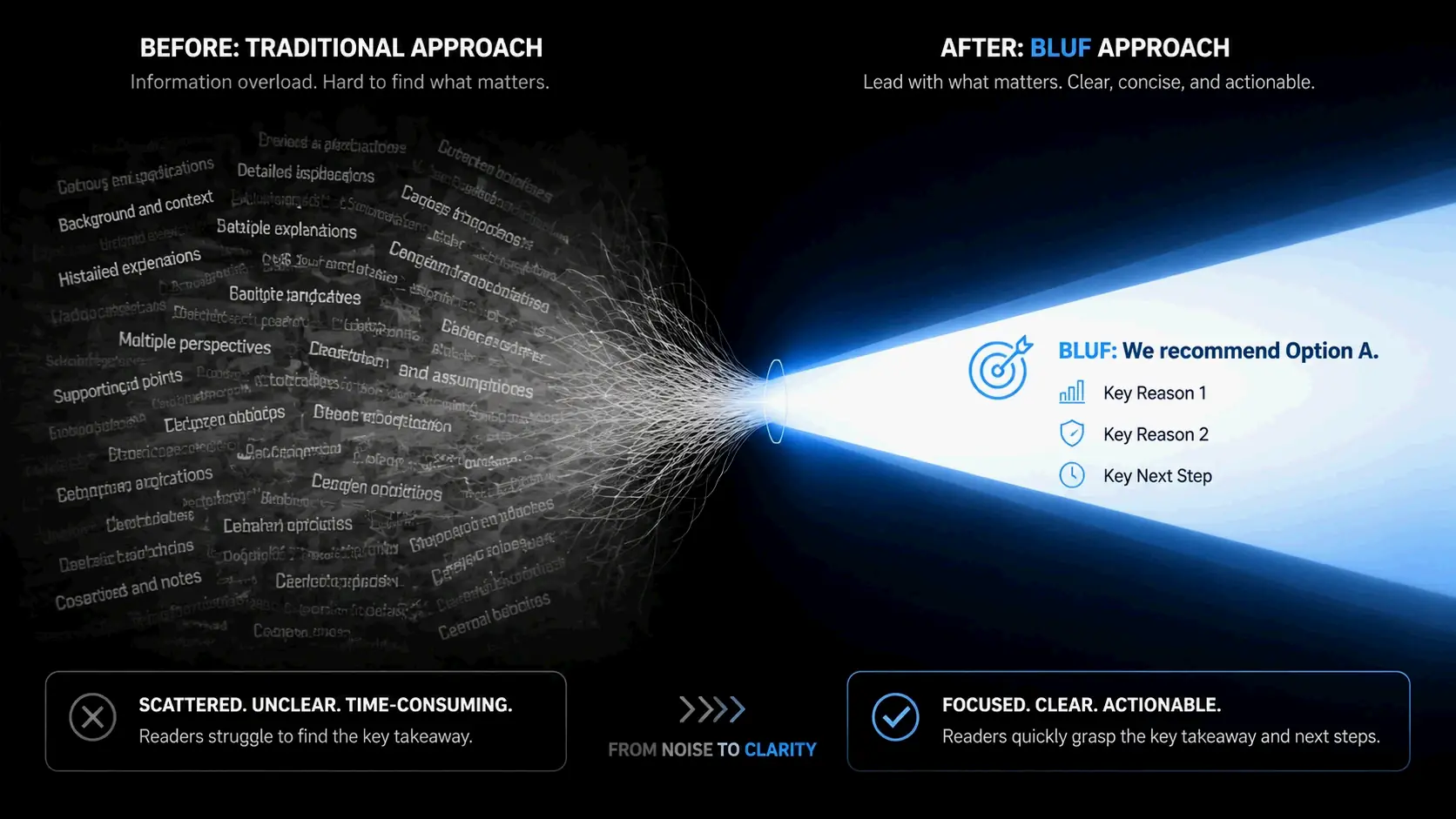
The rewritten version delivers the definition, the distinction from traditional SEO, and the success metric in three sentences. Every sentence is extractable. Every sentence can be cited independently. The AI doesn’t have to go searching for the answer—it’s waiting right at the top of the page.
Entity Optimization: From Keywords to Knowledge Graph Connections
Entity optimization is how you structure content around recognized, disambiguated things—brands, people, products, concepts—so AI search engines can reliably pull your passages into generated answers. This is a fundamental departure from keyword SEO. Keywords are strings of characters. Entities are what those strings refer to. “GEO” is a keyword. “Generative engine optimization as a marketing discipline that targets citations in AI-synthesized answers” is the entity.
The shift is already measurable. The Princeton and IIT Delhi research team found that entity-rich, fact-dense content can improve AI citation visibility by up to 40% across a wide range of queries. Semrush’s AI Search Visibility Study found that only 6–27% of the most-mentioned brands also rank as top sources AI models actually cite, depending on the industry and platform. The gap almost always comes down to entity connectivity: the AI engine can’t resolve the brand’s identity clearly enough to risk citing it.
Why AI Search Engines Think in Entities, Not Keywords
AI search doesn’t rank pages. It retrieves passages, grounds them in known entities, and generates an answer from them. When someone asks Perplexity about content optimization tools, the engine fans the query out into dozens of sub-questions: “what is a content optimization tool,” “which tools are designed for content teams,” “which tools support AI visibility.” It pulls passages where the relevant entities co-occur and synthesizes an answer. If your page is about “content optimization” but the entity “your brand” never surfaces cleanly in the right context, you don’t get cited.
The Google Search Central guidance reinforces this: “The best practices for SEO continue to be relevant because our generative AI features on Google Search are rooted in our core Search ranking and quality systems.” E-E-A-T—Experience, Expertise, Authoritativeness, and Trustworthiness—is the lens AI models use to evaluate content credibility. The “Experience” signal is particularly important. Content that shows first-hand knowledge—original photography, personal narratives, verified data—signals that a real, trustworthy source is behind the page.
AI retrieval systems score passages on entity clarity, fact density, freshness, and authority. A 2,000-word page stuffed with the keyword “content optimization” will lose to a 400-word passage that states clearly: “Brand X is a content optimization platform that scores content against SERP competitors and AI citations.” The entity-rich passage wins because the AI can resolve the entity’s identity and attribute the claim with confidence. For a deeper look at how different tools handle entity optimization and content scoring, see our GeoWriter vs MarketMuse comparison.
The Entity Coverage Audit: A 5-Point Checklist
Use this five-point checklist to evaluate whether a page is entity-optimized for AI citation. Each point maps directly to a signal AI retrieval systems use when choosing sources.
1. Canonical Entity. Every page should be anchored by one clearly defined entity. A page that tries to cover five different things prevents AI engines from determining what it’s really about. Define the canonical entity at the top of your brief before drafting anything else.
2. Definitional Opening. The first sentence should follow the format “[Entity] is a [category] that [differentiator].” If an AI engine can lift this sentence verbatim to answer a generic question about the entity, the opener is working.
3. Entity Co-Occurrence. Map every adjacent entity that naturally belongs in your canonical entity’s category—the people, tools, methods, and related concepts. These co-occurring entities signal to AI engines that your page is part of a coherent topic. A page about GEO that never mentions RAG, BLUF, or Google AI Overviews won’t look like an authoritative GEO page to a retrieval system.
4. Structured Data with sameAs Links. Implement Organization schema with sameAs links connecting your brand to Wikipedia, LinkedIn, Crunchbase, and official social profiles. Without these links, AI engines can’t be certain which entity your page refers to. Add FAQPage schema on question-shaped content and Article schema with author attribution on all blog posts. Automated diagnostics—such as GeoWriter’s SEO Audit Skill, which runs a 92-item checklist covering schema, entity signals, and crawlability—can surface gaps you’d otherwise miss in a manual review.
5. Authoritative Citations. Every factual claim should reference a primary source. A statistic without a source is just an unverifiable claim. A statistic with full attribution—number, timeframe, and source—is a citable passage. Link to authoritative external sources, including .gov and .edu domains where relevant.
Platform-Specific GEO Tactics for 2026
Not all AI search engines retrieve and cite content the same way. Superlines’ analysis of 34,234 AI responses across 10 platforms found that the same brand’s citation volume can differ by a factor of 615 between the lowest and highest-citing platforms. Treating “AI search” as a single, uniform channel is a mistake. The following guidance maps optimization to each major engine’s distinct retrieval mechanism.
Google AI Mode and AI Overviews: Follow Official Guidance, Not Myths
Google AI Mode and AI Overviews draw from Google’s own search index and Knowledge Graph. Google Search Central’s official guidance is unambiguous: you don’t need to create new machine-readable files, AI text files, markup, or Markdown to appear in Google Search, including its generative AI features.
What does matter for Google: strong organic rankings remain a strong predictor of citation eligibility, especially in trust-sensitive verticals like healthcare and finance. Brightedge research found the overlap between AI-cited content and top-10 organic rankings ranges from 68 to 75% in these fields. E-E-A-T signals carry more weight on Google than on any other platform. Structured data—Article, FAQPage, and Organization schema—isn’t required for AI Overviews, but it helps Google understand content type and entity relationships.
Google AI Mode uses a multi-step fan-out process that evaluates content against sub-queries your standard rank tracker won’t monitor. Topic completeness and semantic coverage are more important than targeting a single keyword. A brand with content that covers all facets of a topic cluster is far more likely to win multiple citation slots across the various sub-queries.
ChatGPT Search: Freshness and Bing Discoverability
ChatGPT’s real-time search pulls from Bing’s search index. This means Google indexation is not the prerequisite—Bing indexation is. If Bing hasn’t crawled and indexed your page, ChatGPT’s real-time responses can’t cite it. Set up Bing Webmaster Tools and submit your sitemap. This single action unlocks ChatGPT visibility and often takes less than an hour to do.
ChatGPT responds strongly to brands that appear consistently across multiple independent sources. Cross-web brand mentions on Wikipedia, major publications, and industry forums all reinforce entity authority. Comprehensive, well-sourced content that answers a topic thoroughly, rather than just partially, earns higher citation rates.
Perplexity and Gemini: Timeliness and Answer-Led Formatting
Perplexity heavily weights content recency. Content under three months old gets cited more often than older content. Rank.bot research found that content updated within 30 days earns roughly three times more AI citations than older content across Perplexity, ChatGPT, and Google AI Overviews. For Perplexity specifically, the drop-off is steeper. According to a Qwairy analysis of 118,000 answers, content older than 12 months has a citation rate of just 37%, compared to 82% for content updated within the last 30 days.
Perplexity also indexes Reddit discussions heavily. Genuine participation in subreddits relevant to your category can build the cross-web entity presence its retrieval system rewards. Direct, citation-friendly formatting—clear section distinctions, numbered lists, and extractable chunks of data—also improves citation clarity.
Gemini draws from Google’s index but has a distinct summarization behavior. YouTube transcript optimization is Gemini’s unique citation channel—it pulls video transcripts alongside standard web content. Enable automatic transcripts and ensure they are accurate and keyword-relevant. Structured data depth matters here: stack Article, FAQPage, and Organization schema on your core pages using JSON-LD format.
How to Measure AI Search Visibility and Prove GEO ROI
You can’t improve what you can’t measure, and standard SEO dashboards don’t cover AI search performance. Google Search Console shows organic rankings and impressions. It won’t tell you if ChatGPT cited your brand today, if Perplexity recommended a competitor, or whether your share of voice in AI results is growing or shrinking. AI visibility requires its own dedicated tracking.
Defining the Metrics That Replace Rankings
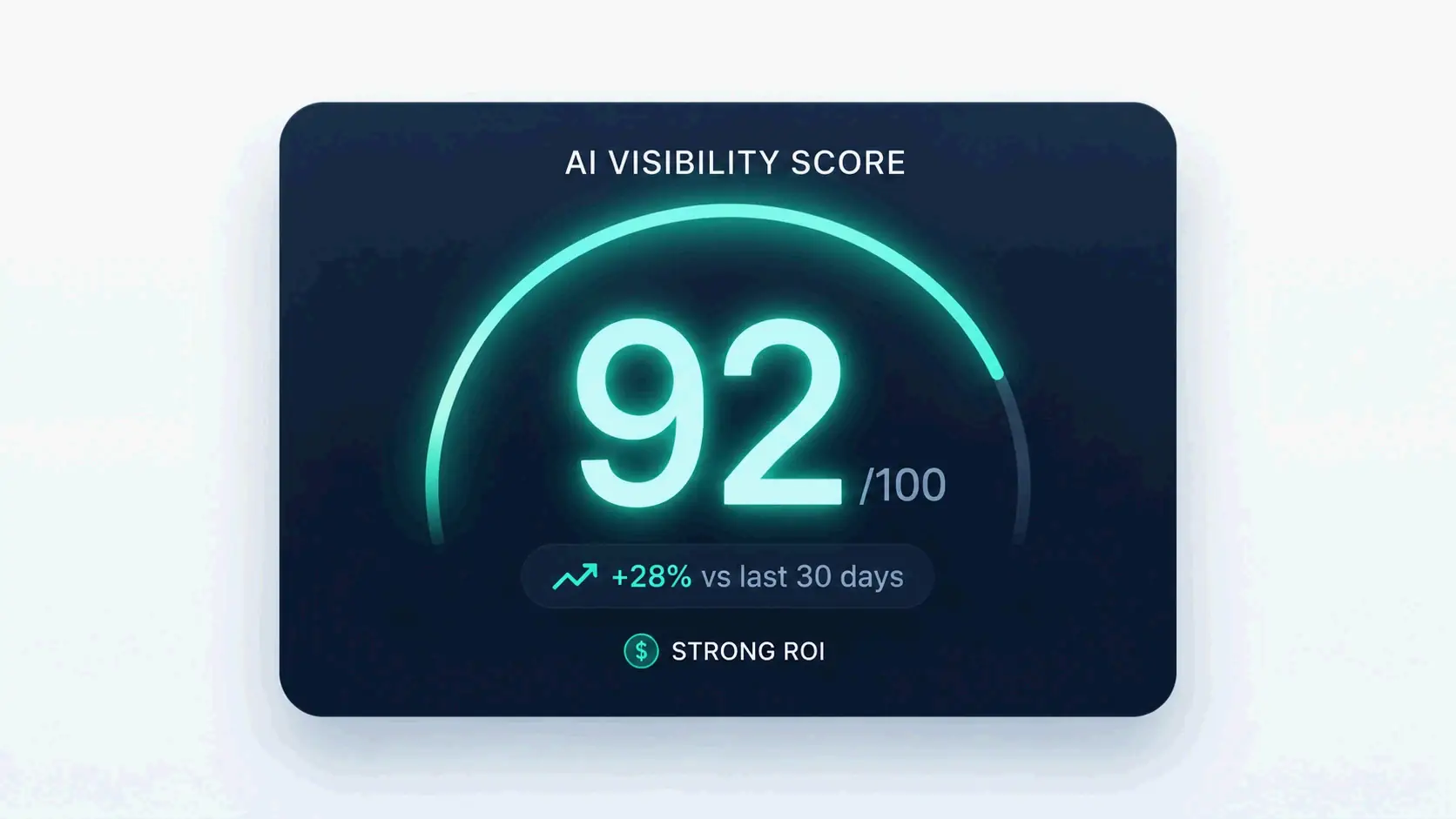
AI Visibility Score is the overall measure of your citation health across AI platforms. It’s typically expressed as the percentage of tracked prompts where your brand appears. Brand Mention Share, or AI Share of Voice, measures your citation rate relative to your competitors across your tracked prompt set. These metrics replace average position and organic CTR as the primary success indicators for any topic cluster where AI Overviews or AI-generated answers appear.
AI Referral Traffic tracks the volume and conversion rate of sessions arriving from AI platforms. Set up custom channel groups in GA4 for chat.openai.com, perplexity.ai, gemini.google.com, and claude.ai. The Semrush AI Search Traffic Study found that AI-referred visitors convert at roughly 4.4 times the rate of traditional organic traffic, making citation growth a direct revenue driver.
Tools like Profound, Similarweb AI Search Intelligence, and Frase’s AI tracking can automate citation monitoring across platforms. Manually checking whether your brand appears in AI answers is not scalable. A baseline established before you start optimizing is critical—without it, you can’t distinguish a real improvement from the natural variation in AI model behavior.
Agentic Commerce: Why GEO Citations Will Soon Drive Purchases Directly
Agentic Commerce is the next frontier where AI citations will directly influence purchases. AI agents—autonomous systems that perform tasks on behalf of users—are beginning to execute purchases via API calls rather than visual browsing. The Agentic Commerce Protocol is emerging as a standard that lets an AI agent read a product page, select a variant, input shipping details, and complete a transaction.
In this environment, GEO citations become purchase triggers. An agent tasked with “buy the best-rated coffee maker” will mathematically weigh review volume, sentiment score, and brand entity authority as its primary decision factors. The brands earning consistent AI citations right now are building the entity authority that will drive direct purchases in the agentic web. Ecommerce and DTC brands face this shift most acutely—our GEO for ecommerce playbook maps the specific tactics for product-page citation optimization and agentic readiness.
Adobe’s GEO practice demonstrates the commercial power of these metrics. After applying systematic GEO discipline, Adobe saw a 41% lift in LLM referral traffic within weeks, then integrated that data with Adobe Analytics to connect GEO efforts directly to revenue and conversions. This closed-loop measurement—from AI citation to site visit to conversion—is the ROI framework that justifies GEO investment at the enterprise level.
The Quick Guide to Writing for AI Search Engines (For Non-SEOs)
GEO isn’t just for SEO specialists. Content creators, subject matter experts, and decision-makers without an SEO background play a critical role. The most powerful GEO signal—genuine, first-hand expertise—comes from the people who actually know the subject. E-E-A-T starts with the author’s actual experience, not with a checklist of SEO techniques. The AI systems evaluating your content are looking for proof that a real, knowledgeable person created it.
Why Your Expertise Is the Most Valuable GEO Asset
AI systems have become quite good at distinguishing between content written by someone with hands-on knowledge and content that just summarizes other sources. A page that demonstrates first-hand experience—personal testing results, specific challenges encountered, unique insights drawn from direct practice—carries more entity authority than a generic summary compiled from existing web content. This is why E-E-A-T heavily weights the first “E”: Experience. A first-person narrative that says “I tested this for 30 days and here is what I found” signals a kind of credibility that synthetic content can’t replicate.
Author credentials matter, too. AI systems evaluate author entities—LinkedIn profiles, publication history, and verifiable qualifications—when deciding whether to cite a page. A blog post written by “Admin” has zero entity authority. The same post written by a named expert with a linked bio and verifiable credentials carries significantly more citation weight. Every page should include an author bio with specific qualifications relevant to the topic.
The 4-Step Writing Checklist for AI-Citable Content
For content creators and subject matter experts without an SEO background, this simplified four-step checklist weaves GEO fundamentals into a natural writing process.
Step 1: State your answer in the first sentence. Whether you’re writing a full article or a single section, open with the direct answer to the question the reader is asking. Don’t introduce. Don’t set the scene. Don’t write a preamble. Write the answer. Everything else—the data, the nuance, the supporting evidence—comes after.
Step 2: Support the answer with specific data or examples. General claims aren’t citable. Specific facts are. Instead of “many businesses are adopting AI,” write “47% of brands still have no AI search strategy in place, according to Digital Applied’s 2026 research.” Include the number, the timeframe, and the source.
Step 3: Connect to recognized entities. Name the people, tools, methods, and concepts that naturally belong in your topic. If you’re writing about GEO, mention RAG, BLUF, ChatGPT, Perplexity, and entity optimization. These co-occurring entities tell AI systems your content is part of a coherent knowledge graph.
Step 4: Keep each section self-contained. Treat every H2 and H3 section as a standalone mini-article. A reader—or an AI retrieval system—should be able to land on any section and understand it without scrolling up. Open each section with its own direct answer. Close each with a clear takeaway.
Conclusion
Generative Engine Optimization is not a replacement for SEO, but an evolution of it. The brands winning AI visibility are the ones leading with direct answers, building verified entity authority, and measuring success through citations instead of rankings. The shift from earning clicks to earning citations changes how you structure content, how you build authority, and how you measure performance—but the core principle remains unchanged: create genuinely useful, expert-led content.
Start with a BLUF rewrite of your top five pages, audit their entity coverage using the five-point checklist in this guide, and begin tracking your brand mentions in ChatGPT and Perplexity to establish a baseline. Choose the implementation tier that fits your resources—manual rewrites for solo creators, atomic H2 architecture for growing teams, or automated visibility monitoring for enterprises—and expand from there. SaaS teams scaling their GEO efforts can find a vertical-specific roadmap in our GEO for SaaS playbook. The brands investing in GEO now are building a presence in AI search that will become increasingly difficult for late movers to challenge.
FAQ
Does traditional SEO still matter for AI search optimization?
Yes. Google confirms that generative AI features are rooted in core ranking and quality systems. Traditional SEO fundamentals like technical crawlability, page speed, internal linking, and E-E-A-T remain essential foundations for GEO visibility. The shift is additive: you still need strong SEO, but you also need to optimize for citation-friendliness and entity clarity.
How long does it take to see results from GEO efforts?
Adobe saw a 41% LLM referral traffic increase within weeks of systematic GEO implementation, but fully building authority takes months. Content structure changes like BLUF can yield quicker citation improvements as AI models recrawl. Entity authority and trust signals are longer-term plays, similar to building domain authority in traditional SEO.
Can I optimize existing content for AI search, or do I need to create new content?
You can absolutely optimize existing content. Start by rewriting introductions to lead with direct answers using BLUF structure. Add entity-rich context, statistics with clear primary source attribution, and ensure H2 sections function as standalone answer blocks. You don’t need to rebuild your site; incremental structural changes yield measurable citation improvements.
Which AI search engines should I prioritize optimizing for?
Prioritize based on your audience: Google AI Mode and AI Overviews for the broadest reach, ChatGPT for tech-savvy and research-oriented audiences, and Perplexity for real-time and news-related queries. Start with Google given its current dominance, but don’t ignore ChatGPT and Perplexity as their query volumes grow rapidly. Platform-specific tactics can be layered on after you have the core GEO fundamentals in place.
