


After running dozens of SEO tasks through all three tools this month, one thing is clear: there is no single “best” AI for everything. ChatGPT (GPT-5.5) brings the most versatility to the table, Claude (Opus 4.8) writes better long-form content and reasons more carefully, and Gemini (3.1 Pro) taps into Google’s ecosystem for research that the others simply can’t match. The real insight is that the strongest SEO workflow uses all three — or better yet, a platform that orchestrates AI across the entire content pipeline.
Contents
- Quick Verdict: Which AI Wins for SEO in 2026?
- Comparing the AI Contenders: Models, Pricing & Core Strengths
- Head-to-Head Test: Which AI is Best for SEO Content Creation?
- The SEO Workflow Pipeline: How to Combine ChatGPT, Claude, and Gemini for Content Success
- Where Gemini Wins: Real-Time Research, Content Refresh & Google Integration for SEO
- Which AI Dominates Technical SEO and Coding Tasks?
- The Future is GEO: Which AI Handles AI-Native SEO Best?
- Conclusion
- FAQ
Quick Verdict: Which AI Wins for SEO in 2026?
Which AI you should use depends entirely on what you need to get done. No model wins across the board — Improvado’s 9-test showdown came to the same conclusion after putting each one through multiple marketing scenarios. The question for SEOs in 2026 isn’t “which one do I pick?” but “how do I use them together?”
Here’s how the three compare on core SEO activities:
| SEO Activity | Best Performer | Key Strength |
|---|---|---|
| Content Writing (Long-Form) | Claude (Opus 4.8) | Holds tone and logical flow steady across thousands of words |
| Content Writing (Drafting & Polish) | ChatGPT (GPT-5.5) | Needs less editing, adapts to more formats |
| Technical SEO & Coding | Claude (Opus 4.8) | 88.6% on SWE-bench Verified coding benchmark |
| Real-Time Research & Content Refresh | Gemini (3.1 Pro) | Deep Google integration, live web access |
| General SEO Versatility | ChatGPT (GPT-5.5) | Broadest feature set — writing, research, and coding in one place |
Sandeep Kumar Chauhan describes ChatGPT as the best all-rounder for daily productivity, writing, and coding. That’s fair — but being a strong generalist doesn’t mean it’s the right tool for every specialized SEO job.
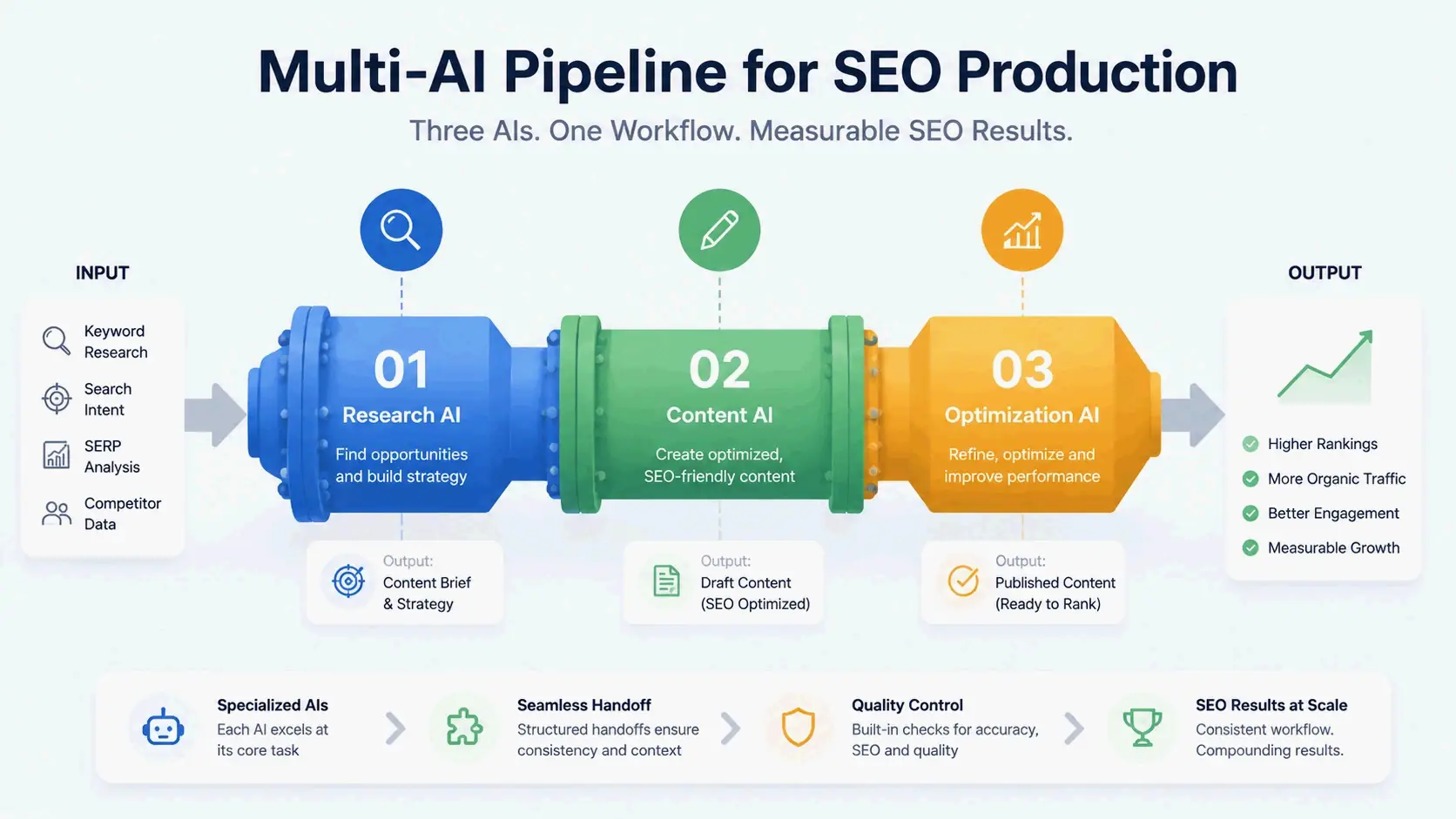
The winning formula in 2026 is a multi-AI setup. Most experienced users and teams now run all three tools, assigning each one the tasks it handles best. Some end-to-end platforms like GeoWriter have already productized this approach — handling everything from research through writing, editorial refinement, image generation, and publishing in a single pipeline — which eliminates the fragmented-tools problem that slows many teams down. Whether you build that pipeline yourself or use a platform that does it for you, the shift turns AI from a single helper into a complete production system.
Comparing the AI Contenders: Models, Pricing & Core Strengths
All three models received major updates heading into mid-2026. Before diving into SEO-specific performance, it helps to understand what each one is working with — their specs, pricing, and the design philosophy behind them.
| Feature | ChatGPT (GPT-5.5) | Claude (Opus 4.8) | Gemini (3.1 Pro) |
|---|---|---|---|
| Release Date | April 2026 | May 2026 | January-February 2026 |
| Context Window | 1M tokens | 1M tokens | 1M tokens |
| Coding Score (SWE-bench) | 74.9% (GPT-5 baseline) | 88.6% | N/A |
| Free Tier | Yes (with ads) | Yes (limited daily) | Yes |
| Standard Paid Plan | $20/month Plus | $20/month Pro | $19.99/month Advanced |
| Premium Tier | $200/month Pro | $100-200/month Max | $249.99/month Ultra |
| Google Workspace Integration | No | No | Yes (native) |
| Image Generation | Yes (DALL-E 3) | Not supported | Yes (Imagen) |
| Key Strength | Versatility, ecosystem | Reasoning, coding, writing | Google ecosystem, real-time data |
Each model has a distinct identity that reflects how its creator thinks about AI. Those differences matter more for SEO work than any single benchmark number captures.
GPT-5.5: The Versatile All-Rounder
OpenAI shipped GPT-5.5 on April 24, 2026, and it’s a noticeable step forward. According to Albato’s 2026 comparison, it runs as a unified system with a standard mode for everyday queries, a deeper reasoning mode (GPT-5.5 Thinking) for harder problems, and a real-time router that picks between the two on the fly. The biggest leap is its agentic capability — the model can plan multi-step tasks, use tools, check its own output, and handle ambiguity without constant hand-holding.
For SEOs, that means one tool that drafts content, generates code for technical work, analyzes data, and creates images — all from a single interface. The plugin ecosystem and custom GPTs extend that even further into repeatable workflows.
Claude Opus 4.8: The Writing & Reasoning Powerhouse
Anthropic released Claude Opus 4.8 on May 28, 2026. It currently holds the highest publicly reported SWE-bench Verified score at 88.6%, per Albato. This version introduces dynamic workflows that let Claude spin up hundreds of parallel subagents for large-scale tasks. The task budgets feature — carried over from Opus 4.7 — gives the model a token countdown for agentic loops, which makes a real difference for autonomous coding and multi-step research.
Claude’s design leans heavily toward safety and accuracy. Jin Grey, a Senior SEO Consultant, points out that Claude hallucinates less than the other major models. For SEO content, where accuracy directly shapes credibility, that matters.
Gemini 3.1 Pro: The Google-Integrated Researcher
Gemini 3.1 Pro came out in early 2026 and represents Google’s most capable public model so far. Its defining advantage is how deeply it plugs into Google’s ecosystem. Simpliaxis notes that Gemini works both as a standalone chatbot and as an integrated assistant inside Gmail, Docs, Sheets, and Drive — you can draft, summarize, and generate content without leaving your workflow.
For SEO, that integration opens up some unique doors: real-time data pulled from Google’s search index, the ability to analyze competitor content directly within Workspace, and cross-referencing claims against live search results. Albato also reports that Gemini 2.5 Pro offers a 1-million-token context window and significantly upgraded coding for web app development.
Head-to-Head Test: Which AI is Best for SEO Content Creation?
SEO content creation isn’t one skill — it’s several. Drafting long-form articles, building structured outlines, writing meta descriptions that actually get clicks, and keeping quality consistent across thousands of words. Testing across these areas reveals some clear winners.
One practical way to measure real-world usability is editing burden: how much work does a human need to do before a draft is publishable? Nenawow’s two-month daily testing found that when given the same 1,000-word article prompt five times, ChatGPT drafts required an average of two sentence corrections each. Gemini drafts needed five. At publishing scale, that gap compounds quickly. Nenawow observed that ChatGPT’s structure held, sentences varied naturally, and tone stayed consistent from start to finish. Gemini could get the job done, but two patterns kept showing up — the same transitional phrases popping up in different paragraphs, and sections getting restructured in ways no one asked for.
Claude really shines in long-form content marketing. Improvado’s comprehensive marketing test found Claude delivers the most authentic tone and the best headlines. In direct comparisons, Claude produced the most natural narrative flow and held a consistent voice across extended pieces. For landing pages, it generated implementation-ready HTML with previews built into the interface — a practical edge over competitors that handed back structured text or separate code files.
For SEO content creation, the strengths split fairly cleanly. Claude is your best bet for long-form articles where tone consistency, logical flow, and factual accuracy make or break the piece. Its larger context window also helps when you need to synthesize information from multiple competing articles into one comprehensive resource. ChatGPT is the go-to for versatile drafting — it turns out polished first drafts that need less structural fixing, and it moves easily between formats, from press releases to social posts. That flexibility helps when content calendars span multiple formats. The persistent challenge with any raw AI output, though, is mechanical tone — that unmistakable AI voice that savvy readers spot immediately. Tools that include editorial refinement and AI tone removal as part of the pipeline address this gap before publishing.
The practical recommendation: use ChatGPT for volume drafting and initial ideation, then bring in Claude to refine the long-form pieces where quality and consistency directly affect rankings and engagement.
The SEO Workflow Pipeline: How to Combine ChatGPT, Claude, and Gemini for Content Success
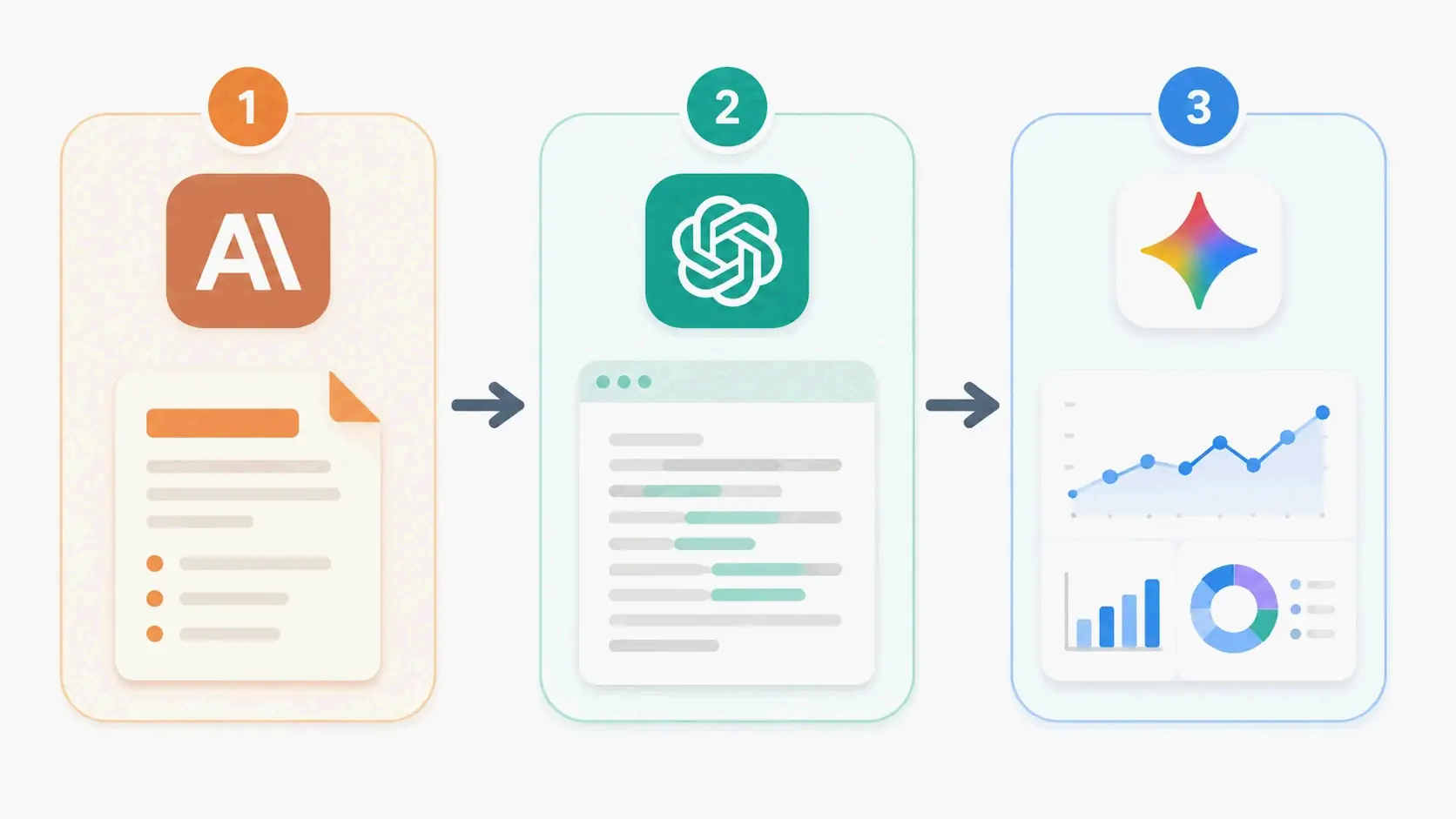
Most SEOs don’t need to pick a single tool, and honestly, they shouldn’t. The smart approach combines all three into a structured pipeline that plays to each model’s strengths. This lines up with what Improvado’s testing confirmed: combining multiple AI tools produces better marketing results. For agencies scaling content across multiple clients, having a repeatable multi-AI pipeline is especially critical.
Step 1: Use Claude for Expert-Level Content Briefs
The content brief is where ranking potential gets determined — before a single paragraph gets written. Claude’s stronger reasoning and large context window make it ideal for analyzing top-ranking competitor pages and building strategic outlines. Feed it the top three to five ranking pages for your target keyword. Ask it to spot content gaps, structural patterns, and semantic entities that show up consistently in high-ranking content.
Claude’s lower hallucination rate is especially important at this stage. Jin Grey notes that Claude hallucinates less than the other major models, which makes it the safer choice for fact-sensitive work like competitive analysis. When you’re building a strategy around what’s actually on ranking pages, accuracy isn’t optional.
Step 2: Draft and Optimize with ChatGPT (GPT-5.5)
With a solid content brief in hand, ChatGPT is the better tool for generating the initial draft. Its versatility covers the full range of SEO content types — listicles, how-to guides, comparison articles, long-form pillar pages. The lower editing burden documented by Nenawow means less time fixing structural issues and more time layering in unique expert insights.
ChatGPT’s memory system adds a practical advantage when you’re working on multiple articles. It can remember your brand voice preferences, style guidelines, and common SEO requirements across sessions — which cuts down on repetitive prompt engineering.
Step 3: Inject Real-Time Data with Gemini 3.1 Pro
AI-generated content often includes outdated or made-up statistics. Gemini fills this gap with real-time web access backed by Google’s search infrastructure. After ChatGPT produces a draft, use Gemini to verify the numbers, find current examples, and make sure every claim reflects the most recent data available.
This step is especially important in fast-moving industries — tech, finance, healthcare — where information ages quickly. If your team uses Google Docs, Gemini’s Workspace integration means you can run these verification checks without leaving your document.
One thing to keep in mind: fact-checking AI output matters regardless of which model you use. Improvado’s testing caught models fabricating statistics and misattributing claims. In one test, a model claimed “90% of enterprise marketers say data is critical to their success” by mashing together unrelated statistics. Human verification is still the final quality gate.
Where Gemini Wins: Real-Time Research, Content Refresh & Google Integration for SEO
Gemini occupies a unique spot in the SEO toolkit because of what it can do with current information and Google’s ecosystem.
Content refreshes are one of the highest-ROI SEO activities, and Gemini handles this workflow better than the others. Its real-time search capabilities let it scan an older article and flag which statistics, examples, and references have gone stale. Give it an outdated post and ask it to suggest updates — it can surface old numbers, identify new developments since publication, and propose refreshed angles based on what’s currently trending in search.
Albato’s comparison highlights Gemini’s “double check” feature, which uses Google Search to help assess the reliability of its own responses. That verification step is especially useful during content refreshes, where fact-checking is essential but time-consuming.
Gemini’s Workspace integration also streamlines SEO workflows in a practical way. Teams writing in Google Docs can analyze competitor content without leaving their writing environment. The tool can pull data from emails, summarize documents from Drive, and draft responses that reference calendar availability — no app switching required. For SEO teams already embedded in Google’s ecosystem, this cuts friction noticeably.
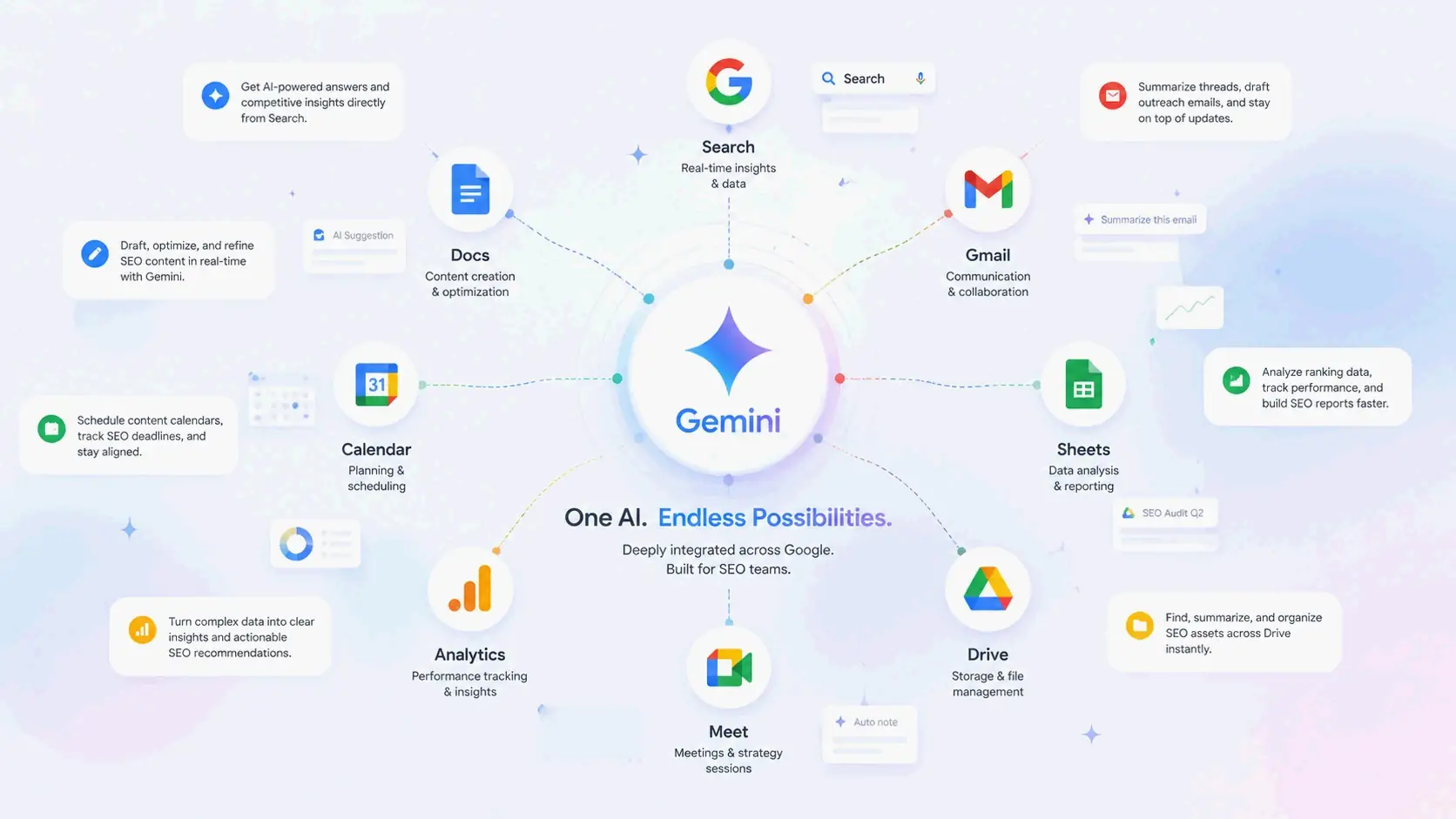
The native multimodal features also help with video SEO. Gemini can process and analyze video content, which makes it useful for optimizing YouTube descriptions, generating transcripts, and spotting opportunities to rank in both traditional search and video results.
Which AI Dominates Technical SEO and Coding Tasks?
Technical SEO increasingly means writing code. Custom Schema markup, Python scripts for site audits, debugging JavaScript rendering issues — if you can generate and refine code efficiently, you move faster. Among the three platforms, one stands out for technical implementation.
Claude Opus 4.8 scores 88.6% on SWE-bench Verified, according to Albato’s 2026 benchmark analysis. That’s the highest publicly available score as of June 2026, and it reflects real capability in debugging complex codebases, generating production-ready scripts, and understanding architectural patterns across large repositories.
For technical SEO, the practical implications are straightforward. Claude can generate validated Schema for complex content types — FAQ, HowTo, Article, Product. It writes Python scripts for automated site audits, complete with crawling logic, data extraction, and error reporting. Its 1-million-token context window lets it process entire codebases or site structures in one session. Dedicated SEO audit tools that run 92-item diagnostic checks — like GeoWriter’s SEO Audit Skill — can complement these AI-generated scripts by catching issues that manual review misses.
ChatGPT is still a strong option for common technical SEO tasks. Its Codex environment lets you test generated code live in a sandboxed interface. For smaller scripts — redirect mapping, meta tag analysis — that immediate feedback loop speeds things up.
Gemini works best when technical SEO overlaps with Google’s ecosystem. If you’re working with Google Cloud, Android development, or Search Console data analysis, Gemini’s native understanding of Google’s APIs and infrastructure is a real advantage.
The practical recommendation: use Claude for complex technical implementations, ChatGPT for rapid prototyping of common scripts, and Gemini when your technical work connects to Google-specific platforms or data sources.
The Future is GEO: Which AI Handles AI-Native SEO Best?
Generative Engine Optimization (GEO) — sometimes called Answer Engine Optimization (AEO) — is where traditional SEO is heading. Instead of optimizing just for Google’s search results pages, GEO aims to make content visible, citable, and accurately summarized inside AI-generated answers from tools like ChatGPT, Gemini, Claude, and Perplexity. As Gravitas Vision puts it, SEO in 2026 means making sure AI tools can find, understand, cite, and accurately summarize you in their responses.
Each AI model handles GEO-optimized content differently, and understanding those differences helps you tailor content for maximum visibility across platforms.
ChatGPT tends to favor content that’s comprehensive, well-structured, and semantically clear. Its training on web-scale data means it recognizes content patterns that signal authority: clean heading hierarchies, concise summaries near important headings, consistent entity usage throughout. If you’re optimizing for ChatGPT’s citations, prioritize semantic depth, structured data, and direct answers to specific queries woven into your content.
Claude’s constitutional AI design makes it especially attentive to factual accuracy and source quality. It’s more likely to cite content that demonstrates clear expertise — author credentials, cited sources, specific examples — rather than generic claims. As Jin Grey notes, Claude hallucinates the least, which also means it’s the most selective about what it treats as trustworthy.
Gemini, through its Google integration, has unique access to real-time web data and Google’s knowledge graph. Content that already ranks well in traditional Google search stands a better chance of getting cited by Gemini. That means GEO for Gemini overlaps more with traditional SEO than GEO for standalone models. Structured data, Google Business Profile optimization, and consistent entity signals across the web all improve citation likelihood.
The practical takeaway: GEO in 2026 means optimizing for multiple AI systems, not just one. The same foundations — structured data, semantic relevance, topical authority, factual accuracy — serve well across the board. GEO-forward platforms like GeoWriter build E-E-A-T signals directly into article structure, which helps content perform across both traditional search and AI citation engines. Whether you’re targeting SaaS audiences or broader markets, the multi-AI workflow described above applies to GEO too: use Claude to ensure depth and accuracy, ChatGPT to ensure readability and structure, and Gemini to verify that your content aligns with what Google’s ecosystem recognizes as authoritative.
Conclusion
The most effective AI strategy for SEO in 2026 isn’t a single subscription. It’s a stacked workflow. Claude provides the strategic foundation with sharper content briefs and accurate long-form writing. ChatGPT handles versatile drafting with the lowest editing burden. Gemini injects real-time data and powers content refreshes through Google’s ecosystem.
Start with the tool that solves your biggest bottleneck. If content quality and consistency are holding you back, begin with Claude. If drafting speed and format versatility matter most, start with ChatGPT. If outdated content and research gaps keep slowing you down, lead with Gemini. From there, bring at least two into your pipeline to take advantage of their complementary strengths. If orchestrating three separate tools feels like too much overhead, end-to-end platforms like GeoWriter handle the full pipeline — research, writing, refinement, AI tone removal, image generation, and publishing — at around $0.6 per article with images, with no platform lock-in. The SEOs who thrive going forward will be the ones who know how to orchestrate multiple AI tools — not the ones still searching for a single perfect solution.
FAQ
Can I use AI-generated content and still rank on Google?
Yes, as long as it meets E-E-A-T standards. Google cares about content quality and expertise, not which tool created it. The key is human oversight, fact-checking, and adding unique expert insights. Pure, unedited AI content without human refinement is unlikely to rank long-term.
Which AI assistant is best for long-form SEO writing?
Claude Opus 4.8 is currently best for long-form writing because it maintains consistent tone and logical flow over thousands of words without heavy editing. ChatGPT is a close second, with a lower initial editing burden for shorter sections and more versatile format adaptation.
How do AI search engines like ChatGPT and Gemini impact traditional SEO?
They shift focus from ranking on Google alone to optimizing for Generative Engine Optimization (GEO) across AI chat results. That means creating content that’s structured, cited, and easy for AI tools to summarize. Traditional SEO still matters, but visibility in AI-generated answers has become an additional priority.
What is the best AI for coding and technical SEO tasks?
Claude Opus 4.8, with its 88.6% score on the SWE-bench Verified coding benchmark, is the strongest option for complex Python scripts and Schema generation. ChatGPT is a solid and versatile alternative, especially for common SEO scripts where its live code execution environment gives you an immediate feedback loop.
Are there free AI tools good enough for professional SEO work?
Gemini’s free tier provides strong, real-time Google-powered research capabilities, making it a useful free tool for fact-checking and content research. The free versions of ChatGPT and Claude are limited to older models and, in some cases, lack key features like large context windows and real-time search access.
