

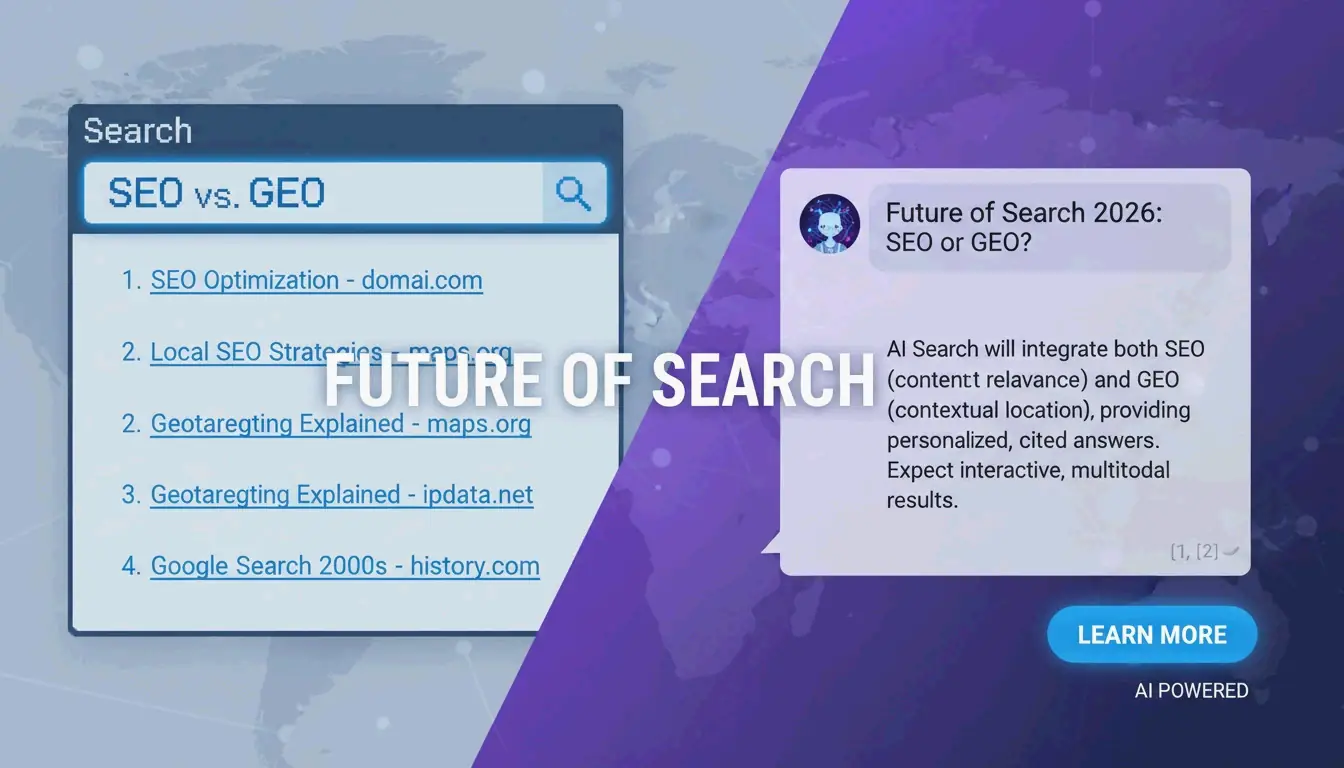

No, GEO is not replacing SEO; it is an essential extension. While SEO focuses on ranking in search results to drive clicks, Generative Engine Optimization ensures your brand is cited and recommended within AI-generated answers. In 2026, a dual-strategy is mandatory to capture both traditional searchers and conversational AI users.
Contents
- SEO vs. GEO: Understanding the Shift to Generative Engine Optimization (GEO)
- Will AI Overviews (SGE) Kill Your Organic Traffic?
- E-E-A-T: The Shared DNA of SEO and GEO Success
- The 7-Day SEO to GEO Pivot: A Practical Strategy Checklist
- Measuring Success: Why Citation Rate is the New North Star Metric
- Conclusion
- FAQ
SEO vs. GEO: Understanding the Shift to Generative Engine Optimization (GEO)
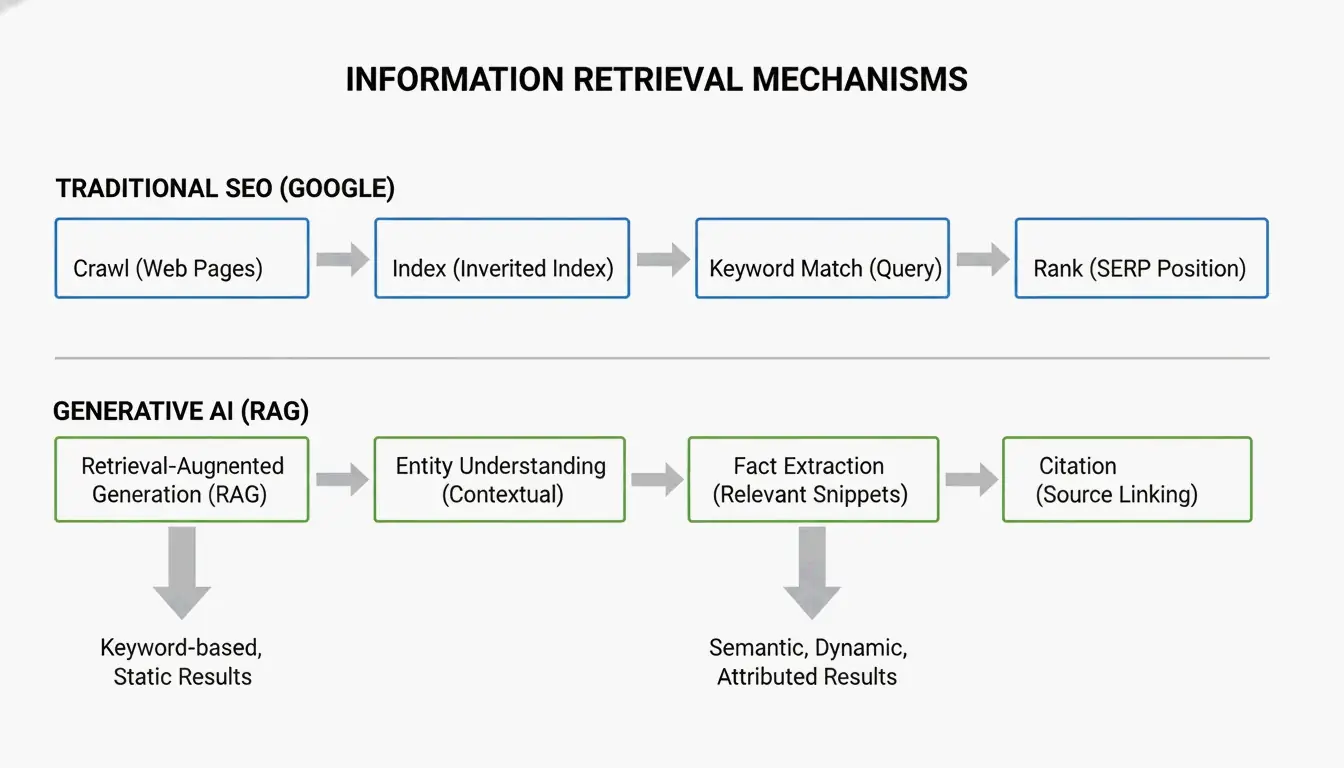
Generative Engine Optimization (GEO) is the next step for digital visibility, moving us past the old “blue link” era. While traditional SEO relies on a crawl-index-rank model to pull traffic to your site, GEO is all about “optimizing for citations.” The goal here is simple: you want your brand to be the one an LLM (Large Language Model) picks when it builds a conversational response.
This shift follows a clear change in how people find information. Gartner predicts that search engine volume will drop 25% by 2026 as AI chatbots take over queries that used to go straight to Google. Search isn’t dying, but it is moving into interfaces like ChatGPT, Perplexity, and Gemini.
As Guy Sheetrit, CEO of Over The Top SEO, puts it: “If ChatGPT doesn’t mention your brand when someone asks about your industry, you effectively don’t exist for that person.” Traditional SEO still provides the technical groundwork—like site speed and authority—that AI models use to decide if a source is trustworthy enough to cite.
How AI Models ‘Search’ Differently Than Google Bots
Standard search engines scan content to match specific keywords and then give users a list of links. AI models work differently; they digest huge amounts of data to understand the links between “entities”—people, places, and things. They don’t just point to a link; they remix what they’ve learned to create a unique answer.
LLMs use Retrieval-Augmented Generation (RAG) to grab real-time info from the web. This means your visibility now depends on “semantic clarity”—how easily an AI can pull a specific fact from your page. Unlike Googlebot, which loves PageRank, AI engines look for “fact density” and content that is easy to summarize into a direct reply.
Will AI Overviews (SGE) Kill Your Organic Traffic?
AI Overviews (formerly SGE) have turned “Zero-click Search” into a daily reality. When an AI summary sits at the top of the page, users often get what they need without clicking anything. Data from PageOnePower shows that CTR can drop from 34.5% to as low as 61% when an AI Overview answers the query first.
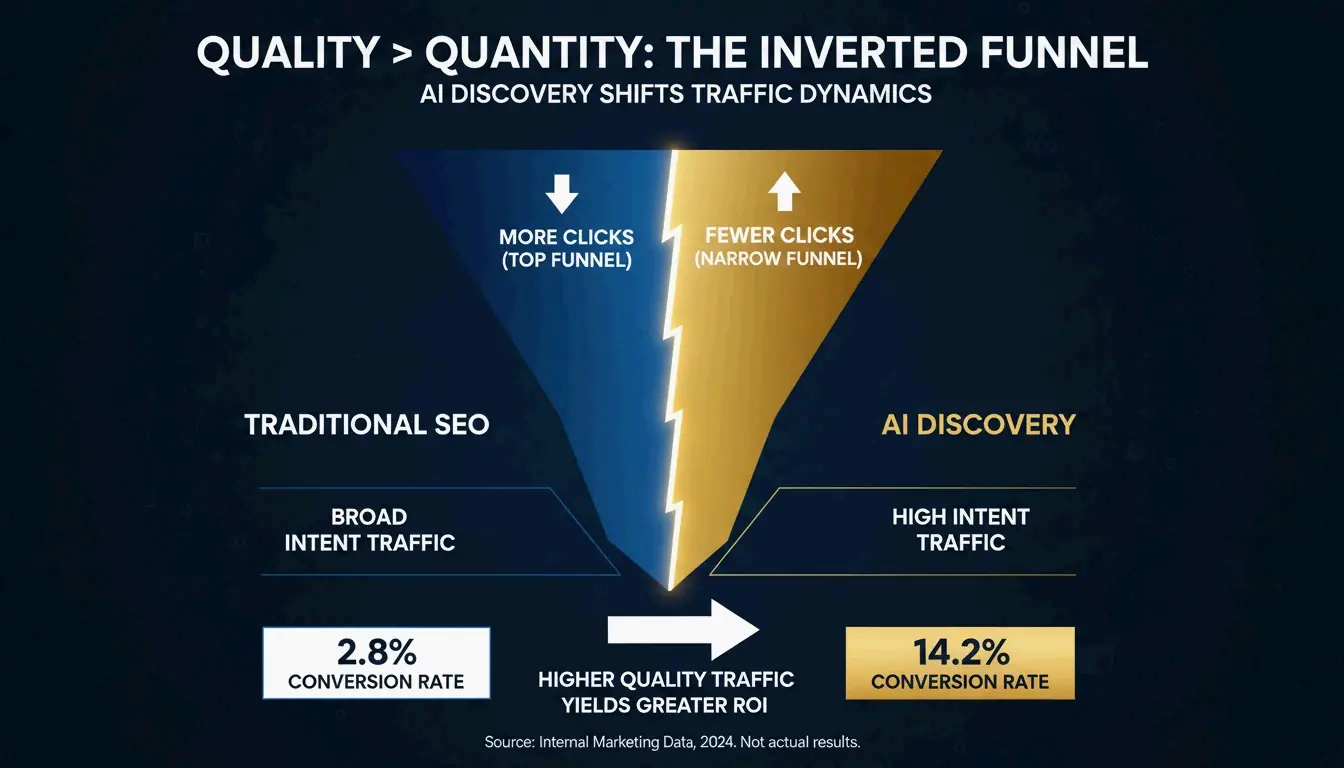
But this has created an “Inverted Funnel.” You might lose some top-of-funnel traffic (the “What is X?” crowd), but the people who do click through usually have much higher intent. If a user moves from an AI summary to your site, they’ve already been “pre-qualified” by the AI’s answer. The game is shifting from raw traffic numbers to lead quality and brand influence.
We’re already seeing this work in the real world. One B2B SaaS company saw a 537% jump in AI visibility by focusing on comparison queries. It turns out being cited by an AI can actually lead to more qualified demos than a traditional #1 ranking ever did.
E-E-A-T (Experience, Expertise, Authoritativeness, and Trustworthiness) is the bridge between Google’s algorithm and AI models. AI engines stick to authoritative sources because they are built to avoid “hallucinations” or spreading bad info. By building a clear “Digital Footprint,” you give LLMs the signals they need to trust your data.
Schema Markup acts as the translator here. By using FAQPage, HowTo, and Product schemas, you tell AI engines exactly what your content is about. This technical layer makes your info “extractable,” which makes a citation much more likely.
The payoff for building this trust is massive. Conductor found that visitors coming from AI search convert at 14.2%, while traditional SEO traffic sits at just 2.8%. That 5x gap shows why being a “trusted source” for AI is now more valuable than just ranking for a random keyword.
The 7-Day SEO to GEO Pivot: A Practical Strategy Checklist
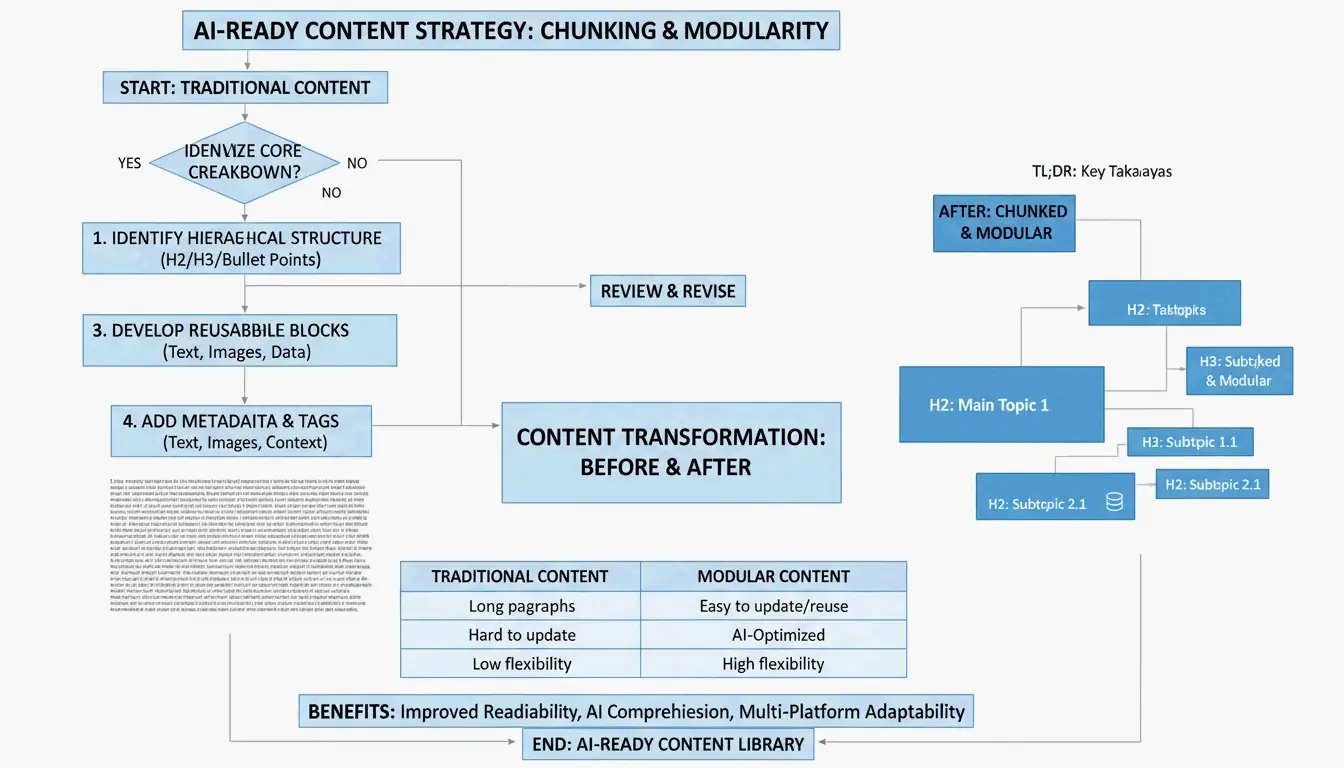
To stay relevant in the GEO era, you need to start “Content Chunking.” This means re-working your H2 and H3 sections so they work as standalone units of 50-150 words. Every section should start with a clear, fact-heavy statement that an AI can easily grab.
Technical AI-readiness also means looking past basic metadata. Setting up an llms.txt file is a new best practice that points AI crawlers to your most important data. It ensures that when bots from OpenAI or Anthropic stop by, they find the cleanest version of your expertise.
Step-by-Step Content Modularization
- Lead with Facts: Start every section with a direct sentence (e.g., “HVAC repair costs average $350 in New Jersey”).
- Use Lists and Tables: AI models cite comparison tables 59% more often than standard paragraphs.
- Cite Sources: Link out to authoritative data to help your own credibility scores during the RAG process.
- Add TL;DRs: Put a short summary at the top of long articles to help AI summarize your work.
The Role of Backlinks in AI Citation Rates
Backlinks still matter, but the “context” of the mention is now more important than the “link equity.” AI models look for co-occurrence—how often your brand is mentioned alongside specific industry terms on platforms like Reddit, Quora, or niche journals. High-authority PR works like a “trust vote” that shapes an LLM’s internal knowledge.
Measuring Success: Why Citation Rate is the New North Star Metric
In a GEO world, traditional keyword rankings are becoming a secondary metric. The new “North Star” is your Citation Rate (or AI Mention Rate). This tracks how often your brand is named as a source in answers from Perplexity, Gemini, and ChatGPT.
You can use tools like Mersel AI to monitor your “Share of Model.” This metric shows your brand’s presence in conversational prompts compared to your competitors. For local shops, this means knowing if an AI actually recommends you when someone asks, “Who is the best plumber near me?”
Conclusion
SEO and GEO aren’t rivals; they are two sides of the same coin. SEO builds your foundation of authority, while GEO optimizes for the conversational interfaces where people are spending more of their time.
To future-proof your site, start by auditing your top 10 pages for “content chunking” and add an llms.txt file. By combining traditional ranking power with AI citation-worthiness, you’ll stay visible no matter how search changes.
FAQ
Does my website need to rank #1 on Google to appear in AI Overviews?
No. While there is a 60% overlap between top Google results and AI citations, AI engines often pull from positions 2-10 if that content is more relevant, fact-dense, or better structured for extraction. Relevance and E-E-A-T signals frequently outweigh traditional PageRank in AI-generated summaries.
How do I measure the success of GEO if there are no traditional rankings?
You should track “Share of Model,” which measures how frequently your brand is cited in AI responses for your target prompts. Additionally, monitor referral traffic in GA4 from platforms like Perplexity and ChatGPT, and use UTM parameters to track the high-converting “link-in-bio” traffic from these tools.
Which AI platforms (ChatGPT, Perplexity, Gemini) should I prioritize for GEO?
Prioritize Perplexity for research-heavy niches where real-time citations are critical. Focus on Gemini (Google AI Overviews) for general search visibility integrated into the Google ecosystem. ChatGPT is best for lifestyle, creative, and general brand recommendations where training data influence is paramount.
Will backlinks still matter for my brand’s visibility in AI-generated responses?
Yes, but the quality of the “mention” is now more important than the link itself. AI models use backlinks as trust signals. High-authority PR, niche citations on forums like Reddit, and mentions in industry publications act as “trust votes” for LLM training and retrieval data.
