

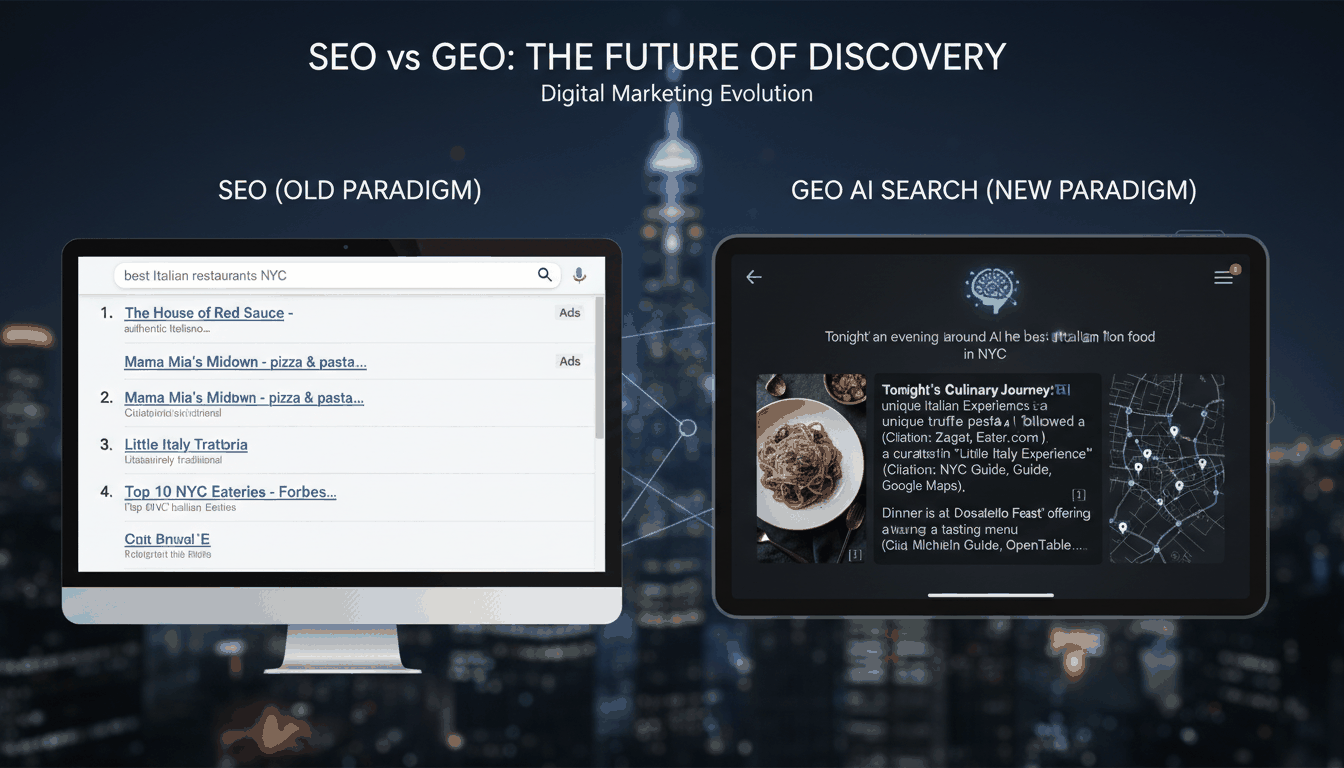

SEO focuses on ranking website links in search engines like Google to drive clicks. In contrast, GEO (Generative Engine Optimization) optimizes content to be cited, mentioned, and synthesized within AI-generated responses from platforms like ChatGPT, Perplexity, and Gemini. This shifts the goal from “earning a click” to “becoming the source.” Understanding how is geo different than seo is essential for maintaining visibility in an AI-first world in 2026.
Contents
SEO vs. GEO: Understanding the Core Shift in Discovery
The move from traditional search to generative AI is changing how we find information. Traditional SEO targets the “blue link” index. In that world, success depends on keyword relevance and hitting the top spots on a Search Engine Results Page (SERP). GEO is different. It targets the “Latent Space” of Large Language Models (LLMs) and Retrieval-Augmented Generation (RAG) systems. Here, the goal is to be the specific data point an AI picks to build its answer.
This evolution means we are moving from tracking Click-Through Rate (CTR) to monitoring “Citation Share of Voice.” Data from Savvy shows that organic click-through rates on queries where AI Overviews (AIO) appear have dropped by over 60%. This “zero-click” reality is a challenge: even if you rank #1 in traditional results, an AI summary might give the user exactly what they need before they ever consider clicking your link.
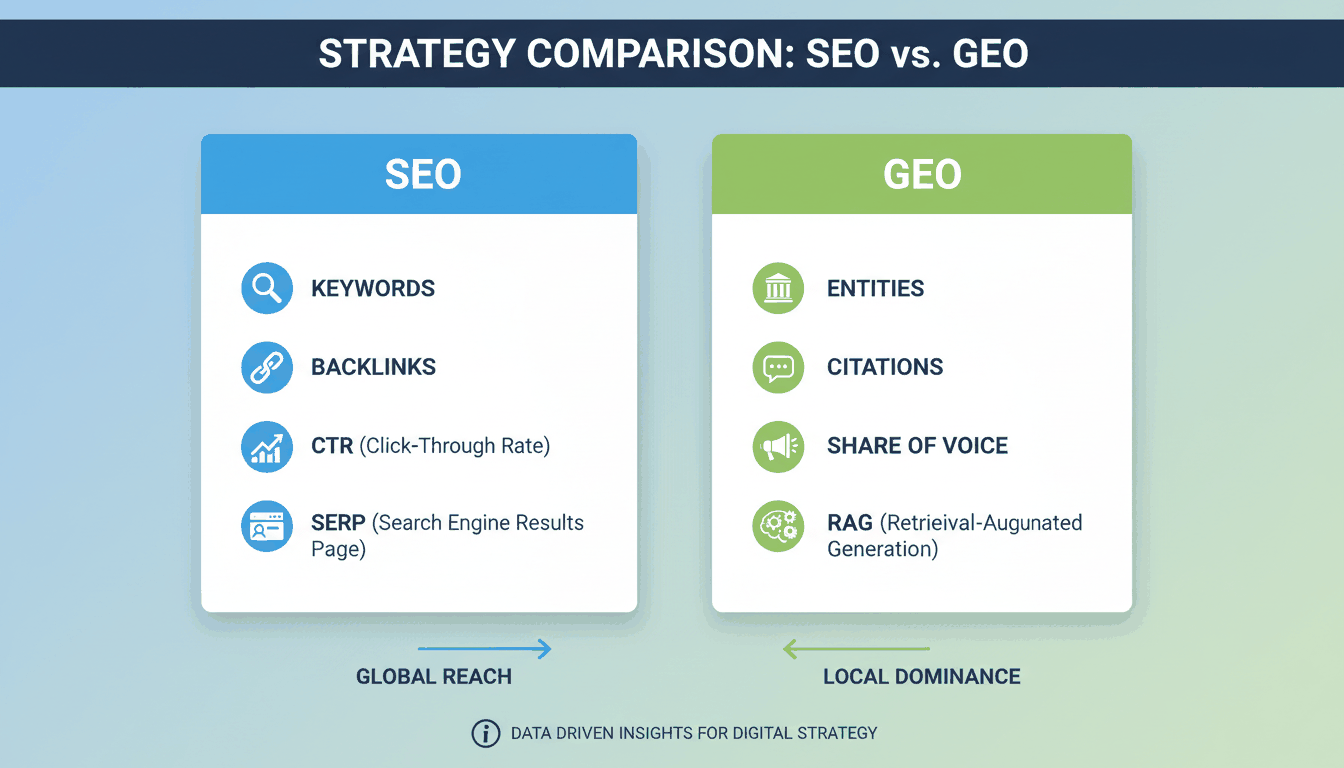
That said, the two disciplines aren’t enemies. As Danny Sullivan, Google’s Public Liaison for Search, puts it: “Good SEO is good GEO… What you’ve been doing for search engines generally is still perfectly fine and the things you should be doing.” You still need high-quality, authoritative content that both crawlers and LLMs can read easily.
From Backlinks to Citations: Why Authority is Being Redefined
In the SEO era, backlinks were the main currency. In 2026, authority is measured by citations and mentions across various trusted platforms. AI engines like Perplexity and ChatGPT Search don’t just look at your homepage; they scan Reddit threads, industry publications, and even YouTube transcripts to see if your brand actually knows its stuff.
Think of citations as the new backlinks. While a backlink’s value is often buried in code to pass “link juice,” a citation is a visible endorsement right inside an AI’s response. To earn these, you have to move past basic website tweaks and focus on “Entity Clarity”—making sure AI models can clearly identify your brand as a leader in your specific niche.
GEO Content Audit: A Step-by-Step Checklist for AI-Ready Content
Transitioning to GEO requires a change in how you write. Traditional long-form articles often “bury the lead” to keep people scrolling. AI-ready content needs to prioritize “extractability.” A study by Seer Interactive found that over 80% of AI-driven traffic and citations go to content updated within the last two years. Freshness is a massive factor in AI retrieval.
To help AI extract your information, use this checklist:
- Lead with the Answer: Put a 50-150 word direct summary at the top of every section.
- Use Declarative Sentences: Cut the fluff. Instead of “We offer revolutionary cost-saving solutions,” say “Our product reduces operational costs by 20%.”
- Incorporate Unique Data: AI models love proprietary stats and original research they can’t find anywhere else.
- Monitor Sentiment: Check your reviews on sites like G2 or Trustpilot. AI models use these to gauge brand “sentiment” before they decide to recommend you.
The ‘Extractability’ Test: Making Your Content Digestible for LLMs
Content Chunking is about breaking information into modular, self-contained units. RAG systems pull specific “chunks” of text to answer a prompt. If a paragraph relies too much on “as mentioned above,” it will likely fail to be cited because it doesn’t make sense on its own.
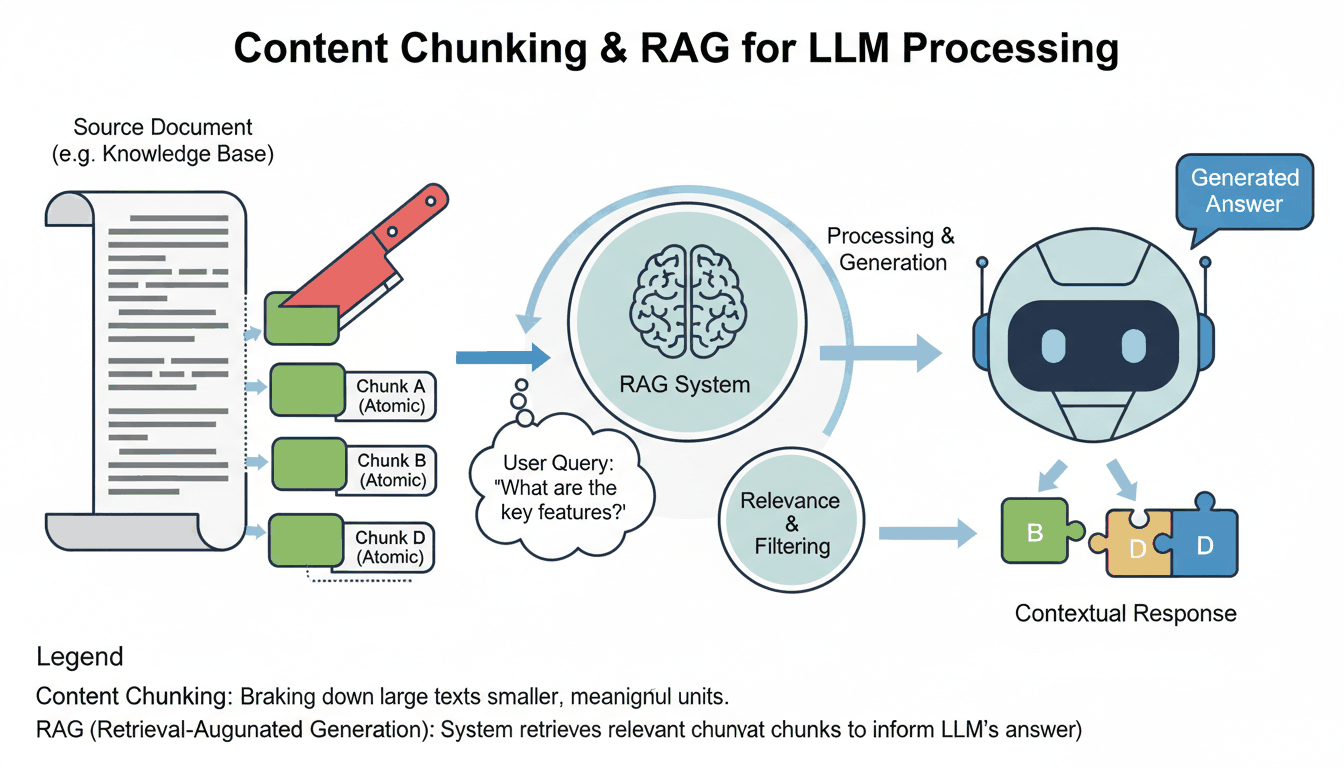
Every AI-optimized paragraph should be “atomic.” For example, instead of writing “This method is better because it saves time,” try: “The RAG-based retrieval method is more efficient than standard keyword matching because it reduces latency by 40%.” This allows the LLM to grab that one sentence and use it in a response while keeping the full context clear for the user.
How Does Entity Clarity & Schema Markup Influence AI Responses?
Entity Clarity & Schema Markup act as a translator between your human-readable content and the machine-readable needs of an LLM. By using JSON-LD schema, you tell the AI exactly what your brand is and how it relates to industry terms. This helps RAG systems “ground” their answers in your verified data, which reduces the chance of the AI hallucinating or quoting a low-quality competitor.
A vital tool appearing in 2026 is the llms.txt file. Much like a robots.txt, this file provides a markdown-based map specifically for AI crawlers. It flattens your site’s expertise into a format that models can digest without getting lost in navigation menus or ads. Tally Forms saw huge success by ensuring their brand entity was clearly defined, eventually becoming a top referral source for ChatGPT users.
Schema for Local SEO vs. GEO: Bridging the Gap
Local SEO schema usually focuses on “Address” and “Phone Number,” but GEO schema cares about “KnowsAbout” and “Author” credentials. To win in AI discovery, use Organization and Person schema to link your content to recognized experts. This builds E-E-A-T (Experience, Expertise, Authoritativeness, and Trustworthiness), signaling to the AI that your content is a safe, high-authority source to cite.
Measuring Success in a Zero-Click Environment
When searches don’t lead to clicks, “Total Clicks” isn’t the only metric that matters. Success in GEO is measured by “Brand Share of Voice” within AI responses. If a user asks Perplexity for the “best SEO tool” and your brand shows up in that summary, you’ve won—even if they never visit your site.
Research from Seer Interactive suggests tracking three new KPIs:
- AI Signal Rate: How often your brand appears in responses for your category.
- Answer Accuracy: How correctly the AI describes what you actually do.
- Citation Recency: The average age of the sources the AI cites (try to keep this under 6 months).
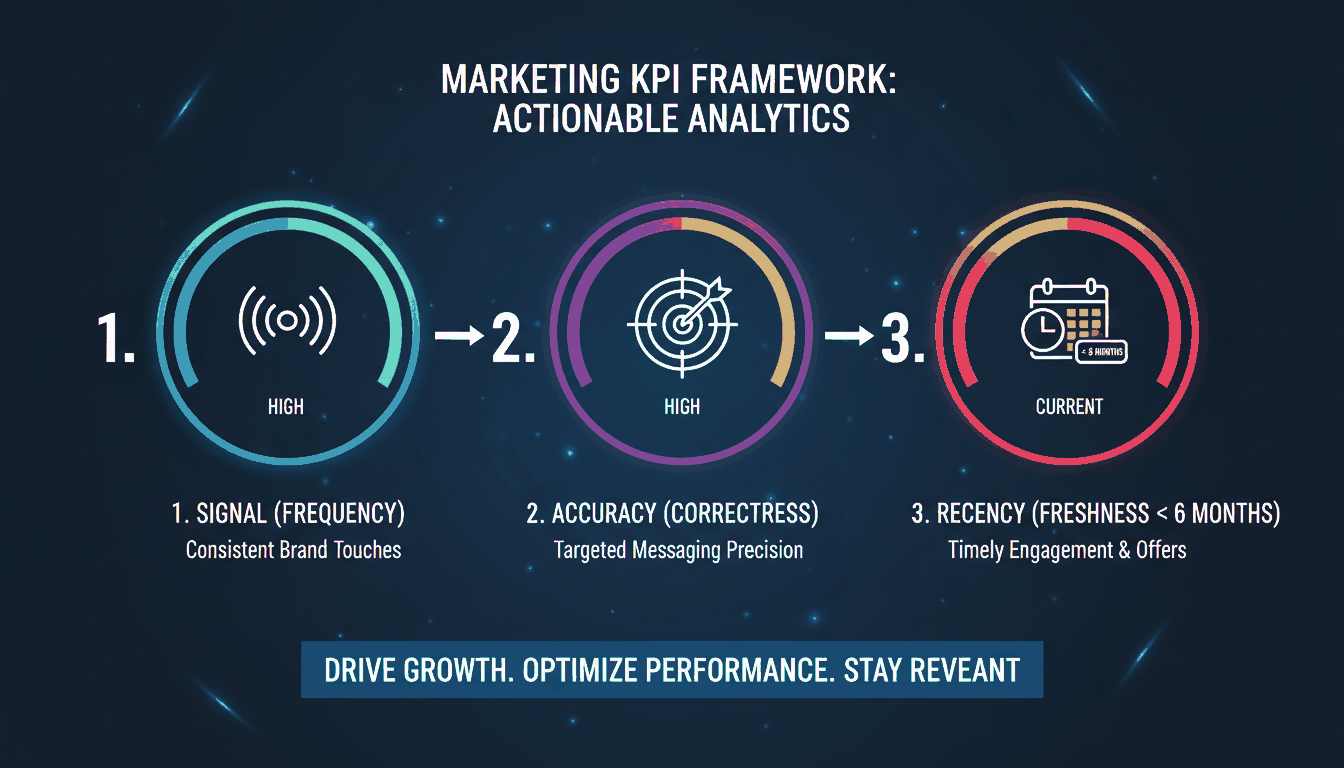
You can monitor these using tools like SEMrush’s AI Visibility Index or by running manual “Secret Shopper” prompts to see how LLMs describe your brand compared to your competitors.
FAQ
Is GEO replacing traditional SEO entirely in 2026?
No, GEO is an evolution, not a replacement. Traditional SEO is still vital for navigational queries (like users looking for your login page) and transactional queries (users ready to buy). However, GEO is now critical for informational and research-based discovery, where users want a synthesized answer rather than a list of links.
What are the best tools to track brand mentions in AI-generated answers?
Specialized AI tracking tools like Perplexity’s own interface and SEMrush’s Enterprise AIO are currently the leaders. You can also use brand monitoring tools that scan for LLM citations or conduct manual “Secret Shopper” prompts in ChatGPT and Gemini to test what the models “know” about your brand.
How does ‘Content Chunking’ specifically help LLMs process my website data?
Content Chunking aligns your text with the “context window” of an LLM. It allows RAG systems to retrieve specific, high-relevance snippets rather than entire pages. This reduces “noise” and makes it significantly easier for the AI to synthesize your information accurately, increasing the likelihood that your specific snippet will be the one cited.
Conclusion
While SEO remains the foundation of web visibility, GEO is the bridge to AI-driven discovery. The main difference in how is geo different than seo is the shift from optimizing for human clicks to optimizing for AI citations. In the AI era, being “findable” isn’t enough; you have to be “citable.”
Actionable Next Steps:
- Audit for Extractability: Rewrite your top 10 pages so they lead with direct, fact-rich answers.
- Implement Advanced Schema: Use JSON-LD to define your brand entities and author expertise.
- Monitor AI Share of Voice: Use tools like Perplexity or SEMrush to see how often you’re cited compared to your top three competitors.
