


Targeting branded keywords means bidding on search terms that contain your brand name. It’s how you defend high-intent demand, keep control of your messaging in an AI-first search world, and stop competitors from sniping your audience in 2026. This approach cleanly separates defensive brand spend from growth-focused discovery campaigns, so you can measure what’s actually incremental and what’s just harvesting existing interest.
Contents
- What Exactly Are Branded Keywords vs. Non-Branded Keywords?
- Why Targeting Branded Keywords in 2026 is Non-Negotiable
- Building a Bulletproof Brand Search Campaign: A Step-by-Step Framework
- Two Advanced Targeting Strategies: Isolation vs. Brand Inclusion
- Measuring Success: How to Prove Brand Search Campaigns Aren’t ‘Stealing’ Organic Traffic
- Targeting Branded Keywords on Amazon: A Different Game Entirely
- Conclusion
- FAQ
What Exactly Are Branded Keywords vs. Non-Branded Keywords?
A branded keyword is any search term that includes your brand name, product lines, or trademarked terms. When someone types “Nike running shoes” or “Apple MacBook Pro pricing” into a search engine, they’re using branded keywords. Non-branded keywords are the opposite—generic, functional, or category terms without a brand reference. Think “running shoes” or “best laptop for programming.”
The classification is something you define on the advertiser side. You build a list of your own brand and product-line terms, then treat any search containing one of those as branded. Everything else falls into the non-branded bucket. As SellerStack points out, this boundary is only as solid as the list you maintain. Every time you launch a new product line, it’s worth revisiting that list.
The Search Intent Behind the Search Term
The real difference between these two keyword types comes down to what the searcher actually wants. Someone searching for your brand name already knows who you are and trusts you enough to look for you specifically. They’re further along in the buying journey and far more likely to convert. Connect Media Agency puts it simply: a non-brand search like “web design company” is a stranger comparing options, while a brand search signals that something earlier—an ad, a referral, a piece of content—already did the work of introducing you.
This intent gap shows up directly in performance numbers. Branded terms typically convert at higher ROAS and lower CPC because they’re capturing demand that already exists. Non-branded terms cost more and convert less often, but they do something essential: they bring in people who’ve never heard of you. Both matter. They just serve different roles in your marketing funnel.
Why Targeting Branded Keywords in 2026 is Non-Negotiable
In 2026, treating branded keyword campaigns as optional means you’re choosing to lose control. The search landscape has shifted in ways that make brand bidding essential, not discretionary. Three pressures are driving this.
The first is defensive. Branded keywords catch high-intent demand from people actively looking for you by name. If you don’t bid on your own brand, competitors will. A competitor who buys ads on your brand name can position their product above your organic listing in search results, intercepting customers right at the decision moment.
The second pressure is AI-driven. A Pew Research Center analysis of Google searches from March 2025 found that 18% of queries generated an AI-powered summary. When those summaries showed up, users clicked on traditional links only 8% of the time, compared to 15% when no AI summary appeared. AI Overviews and answer-first experiences are suppressing organic click-through rates, which means a paid presence is becoming essential for visibility—even on your own brand name.
The third pressure is Performance Max. PMax is built to optimize across Google’s entire inventory, but if you don’t intentionally segment things, it cannibalizes brand traffic by routing brand-aware users into automated campaigns where measurement becomes a mess.
Olga Bobchenok, digital marketing specialist at VIDEN Growth, notes that treating brand isolation as “optional” is where many accounts start losing control. In an automation-first Google Ads ecosystem, the decision to bid on branded keywords isn’t just a budgeting question anymore—it’s a governance question.
The ‘PMax Cannibalization’ Problem Explained
Performance Max automatically expands audiences to find conversions. As it does this, it naturally gravitates toward brand-aware users—people who’ve visited your site before, seen your ads, or recognize your products. These users convert easily, which makes PMax reports look great.
The problem is that PMax mixes true acquisition with existing demand capture. When explicit brand intent doesn’t have a clean home in a dedicated campaign, PMax becomes the default path for brand-driven conversions. Your reports look better, but you lose clarity on what’s actually incremental.
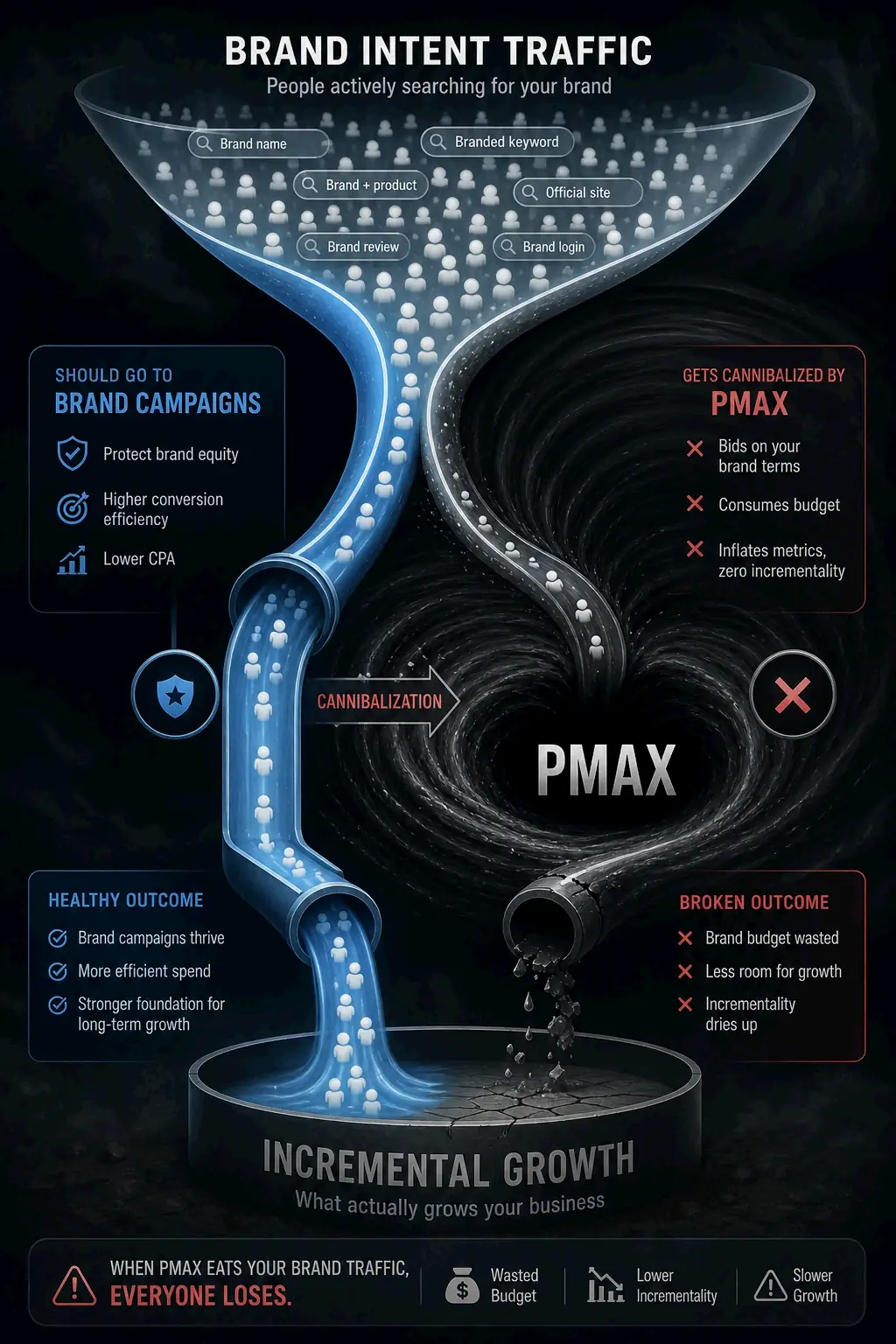
According to VIDEN Growth, the fix isn’t to fight PMax. It’s to set boundaries. A dedicated brand search campaign creates a structural boundary that forces PMax to focus on its real job: finding new demand rather than harvesting existing brand interest.
Building a Bulletproof Brand Search Campaign: A Step-by-Step Framework
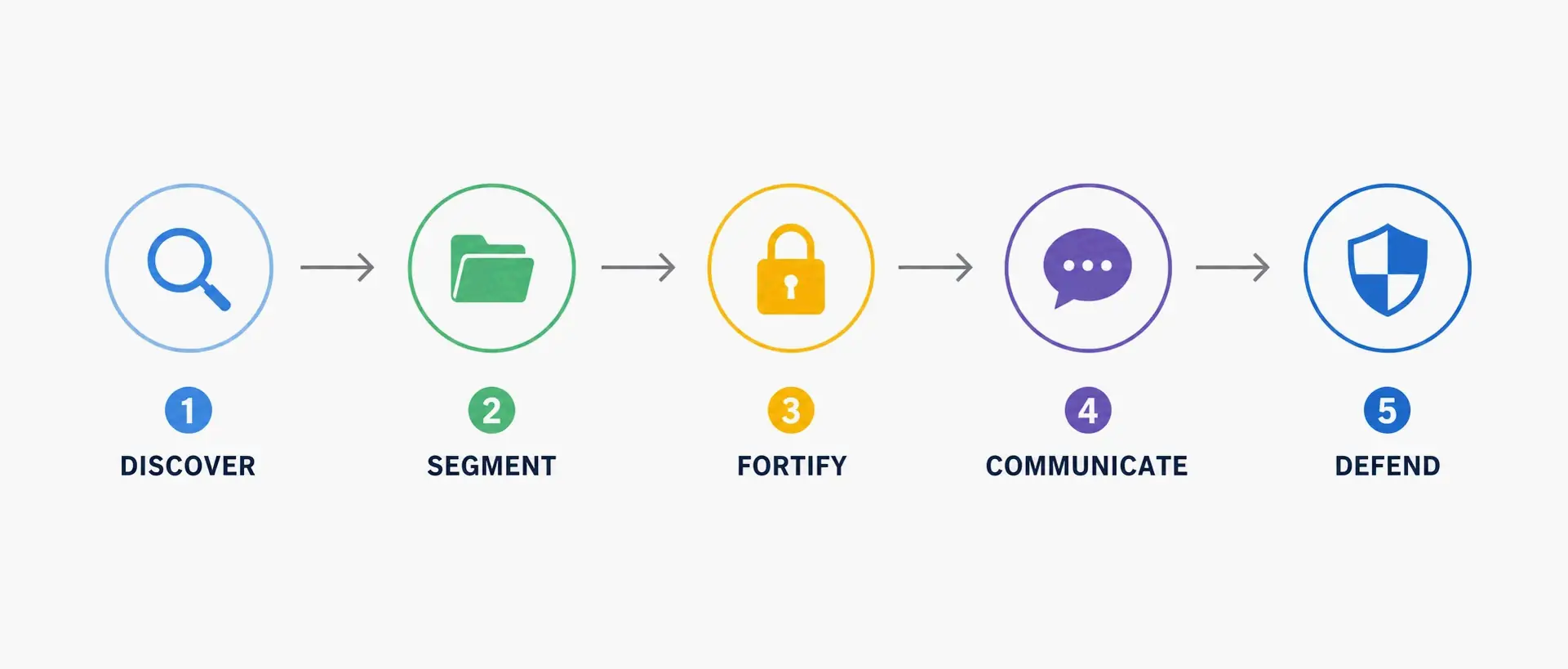
A strong brand search campaign doesn’t happen by accident. It takes deliberate structure, clear boundaries, and ongoing monitoring. Here’s a five-step framework for defending your brand demand in 2026.
Step 1: Discovery. Find every branded keyword variant your audience uses. This means exact brand names, product line names, common misspellings, product codes, and partner phrases like “[BrandName] pricing” or “[BrandName] reviews.” Use Google Keyword Planner to scrape your own website for branded terms, and pull search query reports from existing campaigns to spot queries you may have missed.
Step 2: Segmentation. Create a dedicated, isolated campaign with its own budget. Aim for 100% share of voice on your brand terms. A separate budget keeps brand spend from competing with discovery campaigns and makes performance measurement clean.
Step 3: Fortification. Set exact match keywords for your core brand terms and build a thorough negative keyword list. The goal here is “intent hygiene”—making sure your brand campaign only triggers on genuine brand-intent searches, not on broad discovery queries that belong in non-brand campaigns.
Step 4: Messaging. Use ad copy, sitelinks, and assets to control the narrative for your most valuable audience. Brand searchers are often at specific decision points. Instead of sending everyone to a generic homepage, route users based on what they’re actually looking for: pricing, demo requests, support, or reviews pages.
Step 5: Competitive Defense. Monitor the auction insights report to see who else is bidding on your brand terms and how aggressively. When competitors show up, your brand campaign acts as a defensive layer that keeps high-intent users from getting diverted at the last second.
An audit of 150+ Google Ads accounts by VIDEN Growth found that branded traffic was often scattered across multiple campaign types, inflating CPA while confusing the algorithm. Consolidating brand terms into a dedicated campaign consistently improved both measurement clarity and cost efficiency.
Intent Hygiene: Your 7-Point Brand Campaign Audit Checklist
A brand campaign is only as clean as its structure. Use this seven-point checklist to audit and maintain intent hygiene in your account.
- Dedicated brand campaign exists. Brand terms are not mixed into generic or discovery campaigns.
- Exact match dominates. Core brand terms use exact match to prevent query expansion into non-brand territory.
- Negative keywords are comprehensive. Category terms, semi-brand queries, and competitor names are blocked from the brand campaign.
- Budget is separate and sufficient. The brand campaign has its own budget that can capture available impression share.
- Ad copy reflects brand ownership. Messaging reinforces brand identity rather than generic value propositions.
- Landing pages match intent. Sitelinks and final URLs route users to relevant pages based on query context.
- PMax brand exclusions are active. Where available, brand terms are excluded from Performance Max to maintain structural separation.
Two Advanced Targeting Strategies: Isolation vs. Brand Inclusion
In 2026, advertisers face a clear decision between manual control and AI-assisted scale. Two distinct strategies have emerged for managing branded search, each with different risk levels and resource requirements.
Strategy A: The ‘Fortress’ Approach (Isolation). This method relies on complete manual control through dedicated campaigns with exact match keywords. Brand terms are isolated in their own campaigns with strict negative keyword lists, and Performance Max is explicitly steered toward non-brand discovery. This approach gives you maximum control and measurement clarity while minimizing the risk of brand traffic mixing with automated campaigns.
According to VIDEN Growth, this isolation method keeps outperforming in the accounts they manage, precisely because it preserves clear signals and makes performance shifts something you can actually diagnose.
Strategy B: The ‘Guided AI’ Approach (Broad Match + Brand Inclusion). Some advertisers have found success with a more automated method that uses Google’s Brand Inclusion feature. Instead of a separate brand campaign, brand terms are allowed to appear in broader campaigns that use broad match keywords. When the Brand Inclusion setting is turned on, Google’s AI prioritizes showing ads for searches that include specified brand terms.
This approach requires fewer negative keywords and leans more on machine learning boundaries. It can catch long-tail brand traffic that exact match might miss, but it also introduces more automation risk and makes incremental measurement harder.
Comparison of Strategies.
| Factor | Fortress (Isolation) | Guided AI (Brand Inclusion) |
|---|---|---|
| Control level | High, manual | Medium, AI-assisted |
| Setup complexity | Higher (negatives required) | Lower (fewer negatives) |
| Long-tail brand coverage | Limited to exact match terms | Broader via broad match |
| Measurement clarity | Clean separation | Less distinct boundaries |
| Best for | Enterprises with dedicated teams, eCommerce with high brand search volume | SMBs with limited time, brands with ambiguous or generic names |
| Primary risk | Missing unexpected brand variants | PMax or broad match absorbing non-brand traffic |

Neither strategy is universally correct. The right choice depends on your team’s capacity, your brand’s search volume, and how comfortable you are with measurement ambiguity. What matters is making an intentional choice rather than letting automation decide by default.
Measuring Success: How to Prove Brand Search Campaigns Aren’t ‘Stealing’ Organic Traffic
A persistent worry about brand bidding is that paid ads simply steal clicks that would have gone to organic results anyway, wasting budget on demand you already own. This concern misunderstands how the modern SERP actually works.
When a branded paid ad appears alongside a number one organic listing, the combined presence captures more total clicks than organic alone. The SERP isn’t static—competitors, shopping units, and third-party results all compete for attention. A paid brand ad pushes these alternatives down and increases the total share of clicks going to your business.
The core metric for measuring this effect is incremental clicks, which you can track through Google Search Console’s paid versus organic report. Compare total branded clicks when ads are running against periods when they’re paused. Measure the combined paid and organic total rather than either channel in isolation.
A Simple Geographical Test for Incrementality
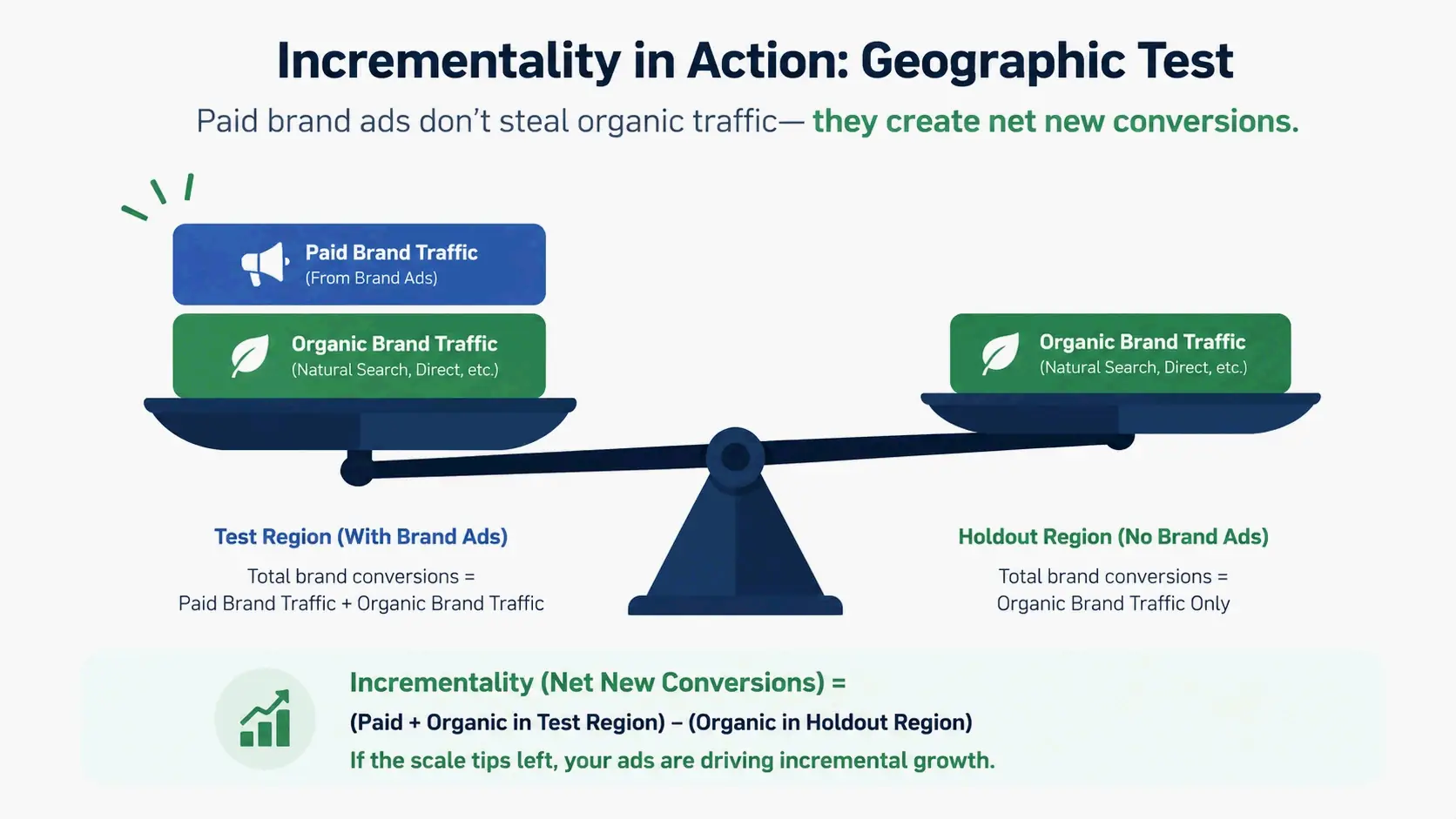
A practical way to measure the true incremental value of your brand campaign is a geographic holdout test. The methodology is straightforward but requires discipline.
Select two markets with similar characteristics. In one market, pause branded search ads for two to four weeks. In the other, keep them running as usual. Measure the change in total brand conversions—paid plus organic—in both markets over the same period.
If the market with paused ads sees a net decline in total brand conversions, your brand campaign was adding incremental value beyond organic alone. If total conversions remain stable, those paid clicks were mostly cannibalizing organic traffic. Most businesses that run this test discover that brand ads protect demand more than they cannibalize it, especially in competitive markets where rivals bid on their brand name.
Targeting Branded Keywords on Amazon: A Different Game Entirely
Branded keyword strategy on Amazon operates by fundamentally different rules than on Google. On Amazon, you’re not just defending against competitors’ ads—you’re defending against their product listings. A competitor who bids on your brand name can place their product directly in front of customers who searched for yours.
The primary goal on Amazon is defensive, but the measurement framework differs. Branded campaigns on Amazon typically run at a low advertising cost of sale, capturing demand that already exists. The SellerStack Goldbond example illustrates the pattern: a branded campaign on “Goldbond lotion” might run at an 8% ACoS, while a non-branded campaign on “itch lotion” runs at a 35% ACoS but generates New-to-Brand sales.
This split matters because Amazon’s New-to-Brand metrics reveal the true roles of each campaign type. Branded campaigns defend existing demand and produce efficient but non-incremental conversions. Non-branded campaigns cost more but reach shoppers with no existing brand preference, driving the new customer acquisition that fuels growth.
According to SellerStack, segmenting the two approaches into separate campaigns lets you measure each goal independently: cheap demand capture versus paid discovery. Blending them produces a dashboard that looks efficient but masks the reality that the brand isn’t actually growing.
Conclusion
Targeting branded keywords in 2026 isn’t an optimization tactic. It’s the foundational structure that automated, measurable, and defensible search marketing is built on. When brand intent is isolated and protected, Performance Max can focus on incremental growth, measurement becomes transparent, and competitive threats become visible.
Your immediate next step isn’t a budget change. It’s a structural audit. Isolate your brand queries into a dedicated campaign today. Implement exact-match keywords and comprehensive negative keywords. Set a performance baseline by comparing total brand conversions—paid and organic—before and after the change. This single structural decision makes your entire account easier to manage, easier to measure, and more predictable to scale.
FAQ
What tools can I use to track search volume for my branded keywords?
Free tools like Google Keyword Planner and Google Search Console provide direct data on branded query volume and performance. For competitive analysis and trend monitoring of your brand terms versus competitors, third-party platforms like SE Ranking offer more robust features.
Is a separate brand search campaign really necessary if Performance Max covers all channels?
Yes, it is critical. Without a separate campaign, Performance Max funnels brand-intent traffic into an automated black box, mixing it with display and discovery conversions and making incremental measurement impossible. A dedicated brand campaign creates a structural boundary that forces PMax to focus on finding new demand rather than harvesting existing brand interest.
How do I know if my paid brand ads are cannibalizing my organic sales?
Standard last-click attribution cannot answer this question. Instead, run a geographic lift test: pause brand ads in one market for two to four weeks while keeping them live in a similar test market. Measure the change in total brand conversions—paid plus organic—not just the paid channel in isolation. This reveals the true incremental impact.
How does a branded keyword strategy on Amazon differ from Google?
On Amazon, the competition is directly within the product purchase flow. The goal is to occupy top-of-search real estate to prevent a competitor’s product from winning the immediate sale. Measurement uses metrics like ACoS for profitability and New-to-Brand to distinguish defense from customer acquisition, whereas Google focuses more on incremental clicks and impression share.
