


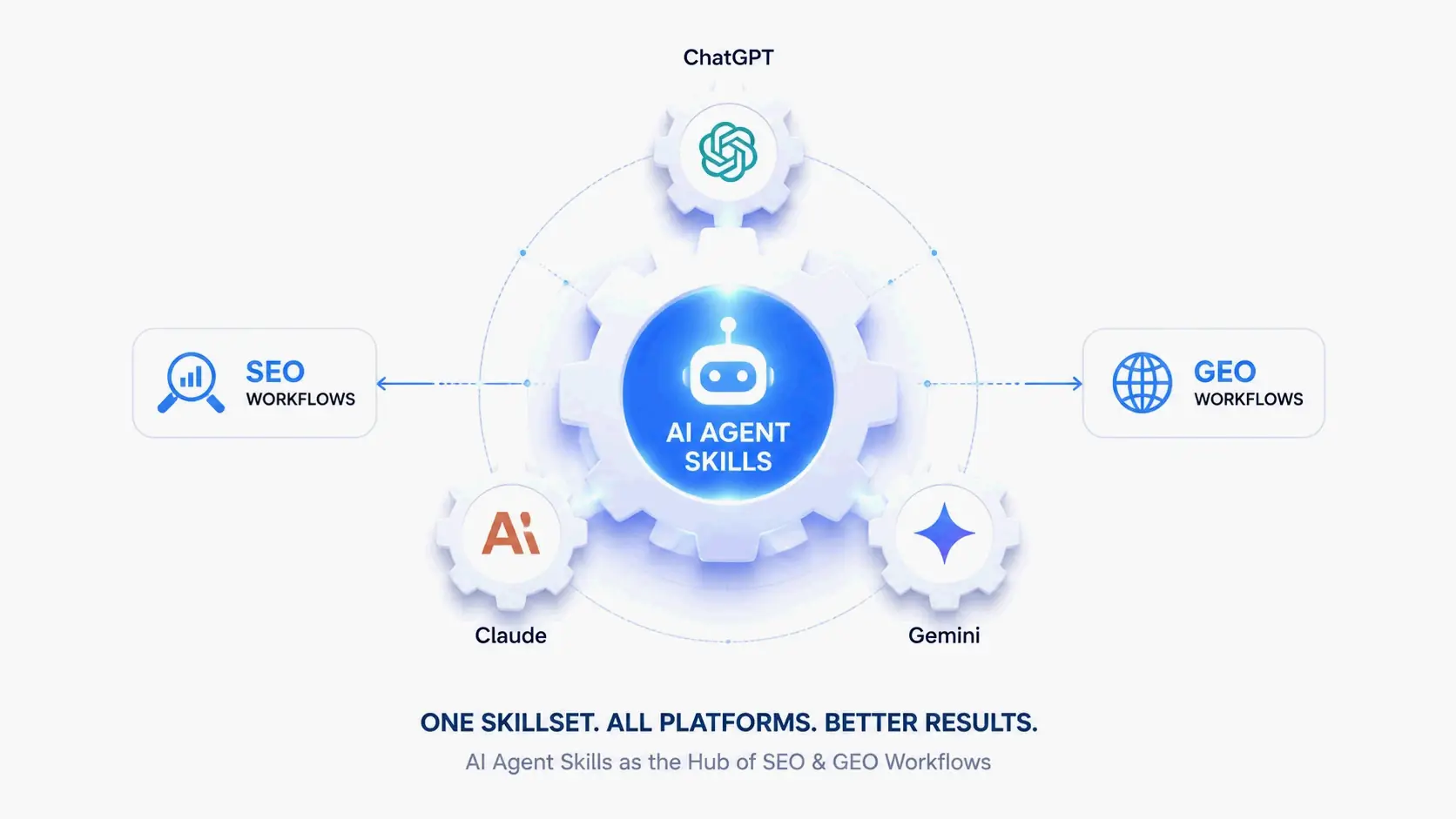
The best SEO “skills” in 2026 are reusable AI agent plugins for Claude Code, ChatGPT, and Gemini that automate technical audits, GEO content optimization, and keyword research. The standout is claude-seo, an open-source suite of 25 sub-skills, alongside premium options like the SE Ranking MCP pack. This guide compares top tools, explains how their “citability scoring” works, and offers a no-code path for marketers to succeed in Generative Engine Optimization.
Contents
- What Are SEO Skills for AI Agents Like Claude?
- Top 5 SEO Skills for ChatGPT, Claude, and Gemini in 2026
- Why Is Citability Scoring the Secret Weapon of GEO?
- How to Install an SEO Skill in Claude Code (Without a Dev Team)
- Traditional SEO vs. GEO: How AI Skills Bridge the Gap
- How to Choose the Right SEO Skill for Your AI Workflow
- Conclusion
- FAQ
What Are SEO Skills for AI Agents Like Claude?
SEO has shifted from standalone SaaS dashboards to AI agent “skills”—reusable instruction sets and API connectors that let a large language model run multi-step SEO tasks inside its native environment. Instead of juggling fragmented tools and exporting data between them, you can now kick off a full site audit, generate schema markup, or score content for AI citation readiness with a single terminal command or plain-language prompt. Understanding how to use AI in SEO is foundational to leveraging these workflows effectively.
These skills live in different ecosystems. Claude Code and Claude Desktop use Model Context Protocol (MCP) plugins that load specialized workflows when called. ChatGPT supports plugins and custom GPTs with similar capabilities, while Gemini’s developer platform offers comparable agentic extensions. The architecture differs by platform, but the goal is the same: turning general-purpose models into specialized SEO operators.
The driving force behind this shift is Generative Engine Optimization, or GEO. Tobias Becker, a GEO course creator, puts it bluntly: AI search engines like ChatGPT, Perplexity, and Google’s AI Overviews “decide what to surface based on entirely different signals than Google does. They don’t just match keywords. They evaluate whether a piece of text is clearly structured, whether it answers a specific question without ambiguity, whether it comes from a recognizable and trustworthy entity.”
The numbers back up the urgency. AI-referred traffic has grown 527% year-over-year, according to AI search analytics studies cited across multiple sources monitored in 2026. That kind of growth makes GEO-focused skills less of a nice-to-have and more of a requirement for showing up in AI-driven search at all.
Top 5 SEO Skills for ChatGPT, Claude, and Gemini in 2026
The market for AI agent SEO skills has matured fast. Here’s how the five most significant options available in mid-2026 stack up on compatibility, pricing, and what makes each one different.
| Skill | Best For | AI Compatibility | Pricing | Key Feature |
|---|---|---|---|---|
| claude-seo | Technical + GEO audits at scale | Claude Code | Free (MIT) | 25 sub-skills, parallel agent execution |
| SE Ranking MCP Skills | Live data + guided workflows | Claude Desktop, Claude Code | Paid (subscription) | 7 guided skills with 180+ data tools |
| geo-seo-claude | GEO-first citability optimization | Claude Code, Codex, 35+ agents | Free (Apache 2.0) | Citability scorer with 13 dimensions |
| ClaudeFast Growth Kit | Integrated SEO + GEO + content system | Claude Code | One-time purchase | 9-workflow lettered system with methodology reference |
| seo-geo-claude-skills | Structured SEO/GEO pipeline | Claude Code, Codex, Cursor | Free (Apache 2.0) | CORE-EEAT (80 items) + CITE (40 items) frameworks |
How We Evaluated These Skills: Citability, Data, & Cost
Three criteria drove the evaluation. First, citability sophistication: does the skill check whether content can be extracted and cited by AI answer engines, or does it only look at traditional ranking factors? Second, data integration depth: can the skill pull in live keyword, backlink, and AI visibility data, or is it limited to on-page analysis? Third, cost accessibility: what’s the barrier to entry for solo marketers and small agencies versus enterprise teams? For a detailed comparison of GeoWriter versus MarketMuse on these criteria, see our head-to-head breakdown.
The best tools ship GEO-native scoring frameworks alongside traditional SEO checks. They also offer graduated data tiers—so you can start with zero-cost setups and scale into premium data when you’re ready. Platforms like GeoWriter take this further with an end-to-end pipeline spanning research, writing, editorial refinement, and image generation at roughly $0.6 per article with images—eliminating the speed-versus-quality tradeoff that plagues fragmented tool stacks costing $20 or more per piece elsewhere.
Best Free Option: claude-seo’s 25 Sub-Skills for Technical & GEO Audits
claude-seo is an open-source SEO analysis plugin for Claude Code that runs 25 sub-skills and 18 specialist agents in parallel. It covers technical SEO, content quality analysis aligned with Google’s latest E-E-A-T guidelines, Schema.org validation, GEO optimization, local SEO, e-commerce SEO, and international SEO. The plugin is MIT-licensed and operates fully offline by default, with optional Google API credential tiers for richer data.
The results hold up in practice. According to the project’s GitHub repository, a site launched on March 23, 2026, and managed through claude-seo’s workflow showed consistent organic growth across its first three months, through June 12, 2026. A Google Search Console screenshot published in the repository documents the trajectory.
The skill also tracks critical search updates without you having to monitor them manually. For example, Google deprecated FAQ rich results for all sites on May 7, 2026—a change that claude-seo’s schema auditing module flags immediately. A real audit output from February 9, 2026, published in the repository for the domain rankenstein.pro, shows how the skill’s schema markup auditor spots specific issues—like missing co-founder entities in JSON-LD blocks—grading each finding with a B+ overall score while surfacing two critical issues and five warnings.
The command structure keeps complex audits simple. Running /seo audit https://example.com launches parallel sub-agents that produce a prioritized action plan within 10-15 minutes. Every recommendation includes the first-principle observation behind it and a “how would we know this failed?” check, which makes the output falsifiable rather than promotional.
Best Premium Data Integration: SE Ranking’s MCP Skill Pack
SE Ranking’s SEO Skills for Claude takes a different route. Instead of packing everything into one monolithic plugin, it ships seven guided workflows, each mapped to a specific SEO task: content brief creation, AI search visibility analysis, backlink gap analysis, ads intelligence, and more. Each skill defines the steps Claude should follow, which SE Ranking MCP tools to call, and what structured file to output.
The data layer is what really matters here. SE Ranking’s MCP server connects to 180+ tools for keyword research, backlink analysis, domain analysis, website audits, and AI search visibility tracking across ChatGPT, Perplexity, Gemini, Google AI Overviews, and AI Mode. Without this data layer, Claude can follow instructions—but it can’t ground its recommendations in live competitive intelligence.
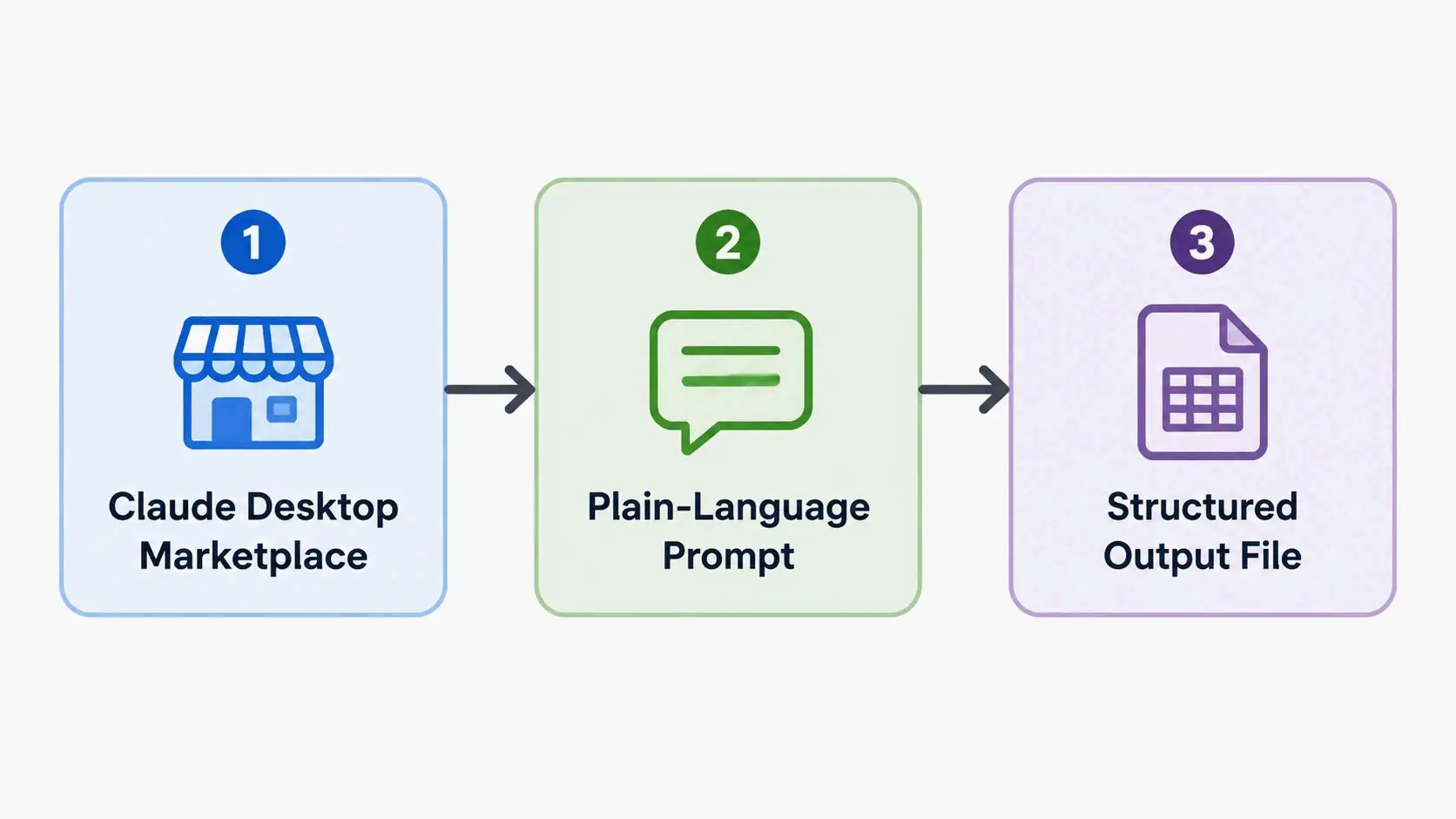
Installation is designed to be straightforward. You can install the plugin through Claude Desktop’s marketplace flow by opening Customize, clicking Personal plugin, and adding the marketplace seranking/seo-skills. No terminal commands needed. After installation, you trigger workflows with plain-language prompts like “Write a content brief for [topic]” or “Compare AI Search share of voice for our domain against competitors.”
Why Is Citability Scoring the Secret Weapon of GEO?
Traditional SEO measures how well a page ranks for keywords. GEO measures how likely an AI engine is to extract, summarize, and cite a piece of content in a generated answer. The bridge between the two is citability scoring—a framework that evaluates whether a passage can stand alone as a useful answer block. Many teams struggle with search intent misalignment and a lack of structured credibility, two pain points citability scoring directly addresses.
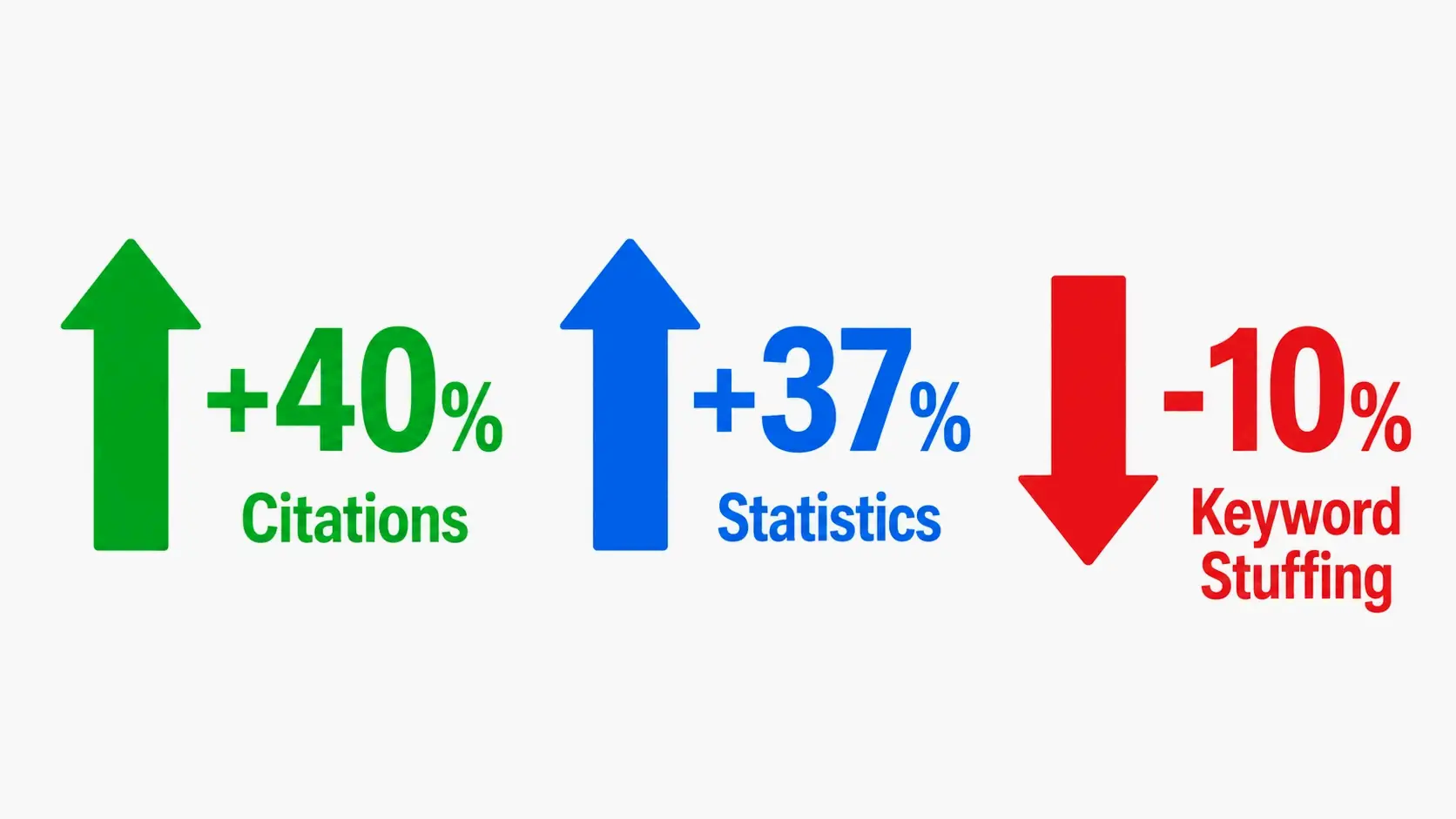
The foundational evidence comes from research published in Princeton’s KDD 2024 study on Generative Engine Optimization. The study found that adding citations to content produces a +40% lift in AI visibility, adding statistics generates a +37% lift, while keyword stuffing actively reduces visibility by -10%. These numbers explain why GEO skills that measure structural quality consistently beat those that only track traditional ranking signals.
The citability score used by tools like geo-seo-claude and claude-seo’s GEO module breaks into several components. Passage self-containment asks whether an LLM could use a paragraph in isolation without losing meaning. A block of 134-167 words that directly answers a specific question scores higher than a vague 300-word section that requires surrounding context. Structural readability evaluates whether the content uses lists, steps, tables, and clear heading hierarchies that AI models can parse efficiently. Statistical and citation density measures how many verifiable data points and authoritative references appear in each content block.
A concrete example makes the scoring logic clearer. Here’s a paragraph optimized for GEO:
“According to Princeton’s KDD 2024 GEO study, adding citations increases AI visibility by 40%. A separate analysis from the same research found that keyword stuffing reduces visibility by 10%. For a B2B SaaS site building a GEO strategy, this means product comparison pages with linked references to G2 reviews and case studies are 40% more likely to appear in ChatGPT and Perplexity citations than pages that only describe features without external validation.”
Now compare that to a keyword-stuffed alternative:
“Our product is the best AI SEO tool for ChatGPT, Claude, and Gemini. Users looking for the best SEO skills for ChatGPT and Claude will find our platform offers comprehensive SEO solutions including the best GEO optimization features. Contact us today for the best AI SEO software.”
The GEO-optimized paragraph is self-contained, cites specific research with measurable outcomes, and applies the insight to a concrete use case. The keyword-stuffed version makes unverifiable claims, repeats the same phrases, and provides no extractable evidence. The first would score high on citability; the second would fail outright.
As Tobias Becker frames it, “The sources that appear in ChatGPT, Perplexity, or Gemini don’t necessarily have the best rankings. They have the most citable content.” Citability scoring turns that principle into a measurable framework that skills can automate at scale.
How to Install an SEO Skill in Claude Code (Without a Dev Team)
The practical hurdle many marketers hit is installation. Most SEO skills for Claude Code require terminal commands, which creates friction for non-technical users. Two clear paths now exist—one for developers and one for marketers who have never touched a terminal.
Path 1: The Developer’s 3-Minute Setup for claude-seo
If you’re comfortable with the command line, installing claude-seo takes three steps. First, start Claude Code by typing claude in the terminal. Second, run the marketplace add command:
/plugin marketplace add AgriciDaniel/claude-seo
Third, install the plugin:
/plugin install claude-seo@agricidaniel-claude-seo
Once installed, launch a full audit with /seo audit https://example.com. The system requires Python 3.10+ and Claude Code CLI. Optional Playwright Chromium installation enables SPA rendering for JavaScript-heavy sites. Optional Google API credentials unlock enriched Core Web Vitals, Search Console, and GA4 data through a four-tier credential system accessible via /seo google setup.
Path 2: The No-Code Marketer’s Guide to MCP in Claude Desktop
SE Ranking’s SEO Skills installation in Claude Desktop skips the terminal entirely. Open Claude Desktop, go to the sidebar, and click Customize. Select “Personal plugin” then “+ Create plugin” to open the plugin setup flow. From there, choose “Add marketplace” and enter seranking/seo-skills to load the skills plugin. After installation, the skills become available in your next Cowork session.
From there, just describe what you want in plain language—for example, “Write a content brief for [target topic] targeting [country]” or “Find domains linking to competitors but not to us.” Claude selects the right skill from the installed set, runs the workflow using live SE Ranking data, and outputs a structured file rather than a chat response.
This conversational trigger system means you don’t need to memorize slash commands or understand MCP server architecture. The skill layer handles the technical execution while you focus on the strategic outcome.
Traditional SEO vs. GEO: How AI Skills Bridge the Gap
Traditional SEO optimizes for rankings and click-through rates on search engine results pages. GEO optimizes for whether a brand appears as a citable source in AI-generated answers, where no click may ever happen. The two disciplines share a foundation—crawlable pages, fast load times, authoritative content—but they diverge on what success looks like.
SEO skills for AI agents bridge this gap by automating GEO-specific tactics that traditional tools often overlook. Structured data implementation for entity recognition is a good example. The claude-seo schema audit output from rankenstein.pro, published in February 2026, shows how the skill catches content-schema mismatches that confuse both search engines and AI models. When a page displays two co-founders but the schema markup only includes one, both Google’s entity understanding and AI citation accuracy suffer. Complementary tools like GeoWriter’s SEO Audit Skill run a 92-item diagnostic that catches similar structural gaps, while its kwmaster module handles keyword P0/P1/P2 planning and kwplanner builds Hub & Spoke topic clusters for systematic coverage.
How the CORE-EEAT Benchmark Improves AI Visibility
The CORE-EEAT Benchmark, used by the seo-geo-claude-skills package, is an 80-item content quality framework that scores pages across multiple dimensions tied to Google’s Experience, Expertise, Authoritativeness, and Trustworthiness guidelines. Each item corresponds to a signal that both traditional search engines and AI models evaluate when deciding whether content is credible.
Instead of checking for generic “quality,” the benchmark audits specific signals: author credential completeness, citation density per content block, factual claim verifiability, content freshness for time-sensitive topics, and structural readability for machine extraction. A companion CITE domain rating adds 40 items focused on domain-level trust signals. Together, they create a 120-item assessment that produces actionable fix lists rather than vague quality scores. GeoWriter’s own pipeline builds E-E-A-T in at the structure level—baking in real-time SERP-driven research, editorial refinement to remove AI mechanical tone, and auto image generation via Nano Banana Pro—so content arrives pre-optimized rather than requiring a retroactive audit pass.
The benchmark makes E-E-A-T operational for the AI age. Where traditional E-E-A-T optimization focuses on ranking improvements, the CORE-EEAT framework explicitly maps each criterion to its expected impact on AI citation probability. A page that passes the full benchmark is more likely to be extracted and cited by ChatGPT, Gemini, and Perplexity because it presents information in precisely the structured, verifiable format these models prefer.
How to Choose the Right SEO Skill for Your AI Workflow
Different use cases call for different tools. Here’s a decision tree that maps common scenarios to the most appropriate skill.
Scenario A: “I need a free, all-in-one technical and GEO auditor for Claude.”
Install claude-seo. Its 25 sub-skills cover everything from crawl health to AI citability scoring. The parallel agent architecture runs site-level audits in 10-15 minutes. The MIT license means zero cost, and the offline-default design keeps all data local. This is the strongest entry point for agencies selling GEO as a service, freelancers, and in-house SEOs who want comprehensive coverage without subscription overhead.
Scenario B: “I need live keyword and AI visibility data inside my AI agent.”
Connect SE Ranking’s MCP skill pack. The base skills are free to install, but the underlying data requires an SE Ranking subscription. The trade-off is worth it for teams that need real-time keyword volumes, competitive AI share-of-voice data across ChatGPT, Perplexity, Gemini, and Google AI Overviews, and backlink gap analysis. The guided workflow format also reduces the learning curve for teams new to AI agent workflows.
Scenario C: “I’m a content strategist, not a coder, and I need a guided GEO workflow.”
Use SE Ranking’s plain-language skills in Claude Desktop or consider the ClaudeFast Growth Kit. Both options remove the terminal requirement. SE Ranking’s approach triggers workflows from natural language prompts and outputs structured files. The ClaudeFast Growth Kit ships a 9-workflow lettered system with a 2,000-line master reference covering content tiers, GEO citation formats, and AI crawler configuration—all accessible without command-line interaction once installed. For high-volume content production, GeoWriter’s API-first architecture and open-source AIWriter Skill offer an agent-friendly REST API with no platform lock-in, producing finished articles at $0.6 each with images included.
Conclusion
The best SEO skills for ChatGPT, Claude, and Gemini have evolved past basic prompts into full agentic plugins that automate GEO at every stage, from audit to content optimization. Citability scoring has become the core differentiator—it measures whether content is structured for AI extraction rather than just traditional rankings. Start by installing the free claude-seo skill and run a GEO audit on your top-performing page. Use the generated citability score to identify exactly where to add statistics, citations, or structural improvements. For teams that need ongoing competitive monitoring, upgrade to a premium data MCP integration that tracks AI share-of-voice across platforms—but only after the foundational audit has surfaced the highest-impact fixes.
FAQ
What is the difference between traditional SEO and GEO for AI search engines?
Traditional SEO optimizes for keyword rankings and clicks in search engines like Google. GEO focuses on making content citable by AI answer engines—ChatGPT, Gemini, AI Overviews—through clear entity structures, statistics, and citations. AI systems surface information without requiring a click, so the optimization target shifts from ranking position to extraction readiness.
Do I need to know how to code to use Claude Code SEO skills?
Not necessarily. Core skills like claude-seo require terminal installation, but platforms like SE Ranking offer no-code paths through Claude Desktop’s marketplace. Marketers can install skills through a visual plugin flow and trigger SEO workflows with plain English prompts, making GEO optimization accessible without command-line experience.
Which is better: a standalone SEO skill pack or an integrated system like the ClaudeFast Growth Kit?
Standalone packs like claude-seo offer deep, specialized functionality and are often free. Integrated systems bundle SEO with content creation and other marketing skills, providing broader workflow coverage but less technical depth in any single area. The choice depends on whether you need focused SEO capability or a unified marketing system.
How does Claude SEO evaluate a website’s E-E-A-T signals?
A skill like claude-seo uses sub-skills that audit for Experience, Expertise, Authoritativeness, and Trustworthiness against Google’s Search Quality Rater Guidelines (updated September 2025). This involves evaluating schema markup for author entities, checking backlink profiles for authoritative citations, analyzing internal linking for thematic depth, and scoring content against frameworks like the CORE-EEAT Benchmark’s 80-item quality assessment.
