


Geowriter is a specialized AI SEO agent toolchain that runs as a skill inside Claude Code and other CLI environments, autonomously producing publication-ready, E-E-A-T aligned articles for AI-driven search. It covers the full pipeline: keyword planning, batch article generation, brand integration, internal link injection, SEO diagnosis, and article image generation in a single automated workflow. ChatGPT excels as a versatile conversational assistant for drafting and research. The core of the Geowriter vs ChatGPT debate lies in agentic automation versus assisted ideation. If you need hands-off, GEO-optimized content that AI engines can cite, choose Geowriter; for multi-purpose help where you control the final output, choose ChatGPT.
Contents
- What Is Geowriter vs ChatGPT? The Fundamental Concept Gap
- Deep-Dive Comparison: ChatGPT vs. Geowriter for a Single GEO Task
- Measuring What Matters: Can ChatGPT or Geowriter Prove AI Visibility?
- Building a Consistent AI Brand Voice: Memory and Shared Context
- Geowriter vs ChatGPT: A Decision Guide for Your Role and Team Size
- The Business Case: Why 4.4x Higher Conversions Make This Choice Urgent
- Conclusion
- FAQ
What Is Geowriter vs ChatGPT? The Fundamental Concept Gap
The choice between Geowriter and ChatGPT comes down to a fundamental architectural difference. Geowriter operates as an AI SEO agent—a specialized system that autonomously runs through multi-stage content production workflows without needing step-by-step human input. ChatGPT functions as a general-purpose conversational assistant. It generates text in response to individual prompts, but someone with real expertise still has to guide it through each stage of the content creation process.

This distinction has become critical in 2026. Search has split into two separate disciplines. Traditional search engine optimization still matters for Google rankings, but Generative Engine Optimization (GEO) has emerged as its own practice. GEO focuses on making content visible and citable inside AI-generated answers on platforms like ChatGPT, Perplexity, Gemini, and Google AI Overviews.
These two optimization tracks demand different approaches to content creation. A general-purpose assistant can help with both, but only when a knowledgeable human directs every step. A specialized AI SEO agent is purpose-built for the new reality: content now has to satisfy an AI model’s requirements for structure, authority, and extractability—without a human having to spell those requirements out each time.
Defining the AI SEO Agent: Beyond a Simple Chatbot
An AI SEO agent differs from a chatbot in one key way: it executes rather than suggests. Louise Linehan explains it clearly: “SEO is a particularly good fit for AI agents because most of the work is sequential. Keyword research informs your content brief. Competitor gaps shape your outline. A technical audit tells you what to fix before you publish.”
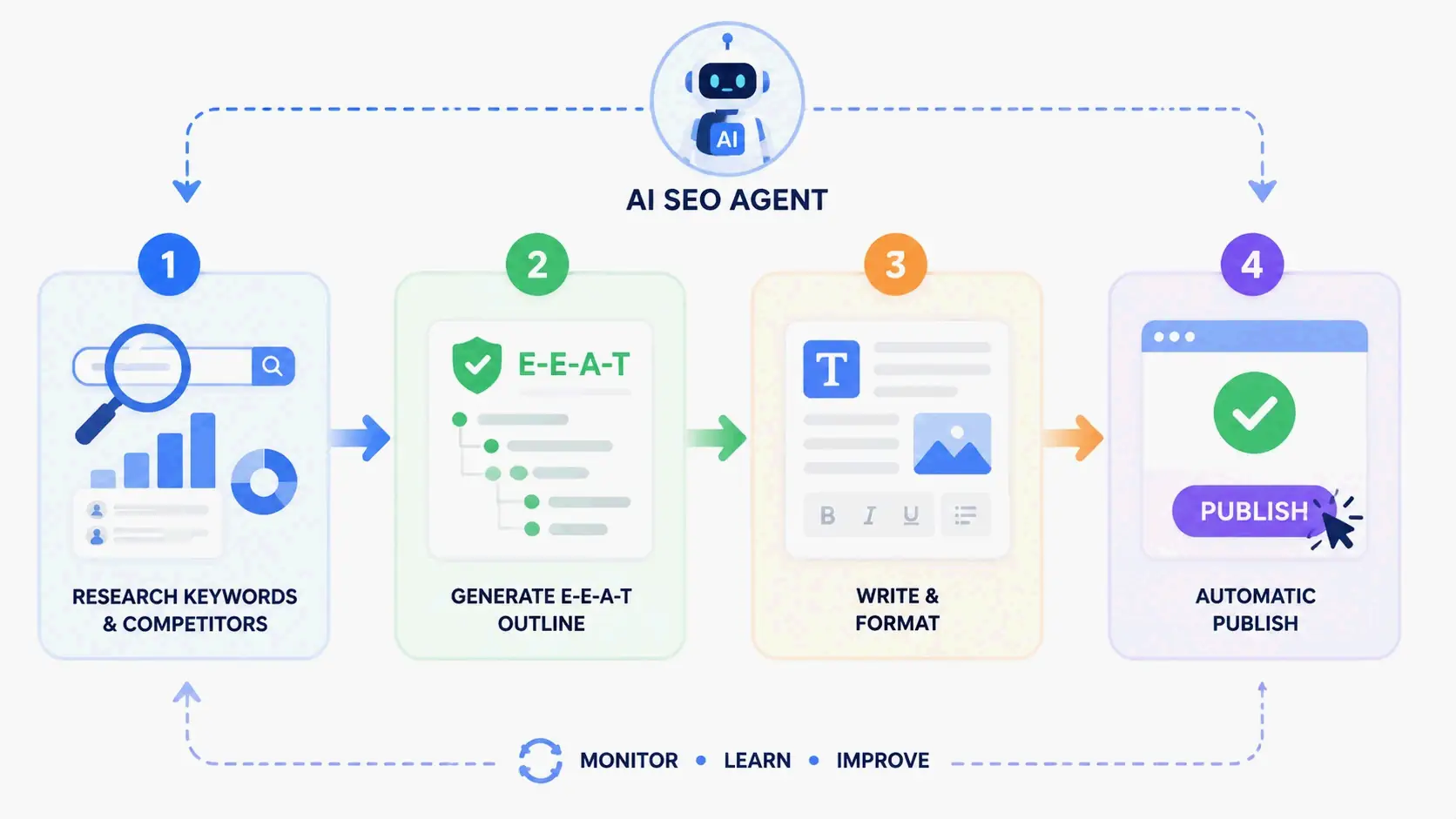
Because the work is sequential, an agent can chain together multiple tasks: pulling live SERP data, analyzing competitor content, generating a structured outline, writing an E-E-A-T aligned draft, injecting internal links, pairing articles with relevant visuals, performing SEO diagnostics, and publishing directly to WordPress. Geowriter was designed as this type of content-focused AI SEO agent — a skill-based toolchain covering keyword planning, batch article generation, brand integration, and link injection in a unified system. It handles the full pipeline in a single autonomous workflow and produces publication-ready articles in about five minutes.
ChatGPT, by contrast, requires you to break that pipeline into individual prompts. Each stage—research, outlining, writing, formatting—needs a new set of instructions. The human operator has to understand SEO and GEO well enough to guide the tool correctly at every step. That’s assisted ideation, not autonomous execution.
The Rise of GEO and Why Your Tool Choice Matters in 2026
The shift from traditional search to AI-powered answer engines has transformed what content needs to do. As noted in Onely’s AI agency guide, “Using AI to do SEO and optimizing for AI search are two completely different disciplines.” Content that ranks well on Google doesn’t automatically get cited by ChatGPT or Perplexity.
AI models evaluate content differently than traditional search algorithms. They prioritize fact density, clear structure, authoritative citations, and machine-readable formatting. Content that buries key information inside long narratives or lacks structured data may still rank on Google, but it can remain invisible to AI engines.
A tool purpose-built for GEO addresses these requirements by design. It structures content for answer engine extraction, aligns with the E-E-A-T signals AI models use to assess trust, and produces output formatted for both traditional SERPs and AI answer engines in a single pass. General-purpose tools can approximate this output with careful prompting, but they don’t have the same built-in structural awareness that specialized agents carry by default.
Deep-Dive Comparison: ChatGPT vs. Geowriter for a Single GEO Task
To see the practical gap between these tools, let’s walk through a real-world task: producing one article optimized for an AI search query. This walkthrough follows the content creation process from research to final output, showing how each tool handles the same challenge.
A consistent pattern emerges. ChatGPT serves as an auxiliary tool that demands expert prompts at every stage. Geowriter operates as an agentic system that executes end-to-end—making decisions about research depth, structural choices, and E-E-A-T alignment inside a single automated flow.
Stage 1: SERP & AI-Overlap Analysis (GEO Research)
The first stage of modern content creation is understanding what already ranks—and what AI engines already cite—for a target topic. That means analyzing traditional SERPs, spotting content patterns among top-ranking pages, and examining how AI platforms like ChatGPT and Perplexity currently answer related queries.
With ChatGPT, you have to structure this research manually. The workflow requires crafting a prompt asking the model to simulate what competitors might cover, then separately researching actual SERPs, then cross-referencing findings with AI answer engine outputs. Each step depends on you knowing what to ask and how to interpret the results.
Geowriter automates this research phase. As a specialized AI SEO agent, it connects to live search data, analyzes both traditional SERP patterns and AI answer engine behavior, and uses those insights to shape the article structure. The agent identifies content gaps and structural patterns that increase the likelihood of being cited—work that would take a human operator hours to complete across multiple tools.
Stage 2: E-E-A-T Aligned Outlining and Brand Voice Injection
E-E-A-T—Experience, Expertise, Authoritativeness, and Trustworthiness—has become central to content visibility in both traditional and AI-driven search. AI models are risk-averse by design. They prefer sources that demonstrate clear expertise, cite authoritative references, and present information in trustworthy, verifiable formats.
Building an E-E-A-T aligned outline with ChatGPT requires significant human expertise. You need to understand which signals matter for your industry, how to structure claims with supporting evidence, and where to inject brand-specific experience that AI models will recognize as authentic. One poorly structured section can weaken the entire article’s citation potential.
Geowriter addresses E-E-A-T as a structural requirement built into its output pipeline. The agent generates outlines that position claims alongside supporting data, structure arguments for AI extractability, and weave brand voice consistently across sections. Because the agent keeps a persistent understanding of the brand context, it applies E-E-A-T signals systematically. You don’t have to specify them again in every prompt.
Stage 3: Structured Drafting for Content-Answer Fit and Citation
Content-Answer Fit has emerged as a critical GEO principle. It refers to how closely a piece of content matches the style and format that AI models prefer when generating answers. Research indicates that AI models favor clear, objective prose with “Answer Blocks”—concise 40 to 60-word sections that directly address specific questions—over long-form narratives where key information is buried deep inside paragraphs.
Writing for Content-Answer Fit with ChatGPT means you have to understand this principle and explicitly instruct the model to follow it. Each section needs a prompt that specifies structure, length, and citation-friendly formatting. The model will comply, but the quality of the output depends entirely on the precision of your instructions.
Geowriter produces content that aligns with Content-Answer Fit by default. The agent’s output pipeline structures articles with machine-readable headings, standalone answer blocks, and clear data attribution—the elements AI engines need to extract and cite information accurately. This formatting happens automatically as part of the publishing workflow, so there’s no need for post-generation restructuring.
Measuring What Matters: Can ChatGPT or Geowriter Prove AI Visibility?
Content production is only half the picture. The other half is knowing whether that content actually achieves visibility in AI-driven search—a measurement challenge that general-purpose tools cannot address.
ChatGPT has no feedback loop for published content. Once text is generated and published, the tool provides no way to track whether AI engines cite that content, how often it appears in generated answers, or how it performs relative to competitors. Measuring AI visibility requires entirely separate platforms and manual analysis.
A dedicated AI SEO agent can, in theory, close this loop. By connecting content production to performance monitoring, an agent can track citation rates, Share of Model metrics, and visibility trends—then feed those insights back into future content decisions. This closed-loop capability turns content strategy from a series of educated guesses into a data-driven optimization process.
The New GEO KPI Playbook: Citation Rate and Share of Model
Traditional SEO metrics like click-through rate and keyword ranking no longer capture the full picture of content performance. In the AI-driven search landscape, two new KPIs have become essential measures of success.
Citation Rate tracks how frequently AI engines reference your content when generating answers to relevant queries. This metric matters because AI-generated answers often satisfy user intent without sending traffic to source websites. A high citation rate means your brand still influences the conversation, even when users never visit your page.
Share of Model measures your brand’s presence in AI-generated responses relative to competitors for a defined set of prompts. It’s the AI-era equivalent of Share of Voice. It reveals whether your content is gaining or losing ground in the answers that AI engines provide.
From Production to Citation: The Agent’s Closed-Loop Advantage
The gap between producing content and measuring its citation performance is where most teams lose momentum. General-purpose tools create an inherent disconnect: content is generated in one environment, published separately, and then measured (if at all) through yet another set of tools. This fragmentation makes it hard to connect specific content decisions with citation outcomes.
A purpose-built AI SEO agent addresses this by integrating production and monitoring inside the same system. When the agent understands both what content it produced and how that content performs on AI visibility metrics, it can adjust future outputs based on real performance data. This closed-loop capability turns content creation from a one-directional process into an iterative optimization cycle.
The results of dedicated AI visibility strategies are measurable and significant. Thrive Internet Marketing Agency applied its own AI SEO strategies internally and grew total traffic from all AI platforms by +4,302% from January to October 2025, including +322% traffic from Gemini and +862% traffic from ChatGPT. These numbers show that systematic AI content optimization produces measurable outcomes—outcomes that require monitoring tools purpose-built to track them.
Brand voice consistency is a prerequisite for AI trust. When an AI model encounters your content across multiple pages and platforms, it assesses whether the information is coherent and consistent. Inconsistencies—different tones, conflicting claims, varying levels of expertise—signal unreliability. The model responds by deprioritizing your content as a citable source.
This makes persistent memory a critical differentiator between tools. ChatGPT operates on session-based context. Each conversation starts fresh unless you manually re-establish brand voice, target audience, and stylistic preferences through custom instructions or detailed prompts. Across multiple writers and content sessions, keeping everything perfectly consistent turns into a manual coordination challenge.
Geowriter relies on a shared brand memory architecture built into its skill-based agent design. Connected to a project-specific knowledge base via Dify, it retains brand voice, subject matter expertise parameters, and audience context across all content production. That memory layer means every article the agent produces aligns with the same brand standards—no repeated instruction needed. For E-E-A-T, particularly the Experience and Trustworthiness dimensions, this consistency strengthens the signals AI models use to assess source reliability.
Why Brand Consistency Is the Cornerstone of AI Trustworthiness
AI models assess trust algorithmically. They examine signals like cross-page consistency, factual reliability, and source attribution patterns. When a brand publishes content that varies significantly in quality, tone, or factual claims from page to page, the model’s confidence in that brand as a source goes down.
Brand consistency affects citation probability because it lowers the model’s “perplexity”—a measure of uncertainty in language processing. Content that follows predictable, coherent patterns requires less cognitive processing for the AI to parse and reference. Content that shifts tone or contradicts itself introduces uncertainty, and the model resolves that uncertainty by looking elsewhere for more stable sources.
MCP and the Architecture of an Agent’s Brand Memory
The technical foundation for persistent brand memory in AI agents increasingly relies on the Model Context Protocol (MCP). MCP is a standard that connects large language models with live data sources and persistent knowledge stores. It lets an agent access brand guidelines, previously published content, audience data, and competitive context without requiring you to provide that information in every interaction.
This architectural difference explains why general-purpose tools struggle with brand consistency at scale. ChatGPT can approximate brand voice within a session, but each new session needs you to re-establish context. An agent built on MCP maintains that context as a permanent resource, applying it automatically to every piece of content it produces.
Geowriter vs ChatGPT: A Decision Guide for Your Role and Team Size
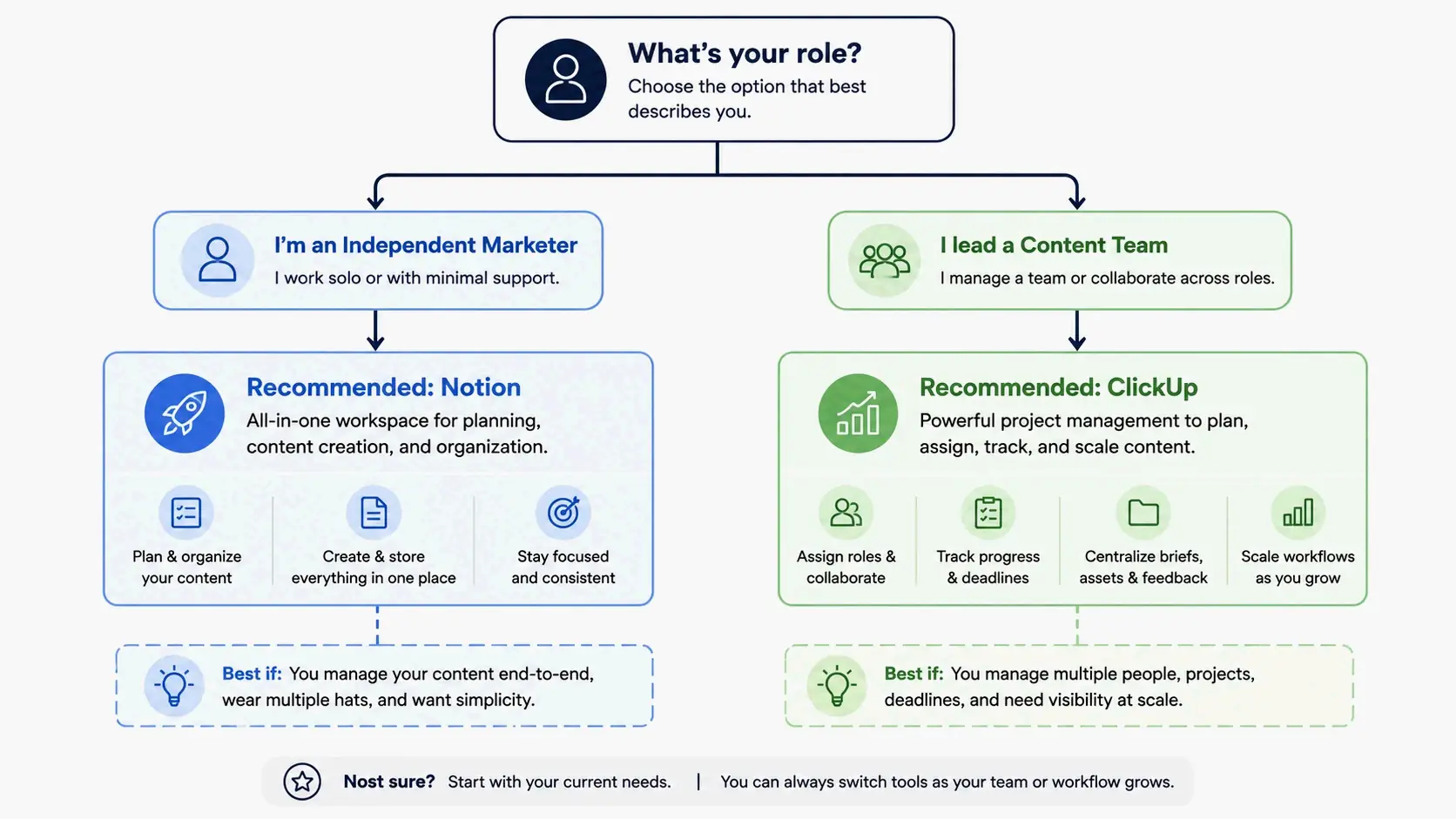
The right tool depends on who is using it and what they’re trying to accomplish. Two common scenarios illustrate how the Geowriter vs ChatGPT decision changes based on team structure and workflow requirements.
Scenario 1: You’re the Only Marketer at Your Company
As a solo marketer or small business owner, time is the scarcest resource. You handle content strategy, production, publishing, and performance measurement—often alongside other marketing and business responsibilities. Every hour spent manually prompting, editing, and formatting content is an hour not spent on strategy, customer engagement, or growth activities.
In this scenario, hands-off efficiency becomes the main decision criterion. Geowriter’s agentic approach fits this need: configure the brand context once, then let the agent handle research, writing, E-E-A-T alignment, visuals, and publishing in a single automated workflow that produces publication-ready articles. The time savings compound across multiple articles, freeing you to focus on higher-leverage work.
ChatGPT can be a capable assistant here, but only if you have the expertise to guide it effectively. If you understand GEO principles well enough to prompt correctly at each stage—research, outlining, writing, formatting—ChatGPT provides flexibility and control. But if you need the tool to handle the full pipeline on its own, an agent is the better fit.
Choose Geowriter if hands-off content production at scale is your primary need. Choose ChatGPT if you want to retain granular control over every stage of content creation and have the time and expertise to guide the tool through each step.
Scenario 2: You Lead a Content Team with a Dedicated SEO
Scaled content teams face different challenges. Brand consistency across multiple writers, integration with existing tools and workflows, and the ability to measure and report on content performance become critical. The tool you choose has to support not just content production, but the entire content operations ecosystem.
For teams with dedicated SEO expertise, ChatGPT can be a powerful component within a broader workflow. The SEO specialist can craft precise prompts for each stage of content creation, verify E-E-A-T alignment, and make sure outputs meet both traditional and AI search requirements. This approach leverages human expertise while using AI to accelerate individual tasks.
Geowriter offers a different value proposition for teams: system-level consistency and closed-loop monitoring. When multiple team members contribute to content production, the agent’s shared brand memory ensures every piece aligns with the same standards. Integrated performance monitoring connects production to citation data, so the team can optimize content strategy based on actual AI visibility outcomes.
Choose Geowriter if brand consistency at scale and integrated performance monitoring are priorities. Choose ChatGPT if your team has strong in-house GEO expertise and prefers to build customized workflows.
The Business Case: Why 4.4x Higher Conversions Make This Choice Urgent
The urgency of getting AI visibility right isn’t theoretical—it shows up in conversion data. According to Semrush (2026), LLM visitors convert at a rate 4.4x higher than average organic visitors. This means traffic from AI answer engines isn’t just extra volume. It’s a fundamentally higher-quality audience with stronger purchase intent.
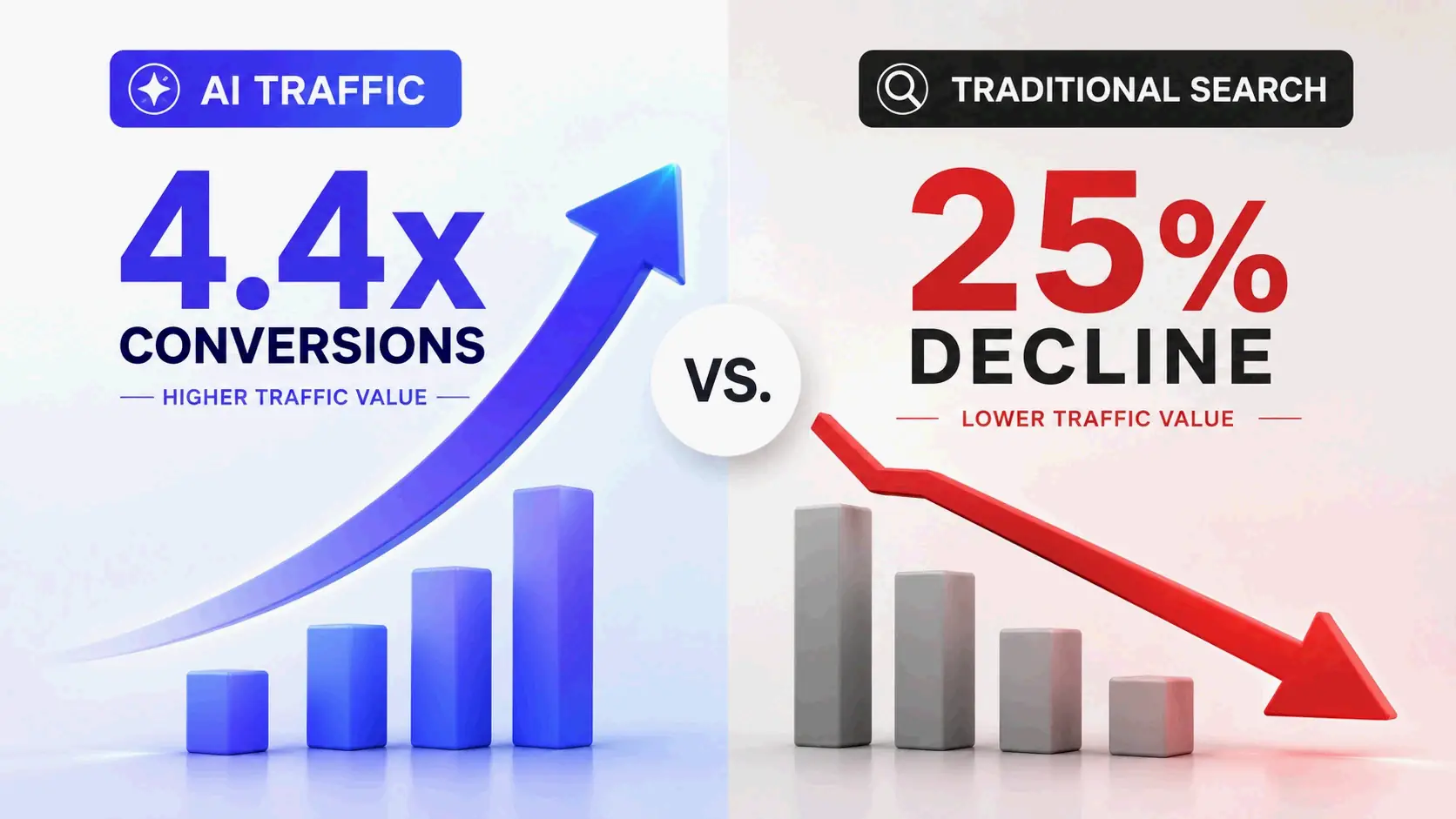
At the same time, traditional search is contracting. Gartner predicted in 2024 that traditional search volume would decline by 25% by 2026. That prediction has materialized: users increasingly turn to ChatGPT, Perplexity, and AI-powered search for answers that previously sent them to websites. The traffic that stays in traditional search concentrates more and more on navigational and transactional queries, while informational and commercial investigation queries migrate to AI platforms.
These two trends—higher conversion rates from AI traffic and declining traditional search volume—create a strategic imperative. Brands that invest in AI-citable content are capturing a growing, high-value audience. Brands that optimize only for traditional search are competing for a shrinking piece of the pie.
An AI SEO agent is more than a content production tool. It’s infrastructure for the “reasoning economy”—the emerging paradigm where AI models synthesize answers from multiple sources instead of directing users to individual websites. In this economy, visibility depends on being the source an AI model trusts enough to cite. Building that trust requires systematic content optimization that general-purpose tools can’t deliver on their own.
Conclusion
The Geowriter vs ChatGPT decision isn’t about which AI is “best.” It’s about which fundamental archetype—the autonomous agent or the assisted chat—fits your need to build a scalable, AI-citable content engine. ChatGPT excels as a versatile assistant for research, drafting, and multi-purpose tasks where human expertise guides every step. Geowriter operates as a specialized agent that handles the full content pipeline autonomously, producing GEO-optimized, publication-ready articles with built-in E-E-A-T alignment.
Assess your primary bottleneck. If it’s hands-on production time—the hours spent researching, writing, editing, and formatting content—trial an AI SEO agent. The agentic approach compresses this workflow into minutes, freeing time for higher-leverage strategy work. If the bottleneck is creative strategy and multi-format repurposing, invest in mastering advanced ChatGPT prompt chains while retaining full editorial control. The right choice matches the tool archetype to the work that matters most.
See also: GEOWriter vs AI SEO Tools: The Ultimate 2026 Comparison — a comprehensive comparison of GEOWriter against all major AI SEO tools.
Related comparisons: GEOWriter vs Claude · GEOWriter vs Gemini
FAQ
Is Geowriter better than ChatGPT for SEO-focused content?
Yes, for producing publication-ready, GEO-optimized content autonomously. Geowriter is purpose-built for this task, handling the full pipeline from research to formatting for AI citation. ChatGPT requires an expert human to guide it through each step, verify E-E-A-T alignment, and structure outputs for AI engines.
Can I use ChatGPT for Generative Engine Optimization (GEO)?
You can use ChatGPT as an assistant within a GEO workflow—for example, to analyze SERP patterns or suggest Content-Answer Fit structures—but not as a complete solution. ChatGPT cannot autonomously execute the multi-stage process of researching, writing, and formatting content that a dedicated GEO tool can.
Does using an AI SEO agent like Geowriter guarantee my content gets cited by AI engines?
No tool can guarantee citation, as AI model decisions are probabilistic. However, an AI SEO agent like Geowriter systematically aligns content with key factors—E-E-A-T signals, Content-Answer Fit, and brand consistency—that are known to heavily influence citation probability. It maximizes the likelihood of being cited by engineering for specific optimization vectors that AI models use to assess source reliability.
