


To learn how to make website appear in AI search results, you need to master Generative Engine Optimization (GEO). This means prioritizing high E-E-A-T content, implementing deep Schema markup, and using direct question-and-answer structures. AI engines favor authoritative, cited sources that offer clear, factual answers instead of old-school keyword stuffing.
Contents
What is Generative Engine Optimization (GEO)?
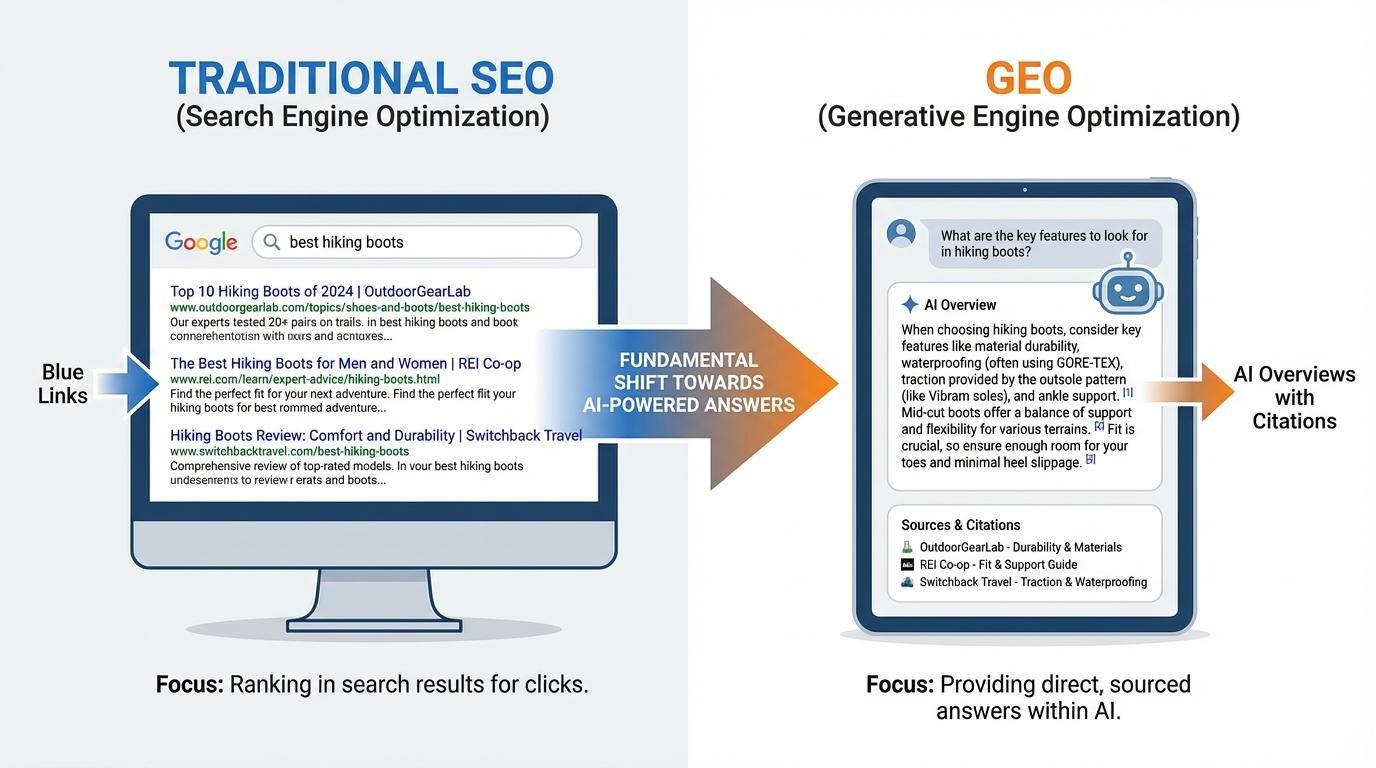
Generative Engine Optimization (GEO) is the process of making your web content easy for Large Language Models (LLMs) to index, understand, and cite. While traditional SEO focuses on ranking in the “Blue Links,” GEO aims for the top spot in AI-generated summaries on platforms like ChatGPT, Perplexity, and Google’s AI Overviews.
LLMs don’t just match keywords; they identify “entities” and the connections between them. They look for the most statistically probable and authoritative answer to a user’s prompt. To win in 2024, your website has to stop just providing “information” and start providing “answers.”
Research from Princeton University & Google DeepMind shows that specific GEO tactics can boost a site’s visibility in AI search results by up to 40%. This shift is vital as AI search continues to eat into traditional organic click-through rates by giving users the answer right on the results page.
Core Strategy: Optimizing E-E-A-T for AI Trust
Experience, Expertise, Authoritativeness, and Trustworthiness (E-E-A-T) aren’t just “best practices” anymore—they are the filters AI models use to stop “hallucinations.” When an engine builds a response, it looks for grounded, credible data to ensure the output is accurate.
Structure your content using a “Direct Answer” format. Start your articles or sections with a punchy, 40-60 word summary that hits the primary search intent. This modular style makes it easy for AI bots to “clip” your content and use it as a citation.
A study by Authoritas found that 40-60% of AI citations in Google don’t actually come from the top 10 organic links. This is good news for smaller, specialized sites; you can outrank the giants if your content is more authoritative and better structured.
As the saying goes: Write for people first, but help the robots understand that you’re doing it. This balance of human value and technical clarity is what drives machine ingestion.
Natural Language Processing (NLP) Writing Techniques
To align with how AI reads, use the active voice and ditch vague pronouns. Instead of saying “It is a great tool for this,” say “SEMrush is an effective tool for keyword research.” Use “Semantic Triples” (Subject-Predicate-Object) to help LLMs map your data. Tools like Clearscope or SurferSEO can help you find the specific semantic terms AI engines expect to see for any given topic.
Technical Implementation: Structured Data (Schema Markup)
Schema markup is the translator between your site and the AI. Even though LLMs are getting better at reading raw HTML, Schema provides the explicit context that removes the guesswork. By using JSON-LD, you tell the AI exactly who the author is, what the main entities are, and what facts you’re presenting.
For GEO, focus on Article, FAQ, and ProfilePage (Author) schemas. You should also use mentions and about properties to link your content to established entities in the Google Knowledge Graph. This builds “Entity Authority,” making it easier for AI to verify your claims against other trusted sources.
Copy-Paste JSON-LD Template for GEO
To help your site show up in AI search results, try this enhanced Schema template. It includes reviewedBy and author properties to give your E-E-A-T a boost:
{
  "@context": "https://schema.org",
  "@type": "TechArticle",
  "headline": "How to Make Website Appear in AI Search Results",
  "author": {
    "@type": "Person",
    "name": "Your Name",
    "jobTitle": "SEO Specialist",
    "url": "https://yourwebsite.com/about"
  },
  "reviewedBy": {
    "@type": "Person",
    "name": "Expert Name"
  },
  "mainEntityOfPage": {
    "@type": "WebPage",
    "@id": "https://yourwebsite.com/your-post-url"
  },
  "about": [
    {
      "@type": "Thing",
      "name": "Generative Engine Optimization",
      "sameAs": "https://en.wikipedia.org/wiki/Search_engine_optimization"
    }
  ],
  "faqSection": {
    "@type": "FAQPage",
    "mainEntity": [{
      "@type": "Question",
      "name": "How do I rank in AI search?",
      "acceptedAnswer": {
        "@type": "Answer",
        "text": "Rank in AI search by optimizing for E-E-A-T, using structured data, and providing direct, fact-based answers."
      }
    }]
  }
}
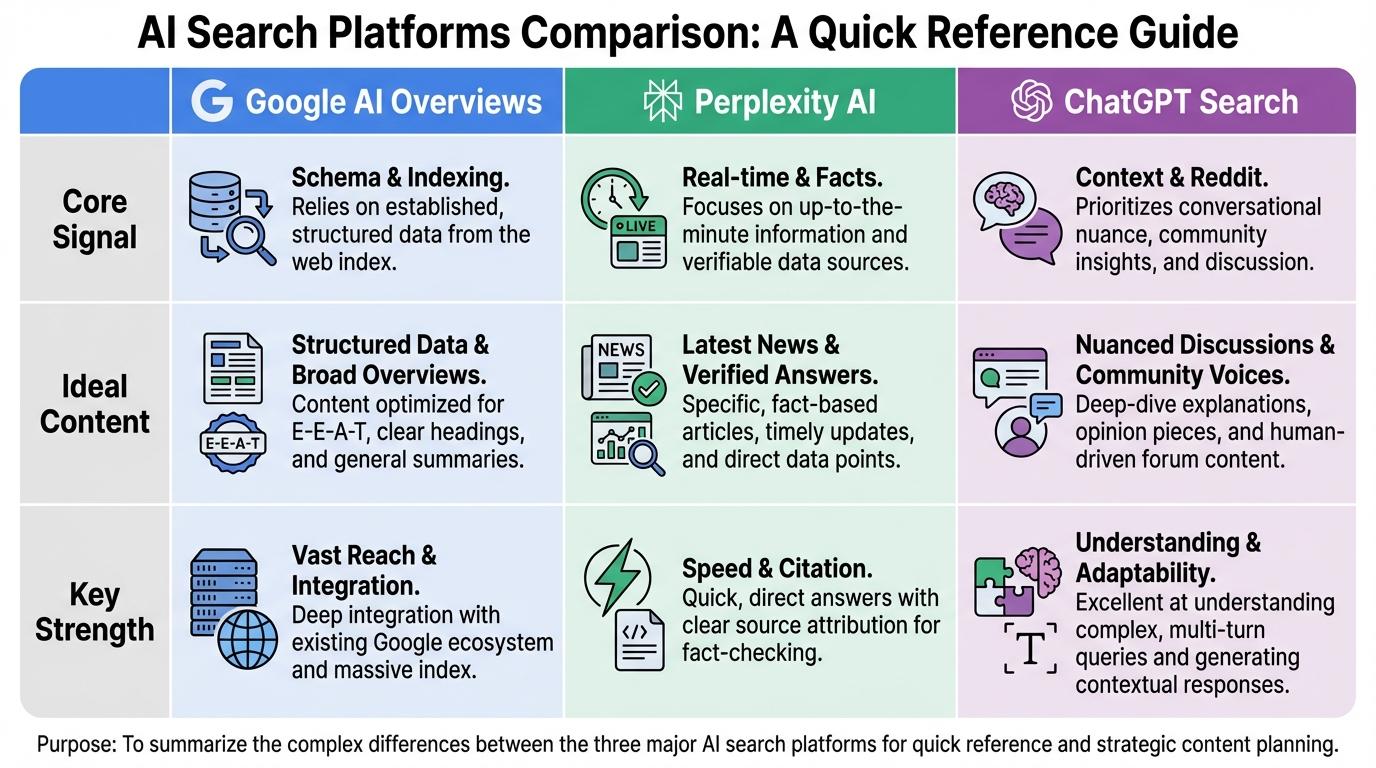
Platform Breakdown: Google AI Overviews vs. Perplexity vs. ChatGPT
Different AI engines have different “tastes” in data. Understanding how to make website appear in AI search results means knowing who you’re optimizing for.
- Google AI Overviews: Still relies heavily on the existing Google Index and traditional ranking signals. It loves clear headings and Schema, and often cites sources that offer a unique perspective or “Information Gain” that isn’t in the top 3 results.
- Perplexity AI: This is an “answer engine” that acts like a researcher. It prioritizes real-time data and academic-style citations. To rank here, keep your content fact-dense and link out to high-authority external sources.
- ChatGPT Search: Powered by the Bing index, ChatGPT focuses on conversational context. It favors sites with strong “Brand Authority” and those mentioned frequently on Reddit, forums, and news outlets. It’s looking for the “consensus” answer.
Measuring Success: Tracking AI Visibility
Traditional keyword rankings aren’t the full story anymore. In a world of Zero-Click Searches, you have to change how you measure success.
Google Search Console (GSC) doesn’t show “AI Impressions” yet, so you need to monitor Brand Mention Velocity. Use tools like Brand24 or Google Alerts to see how often other sites or AI engines cite you as a source.
To track your “Share of Voice” in AI results, consider these tools:
- Authoritas: Great for tracking if your brand shows up in the generative AI boxes.
- BrightEdge: Uses “Generative Parser” tools to see which of your pages are feeding AI answers.
- Direct Traffic: Keep an eye on this. A spike in direct traffic often means an AI cited your brand, and users are now searching for you specifically.
FAQ
What is Generative Engine Optimization (GEO)?
Generative Engine Optimization (GEO) is a digital marketing strategy designed to increase a website’s visibility in AI-driven search engines like ChatGPT and Google AI Overviews. It focuses on optimizing for authority, citations, and structured data rather than just keyword density, ensuring that LLMs recognize your content as a credible source for synthesized answers.
Does Schema markup help with AI search rankings?
Yes, Schema markup is essential for AI search rankings. It provides explicit, machine-readable context that helps Large Language Models (LLMs) identify the author, the entities discussed, and the factual claims within the content. This reduces the likelihood of AI “hallucinations” and increases the chances of your site being cited as a verified source.
How do I block my content from being used by AI models?
To block AI models from crawling your site, you can add specific directives to your robots.txt file, such as User-agent: GPTBot followed by Disallow: /. However, be aware that blocking these bots will prevent your website from appearing in AI search results and generative summaries, which may lead to a significant loss in discovery traffic.
Conclusion
Ranking in AI search is a shift from “optimizing for clicks” to “optimizing for citations.” By leaning into GEO, you make sure your content isn’t just readable for people, but verifiable and authoritative for AI models.
To stay ahead in 2024, start by auditing your most important pages. Add proper JSON-LD Schema, sharpen your introductions to provide direct answers, and make sure every claim is backed by solid data. As search fragments between Google, Perplexity, and ChatGPT, building a foundation of E-E-A-T is the only way to stay visible.
