



GEO for Finance & Fintech is all about making a fintech brand more visible in AI engines like ChatGPT and Perplexity — by blending content strategy, digital PR, and strong E-E-A-T signals to build trust and earn citations. This guide walks you through how to pick the right approach, implement it, and measure what works.
Contents
- Why GEO for Finance & Fintech Matters More Than Ever
- How to Choose the Right GEO for Finance & Fintech Agency: 6 Essential Criteria
- The 6-Step Fintech GEO Implementation Framework
- Why Fintech Brands Need a Specialized GEO Strategy (Not Just SEO)
- GEO vs AEO: What Finance Marketers Need to Know
- Internal Resources: A Self-Learning Guide for Fintech Marketing Teams
- Conclusion
- FAQ
Why GEO for Finance & Fintech Matters More Than Ever
The fintech industry is seeing a measured comeback, thanks to smarter investments and more mature operations. According to the CB Insights “State of Fintech 2025 Report,” global fintech funding hit $52.7 billion — the highest annual level since 2022. That means more players are fighting for attention. Meanwhile, a 2024 Deloitte study found that 67% of fintech buyers hold off on new solutions unless they see strong trust signals: security certifications, transparent pricing, and content backed by real expertise.
At the same time, how buyers discover solutions is shifting fast. Large language models (LLMs) like ChatGPT and Perplexity are becoming go-to search tools for B2B fintech decision-makers. For a fintech brand, getting mentioned by an LLM is like swapping a billboard on a back road for a neon sign in Times Square. And since finance falls under the Your Money, Your Life (YMYL) category, it faces extra scrutiny — making a dedicated GEO strategy less of a nice-to-have and more of a must.
How AI Engines Judge Fintech Content Today
LLMs prioritize content that’s authoritative, cited, and backed by real expertise. Unlike traditional search engines, AI cross-checks sources and favors information that’s conceptually solid and low-risk. For fintech, that means content should explain concepts with technical depth, include regulatory context, and clearly separate education from sales. Compliance creates unique hurdles — AI systems are extra cautious with financial information because mistakes can have real consequences.
How to Choose the Right GEO for Finance & Fintech Agency: 6 Essential Criteria
Picking the right agency matters a lot. A generic SEO shop won’t cut it for fintech. Here are six things to look for.
Criterion 1: Deep Fintech Vertical Knowledge
Your agency shouldn’t need a 90-day crash course on the difference between embedded finance and BaaS. Look for proven work in specific fintech areas like payments, lending, or Banking-as-a-Service (BaaS). The best agencies have writers and subject matter experts who really get the space.
Criterion 2: Demonstrated E-E-A-T Expertise for YMYL
For YMYL fields like finance, E-E-A-T (Experience, Expertise, Authoritativeness, Trustworthiness) is critical. AI engines look at author credentials, backlink quality, and content accuracy. Your agency should have a track record of building trust signals that satisfy both Google and AI engine standards — often through content co-authored or reviewed by verified experts.
Criterion 3: Proven Digital PR & Citation Engineering Results
GEO is about sentiment and citations. The agency needs to build a citation network through digital PR and expert contributions. Ask to see how they’ve earned mentions from top financial sources like Bloomberg, American Banker, PYMNTS, and Finextra. They should be able to show how earned media campaigns directly led to AI citations.
Criterion 4: Clear GEO Measurement Framework
Can they measure what matters beyond traditional SEO? Verifiable GEO outcomes include AI Overview citations, brand visibility in AI responses, and changes in brand sentiment. A good agency will have its own (or a proven) framework for tracking your brand’s presence across ChatGPT, Perplexity, and Google AI Overviews.
Criterion 5: Understanding of Fintech Regulatory Landscape
Financial content has compliance implications. Agencies need to know the rules from bodies like the SEC and FINRA about promoting financial products. The best ones can navigate compliance reviews and create content that’s both effective and legally sound.
Criterion 6: Case Studies with Measurable Fintech Impact
Look for real results in fintech sub-sectors. For example, Siege Media helped Zip boost blog traffic value by 213%, earned 92 AI Overview citations, and saw a 528% jump in links and a 145% increase in organic traffic. Similarly, Creditsafe via Crackle PR racked up over 1,940 media mentions in one year and a 9x increase in share-of-voice. Those numbers show real ROI.
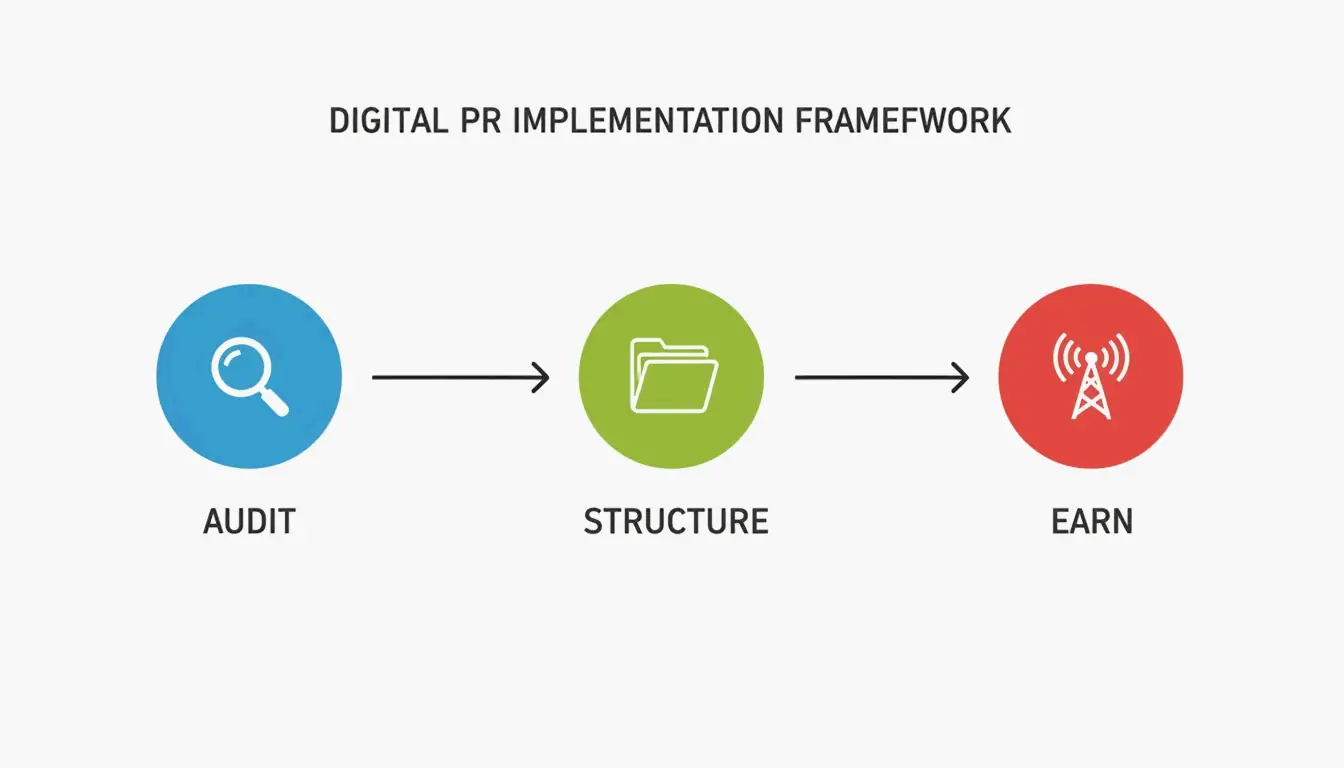
The 6-Step Fintech GEO Implementation Framework
Once you’ve found the right partner (or built internal buy-in), a structured process makes all the difference. Here’s a six-step path from audit to execution.
Step 1: Conduct a GEO Compliance Audit for Your Fintech Brand
Start by checking your current AI engine visibility and compliance position. Identify gaps in your content, see how LLMs perceive your brand, and make sure everything you already have meets regulatory standards. This audit gives you a baseline for everything else.
Step 2: Create Authoritative Content Hubs for Key Fintech Topics
Instead of scattering content around individual products, organize knowledge into stable, well-defined hubs for major topics like payments, risk, lending, or regulation. AI engines treat a website as a set of recurring semantic patterns — thematic consistency builds authority.
Step 3: Engineer Your Citation Strategy with Structured Data
Use schema markup and structured data to make things crystal clear. In finance, where precision matters, consistent schema lets you spell out content type, responsible entity, expert authorship, and update dates. This is especially important for distinguishing educational content from commercial pitches.
Step 4: Build Digital PR Campaigns Targeting Finance-Media Authority
Develop campaigns designed to earn citations from high-authority financial publications. Offer unique data or expert insights that journalists and AI engines find useful. The goal: build a citation network that positions your brand as a go-to resource.
Step 5: Optimize Content for Multiple AI Answer Engines
Your content needs to work well on different platforms — ChatGPT, Perplexity, Google AI Overviews — each with slightly different quirks. For instance, Perplexity loves inline source citations, so original research shines there. Use a multi-engine optimization strategy to cover your bases.
Step 6: Track GEO Success with Fintech-Relevant KPIs
Move beyond old-school metrics. Track things like how often your brand appears in generative explanations, how accurate those descriptions are, and whether you’re associated with concepts like security and solvency. The goal isn’t a one-off mention — it’s recurring citations.
Why Fintech Brands Need a Specialized GEO Strategy (Not Just SEO)
Traditional SEO isn’t enough anymore. YMYL standards raise the bar for fintech content in AI outputs, and only a targeted GEO strategy can clear it. LLM trust algorithms weigh citation frequency, expert authorship, and regulatory compliance — elements that often take a back seat in SEO. Plus, AI engines and Google’s search algorithms prioritize trust signals differently. Google values backlinks from authoritative sites; LLMs also care about information consistency across multiple high-quality sources and how recent the content is, especially given financial market movements.
GEO vs AEO: What Finance Marketers Need to Know
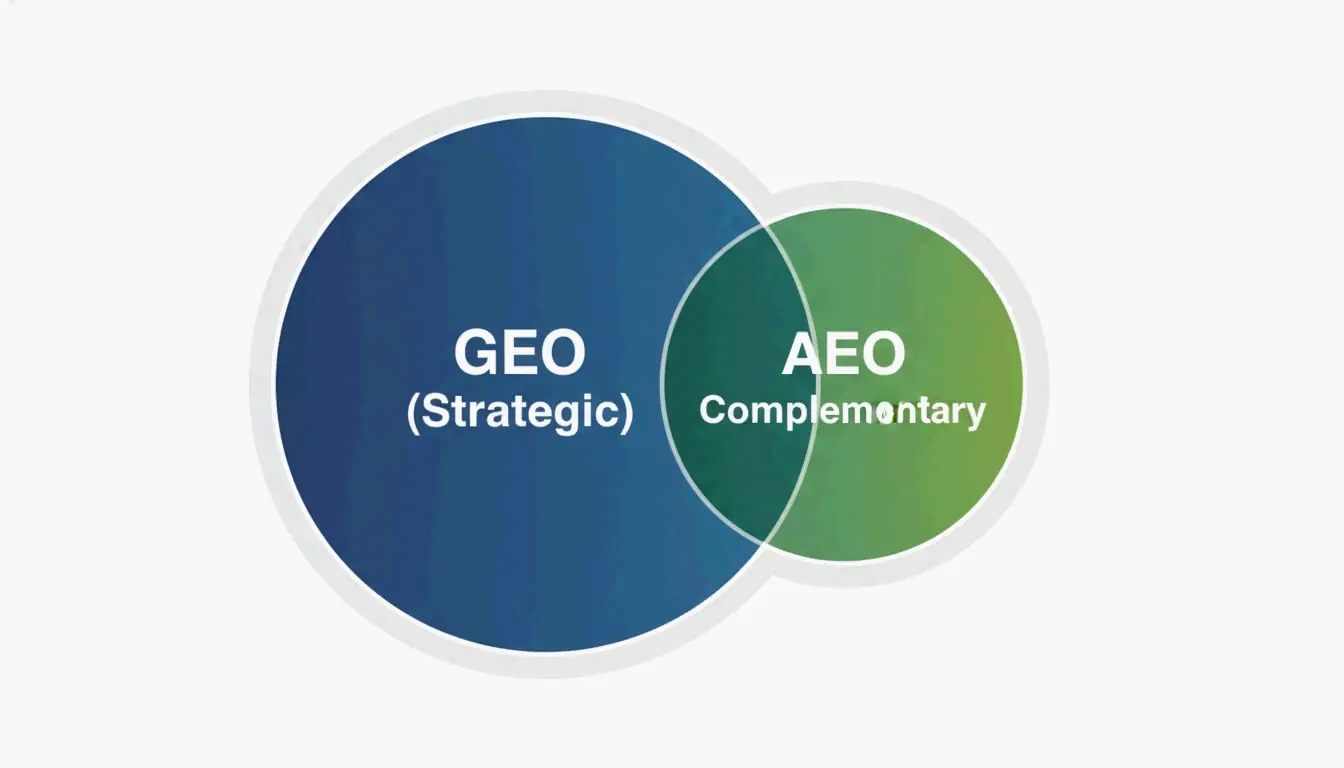
Finance marketers should understand the distinct roles of GEO and AEO. GEO focuses on optimizing your brand’s overall presence and visibility across all AI-generated responses — including brand mentions and citations in broad discussions. AEO (Answer Engine Optimization) is a subset that aims to capture specific answer snippets for defined questions in voice and AI search. GEO is broader and more strategic (making your brand the default authority), while AEO is more tactical (targeting specific high-intent queries). Both complement each other and should be part of a comprehensive plan.
Internal Resources: A Self-Learning Guide for Fintech Marketing Teams
Building internal capability matters too. Here’s a learning path and tools for your marketing team.
Free Tools to Audit Your Fintech Brand’s AI Visibility
While robust tools often cost money, you can start with free or trial versions of AI monitoring tools like Goodie. Manually testing your brand’s visibility on Perplexity and ChatGPT for key queries is also a valuable, zero-cost audit method. Tools like Schema.org’s validator can help you check your structured data.
Building a GEO-Ready Content Calendar for Fintech
Create a content calendar that prioritizes authoritativeness. Plan “pillar” content on major financial topics — explain core concepts with technical depth. Schedule updates for regulatory changes and market analysis. Integrate digital PR campaigns that aim to earn citations on breaking financial news. This keeps your content fresh and relevant, driving ongoing AI visibility.
Conclusion
GEO for Finance & Fintech is no longer optional for fintech brands that want to be seen in the AI-powered search landscape. Start with a GEO readiness audit, apply the six-step framework, and consider partnering with an agency that has proven fintech E-E-A-T and digital PR chops. The brands that invest now will define the conversation for their market in the years ahead.
Related reading: GEO for B2B Services: Complete Playbook
FAQ
Why do fintech companies need a dedicated GEO strategy instead of regular SEO?
YMYL standards require stricter authority signals that only purpose-built GEO strategies address. LLM trust algorithms prioritize citation frequency, expert authorship, and regulatory compliance content — elements often secondary in traditional SEO. Traditional SEO also fails to optimize for AI engine citation patterns or specific structured data requirements needed for financial content.
What is the difference between GEO and AEO (Answer Engine Optimization)?
GEO optimizes brand presence across all AI-generated responses, focusing on brand mentions and citations. AEO focuses narrowly on capturing specific answer snippets for defined queries in voice and AI search. GEO is broader and strategic for overall authority, while AEO is more tactical and snippet-specific.
How does E-E-A-T impact fintech companies’ GEO effectiveness?
E-E-A-T signals are critical for YMYL industries like finance. AI engines use E-E-A-T proxies (author credentials, backlink quality, content accuracy) to determine inclusion in their responses. Strong E-E-A-T directly correlates with higher citation rates in AI Overviews and ChatGPT responses, making it foundational for any GEO strategy.
